
Sort by Category
4000 musicians and a poem
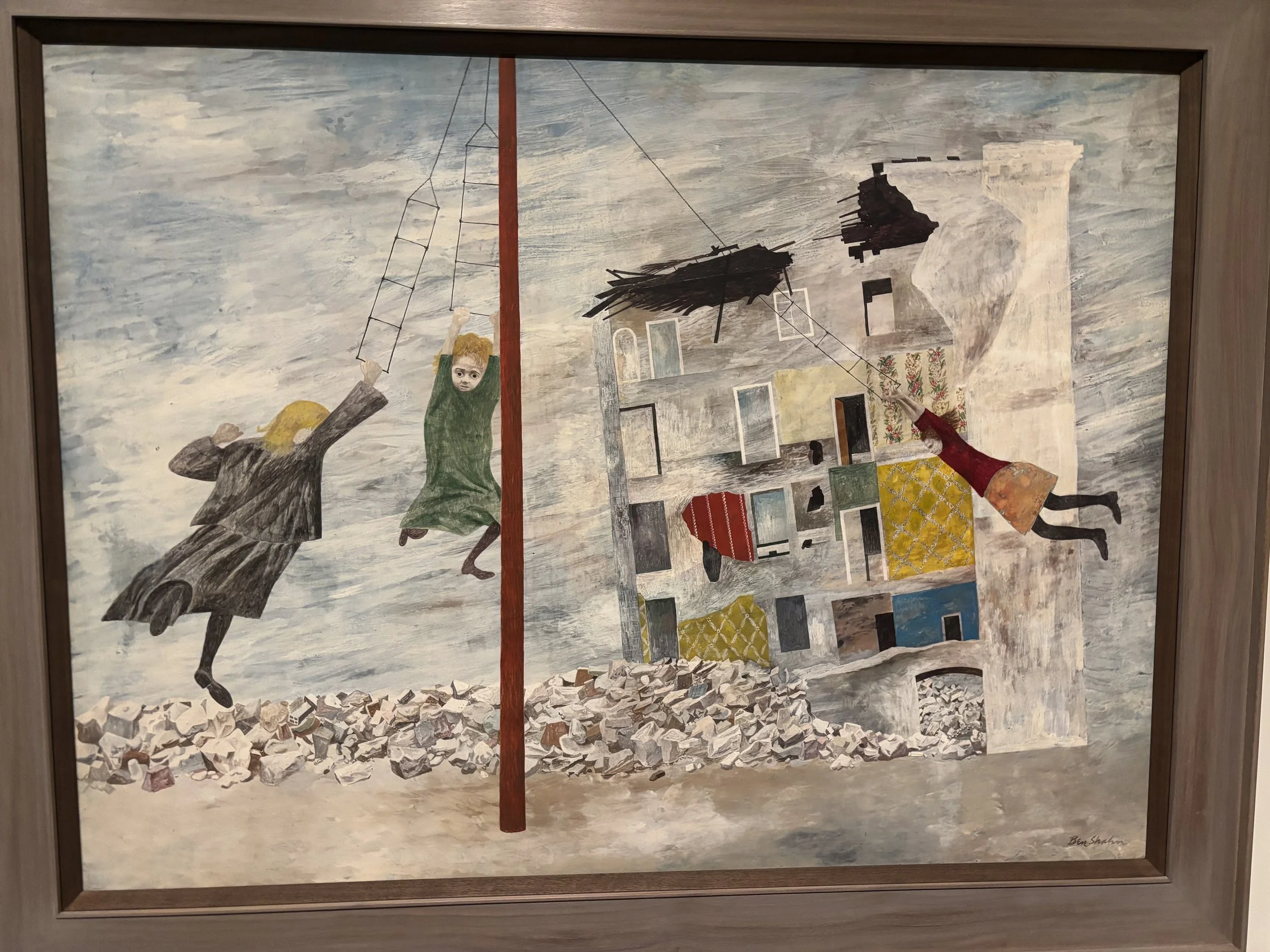
Liberation 1945, by Ben Shahn
Dear friends,
One of King David’s final acts before he died was to assemble an orchestra of 4,000 musicians. The prophet Nathan had already informed him that he will not be the one to build the house of God, “for you are a man of wars and have shed blood.” But David, considered the greatest musician and poet our people have known, understood the importance of music and song to religious life. So, he got the band ready for the dedication of the Temple, even though he knew it would take years until his son, Shlomo would finalize the building of the Temple.
He also wrote a poem for the day of the dedication of the Temple, which we can imagine performed by 4,000 instrumentalists and singers, singing of the human struggle through times of personal and collective strife. The war in Iran is paused, thank God, but others persist, in Lebanon and Ukraine and Sudan and many other places. So perhaps the building of a house of song and love will have to be built by our kids or grandkids. But maybe we can take a page from King David and set them up with poetry of gratitude and beauty for the day on which they dedicate their Temple of Peace.
Here’s a translation I made years back the poem David left for that day:
(A song of praise for the dedication of The House, by David.)
Like a woman pulling a bucket
Filled with water
From the well
So have you, God,
Raised me from the dark,
Cold depths.
Those who were glad I disappeared
Now watch me
Sing to you in the sunshine.
You,
Who are my self and all at once,
My God,
To you did I direct my cry for help.
You heard, and healed me.
You enabled me to rise
Above the hellish noise to extricate
Myself from the downward spiral
To remember that I am alive.
Do you believe in mercy?
Then sing!
Remind yourself that life is holy.
Brokenness is a beginning.
At night she weeps,
By Morning she is singing joy.
But I forgot all this.
My comfort made me fear
The slightest change.
Then the mountain that we climbed together shook,
And you, God,
Were hiding.
Suddenly alone, I panicked.
I called you.
I begged you to come back.
“What good is my blood to you?
My lifeless corpse is worthless!
Does dust pray?
Does it speak your truth?
Sh’ma, Adonai - Hear me - spare me -
Help me!”
And you did.
You turned my mourning into dancing.
You unclothed me,
Washed the dirt off my body, gave me the courage to be happy.
Now I can sing again.
With the sun and
The stars and
The mountain and
The well and
All that is constantly expressing glory.
You,
Who are my self and all at once,
My God,
I will thank you forever.
Shabbat shalom,
Rabbi Misha
When is Then?
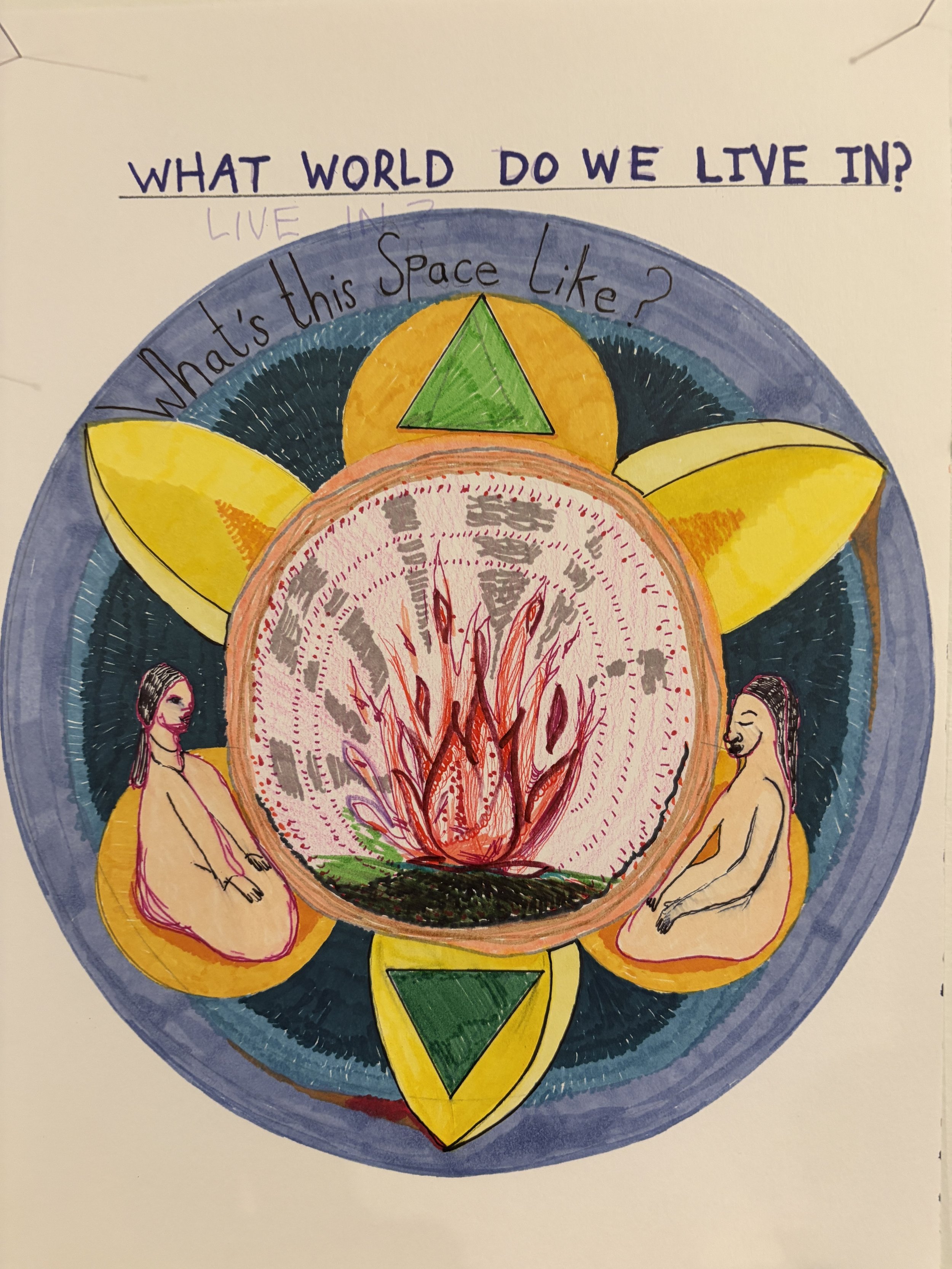
What World Do We Live In? by Jacquie Mauer
Dear friends,
The Great Sabbath is upon us, Shabbat Hagadol, as the Shabbat before Passover is called. It gives us a chance to orient ourselves toward this Festival of Freedom, and to contemplate how we might celebrate it this year. Ma Nishtana halayla hazeh, how is this night different, we ask again, knowing that here we are again in the same situation we were in a year ago, and two years ago, and well, just about every year in memory, which is to say celebrating freedom in a world that seems everything but free, in the midst of war and conflict, rising poverty, hatred, bigotry and violence, a time when the Land of the Free is doing all it can to impose its iron fist on anyone in its way, and the Jewish state makes Pharaoh its hero and calls itself a freedom fighter. In the heart of the current storm, in the clench of the stronghold of chaos, we are called upon to see ourselves as slaves who have been liberated.
Perhaps that is the very lesson of Passover.
I think of heroes like Jean Genet, who in the midst of WWII, in prison in France, took the paper the prisoners used to make camouflage for the German army, and wrote on it two of the greatest novels of that time period, the imaginative gems, Miracle of the Rose and Our Lady of the Flowers. I think of the Esh Kodesh, the Piazetzner Rebbe, who teased out hidden beauty from the Torah every Shabbat for three years in the Warsaw Ghetto, and then hid his sermons in milk cans buried under the ghetto until the war’s end. I think of the American heroes of civil rights, women's rights and gay rights, who imagined their way out of much narrower and darker times.
The rabbis identify one small word as key to liberation, the Hebrew word אז, Az, meaning “then.” It’s the first word that appears in the Torah after the Hebrews realize they are free, and is followed by song - אז ישיר, “Then they sang.” The Maharal, in 17th century Prague, wrote that Az can be understood as referring to either the future or the past. And indeed, אז ישיר, is understood as “then they sang,” but literally means “then they will sing.” In other words, the vision of a future in which we are redeemed, when we are able to sing, is directly connected to moments in the past when we were redeemed and able to sing.
Between those two possibilities, of course, lies a third possibility. We could be redeemed right now, and sing. That is Passover. Looking ahead to the times beyond the storms, looking back to the times when the clouds lifted, and seeing through the current fog that is preventing us from enjoying the beauty in front of our eyes.
The word Az appears dozens of times in the bible, many of which invite us to find that “then” time today.
Then the eyes of the blind shall be opened,
and the ears of the deaf shall be unstopped. (Isaiah)
אָז תִּפָּקַחְנָה עֵינֵי עִוְרִים וְאׇזְנֵי חֵרְשִׁים תִּפָּתַחְנָה.
Then the lame shall leap like a deer,
and the tongue of the mute shall sing for joy; (Isaiah)
אָז יְדַלֵּג כָּאַיָּל פִּסֵּחַ וְתָרֹן לְשׁוֹן אִלֵּם כִּי נִבְקְעוּ בַמִּדְבָּר מַיִם וּנְחָלִים בָּעֲרָבָה.
Then your light shall break forth like the dawn,
and your healing shall quickly sprout; (Isaiah again)
אָז יִבָּקַע כַּשַּׁחַר אוֹרֶךָ וַאֲרֻכָתְךָ מְהֵרָה תִצְמָח
Then you shall delight. (Last Isaiah)
אָז תִּתְעַנַּג
Then our mouths shall be filled with laughter,
and our tongues with song. (Psalms)
אָז יִמָּלֵא שְׂחוֹק פִּינוּ וּלְשׁוֹנֵנוּ רִנָּה
Then I shall rest. (Job)
אָז יָנוּחַ לִי
On Shabbat Hagadol the rabbis instituted as the haftarah a vision of redemption that came to the Prophet Malachi. In it he depicts a surprisingly troubling time, when the wicked seem to be thriving, leaving the good people of the world at a loss.
“Then,” he sings, “those who live with wonder will talk with one another as friends, and YHVH will listen carefully, and hear them. A scroll of remembrance will be written in His presence containing the thoughts of these wonder-full people.”
אָז נִדְבְּרוּ יִרְאֵי יְהֹוָה אִישׁ אֶל רֵעֵהוּ וַיַּקְשֵׁב יְהֹוָה וַיִּשְׁמָע וַיִּכָּתֵב סֵפֶר זִכָּרוֹן לְפָנָיו לְיִרְאֵי יְהֹוָה וּלְחֹשְׁבֵי שְׁמוֹ
This, I believe, is a description of us all at our seders, in honest conversation with each about the beauty we get to enjoy, our battles with the ugliness we don’t, and between bites of delightful food, a song of happiness on our lips. We will also be reading an older scroll of remembrance, which our ancestors put together for us called the Haggadah.
I hope you can join us tomorrow at the protest to sing the Patti Smith psalm The People Have the Power. And on Tuesday evening at 8pm we will have a special pre-Passover Torah class, where we will explore some Passover teachings of the great 20th century prophet, Yishayahu Leibowitz. I hope you can join me.
Shabbat shalom,
Rabbi Misha
Take a Dream of Life With You
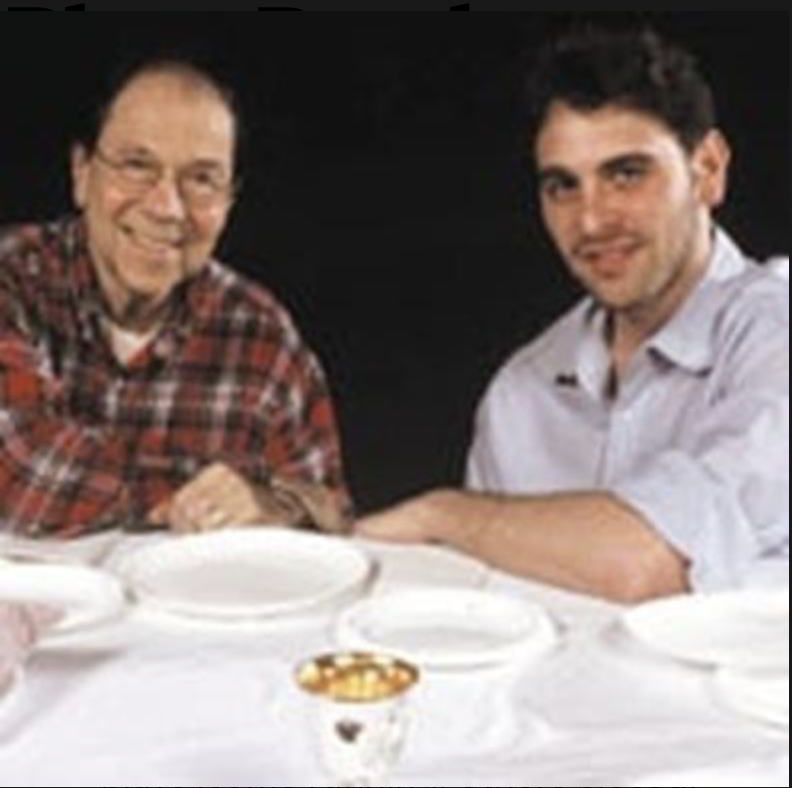
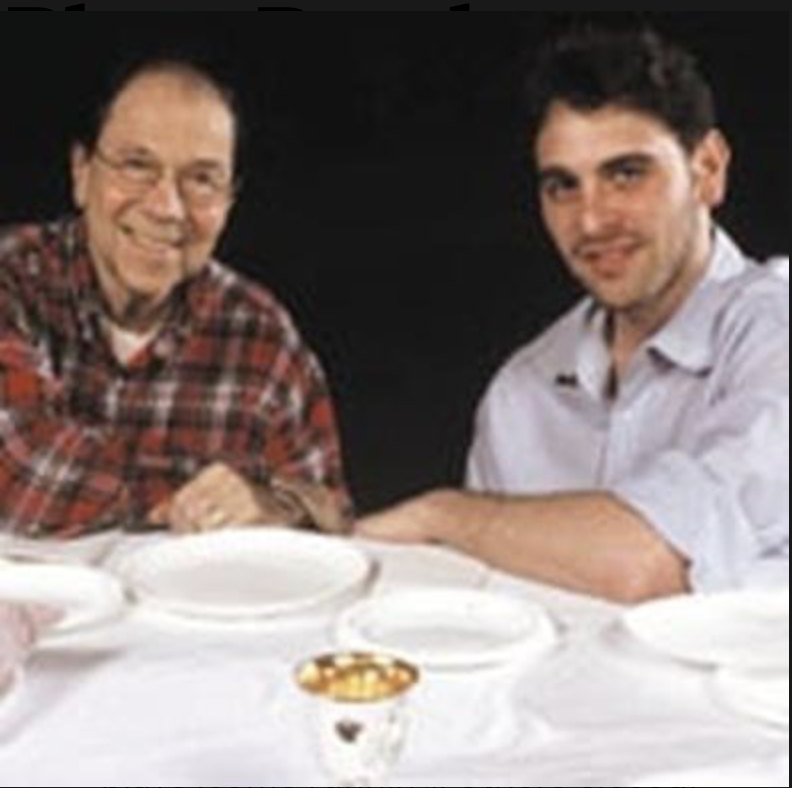
Michael Rutenberg z"l and I in rehearsals for The Fist in 2004
Dear friends,
There were, so far, a few things I’ve been called upon to do in this lifetime: father my boys, partner with Erika, lead a shul, create a school, protest injustice and war, study holy books, play basketball. And then there is the theater. I first heard that call at age 9, again in high school, once more at 21, and then in a loud and clear voice two years later from my teacher at Hunter College, Professor Michael Rutenberg. I don’t think it’s a coincidence that I learned about Mike’s death on the week of Parashat Vayikra: “And He called upon.” This is often the week when we ponder our callings, listen for new ones, and wonder whether we’ve missed any.
With Mike, missing the call to become a playwright would have been impossible. I took the one undergraduate playwriting class the theater department offered, which Mike taught. At the end of the semester, I handed in a one act play I called The Fist, about an IDF officer who informs his family that he signed a public letter stating that he refuses to serve in the Occupied Territories. Over the course of the next 3 years, Mike worked closely with me to develop the script into a full-length play, through thousands of emails and hundreds of hours of meetings and rehearsals, to bring it to production in Florida and New York. He taught me not only how to write and rewrite a play, cast and direct it and do it all over again, but how to devote yourself to teaching, how to guide and share knowledge, how to obsess fully and whole heartedly over a project your heart commands you to get just right. He directed The Fist Off Broadway, with me as the lead, and the production was a big success. And just like that, Mike handed me a career in the theater.
Mike had, like most theater people, heard the call to a life in the theater in an overpowering way. It was his ticket out of the rough streets of Brooklyn where he grew up, and as an late teen he would stay up nights rehearsing plays with friends until they were just right. That led him to the Yale School of Drama, and to the Actors Studio, where he worked with Marylin Monroe and Paul Newman, and had funny stories about watching Gene Wilder try to be dramatic and eliciting laughs. He taught acting, directing and playwriting at Hunter College until he was 82, where he shepherded countless young people in the same way he did with me, and then til close to 90 in another university in Florida after he retired.
His final obsession, which kept him busy from Covid until his death in late 2024 was an old Yiddish play that had never been produced in English, and which he said is “an anti-war play much more significant now than when it was written in 1920.” Der Toiter Mensch, or The Dead Man, by the great Yiddish playwright, Sholem Asch. In typical entrepreneurial spirit, Mike found a yeshiva bocher, gave him the script with the instruction to make a literal translation into English, and then he freely adapted it into modern English. The play is about a dead soldier who mysteriously returns to his war-torn, ravaged village in an attempt to convince the people there to follow him to a new village just across the river where war and hunger no longer exist. It strikes the notes of chaos and despair that have only gotten more pronounced since Mike’s death, and calls on us, like a voice from beyond to create new life out of the chaos.
I’ll leave you with a few lines from Mike’s script.
Yoysef:
Take a dream of life with you, on the last step from this world into the other, for after your death.
Dinah:
Where are the dreams?
Yoysef:
Look within yourself. Search for a beam of light and spin of it a dream, for the darkness of your days.
Dinah:
I remember nothing from that life. Everything sinks into a mist. Only little lights that spark and vanish, lasting the blink of an eye.
Yoysef:
Take hold of a spark, to light your final footstep.
Dinah:
I can’t, alone. I sink back into the darkness. Help me, Yoysef, to raise up the light.
Yoysef:
Only the living dream. The dead are dead. (Stops at the bridge.) This is the last instant, the last step. Tell me. Tell me.
Dinah:
Now I see. A light ascends to me.
Yoysef:
Dream well… Dream well…
Mike’s final dream was to bring this old masterwork to production. If you feel called to be a part of that effort – let me know!
Shabbat shalom,
Rabbi Misha
Eye of My Eyes
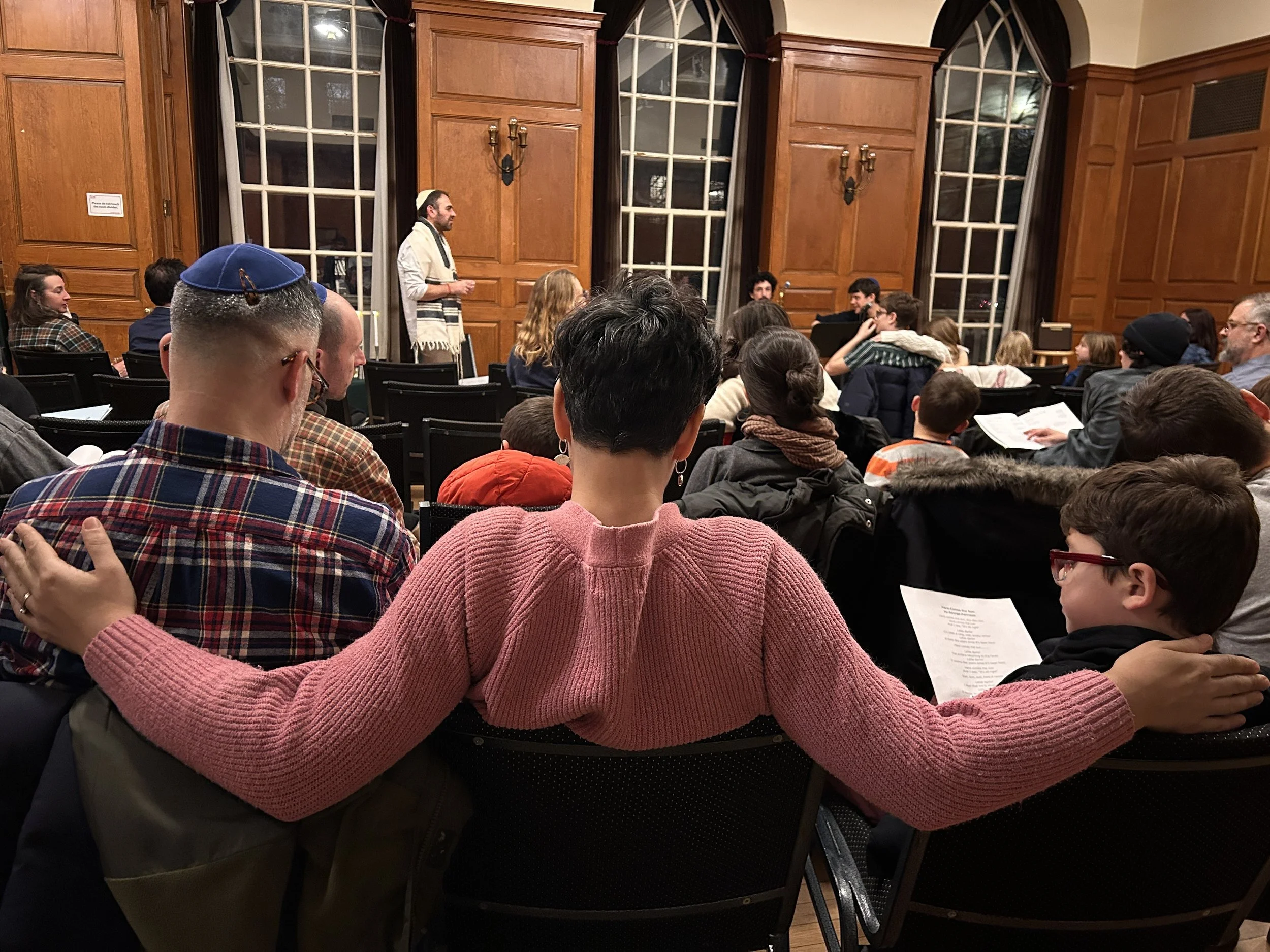
At our last Brooklyn Shabbat
Dear friends,
We stand in solidarity and love with Temple Israel in Michigan in the wake of the shooting yesterday. The fight against antisemitism is never-ending, and is intertwined with the fight against hate of all kinds. Let us stand proud of the Judaism we practice and love as we humbly work to uproot falsehood and violent expressions of hatred perpetuated against Jews, and all people. I offer the following prayer, which came out earlier this week, and invite you all to join us for Shabbat this evening in Fort Greene. And please take a look at the related message below the prayer, from a few long time community members.
Dear God,
I try to avoid making requests from You out of a combination of humility and doubt, so I write these words with fear of ridicule or worse, and a plea for compassion. I am just a man, poor of deeds, slow of thought, soft of heart, whose merit is thanks to his teachers, parents, brothers, friends, children, wife, and, mostly, to You. So please forgive me as I make a request of You, creator, master of the world, source of the seen and unseen, ruler of the imagined and the true, spring of time and breath and peace, heart of my heart and eye of my eyes.
I do not make this request on my own behalf. I suffer from this war far less than millions of others:
Less than those burying their loved ones,
those in hospitals
those displaced from their homes
those hiding in shelters
those whose country is being bombed.
Less than those who are bombing or whose children are bombing
those who are helpless to protect their children, their parents, themselves
those who hear the bombs, the airplanes, the drones, the rockets.
Less than those whose children’s schools have been closed for weeks
those who are exhausted, afraid, depressed and beaten down by years of war and failed resistance.
But I share with them the same human frame, the same feelings of love and hate and loss and hope. I share with many of them the same sense of the collapse of my country, the same feeling of impotence in the face of corruption, the same rage, the same despair, the same dread, the same devotion, the same strength; we are caught in the very same grip of insanity, stupidity and greed.
And so, though I live oceans away from where the sirens blaze, I suffer this war with them. I suffer my family’s fear, my people’s fatigue, my so called enemy’s losses, my real enemy’s survival. I feel my connection to every single human being living on this earth, and to each human being that ever lived or will live, all of us caught for the duration of our lives in a web of illusion and a net of temporary power dynamics that mean less than nothing.
Perhaps You have a reason for this madness. Maybe cruelty performs some mystical task I don’t understand. Maybe we are learning without realizing it. Maybe we are being challenged to go further, much further into love and trust and selflessness like our ancestors. Maybe we are dreaming our way into a world of truth that can’t come about without this one filled with lies. Or maybe none of that is true, but the freedom You have given to human beings comes at the price of what we bring upon ourselves.
I see that this world is in our hands. I am not asking for a miracle. I know that the problem is deeper than one or two or more specific people who I occasionally sin by fantasizing about their death. My request is not for an external intervention, the swaying of Your mighty hand, but for some shift in the thinking of people in positions of power that will bring about the end of what in my limited, shallow and impatient eyes appears to be an incredibly stupid, cruel and cynical war between a host of terrible actors. You, eye of my eyes, are the eye of the eyes of those making decisions that cause this war to escalate, and others that could cause it to de-escalate, some that make it start, and others that make it stop. You have the power to make them see the futility of this war.
Dear God of my life and the lives of all living beings: all lies with You. Please, help us end this war. Let a new path emerge from it. Make us vessels of peace. Help us renounce the path of conflict and self-destruction that we may return to You in peace and Oneness. As is written “They shall not hurt nor destroy anything in all my holy mountain: for the earth shall be full of the knowledge of the divine as the waters cover the sea.”
לֹא יָרֵעוּ וְלֹא יַשְׁחִיתוּ בְּכׇל הַר קׇדְשִׁי כִּי מָלְאָה הָאָרֶץ דֵּעָה אֶת יְהֹוָה כַּמַּיִם לַיָּם מְכַסִּים.
Shabbat shalom,
Rabbi Misha
The Political Heart of the Jewish Tradition
Our musical guest this evening, John Murchison on Qanun: https://youtu.be/EpjUTOPabmA?si=lZ6u4CMbGrZAy9dO
Dear friends,
The political heart of the Jewish tradition – not to be confused with the political heart of the Jewish people circa 2026 – is revealed in a flash of anger in this week’s Parashah. Moses has ascended the mountain. He has received the stone tablets engraved with the commandments written “with the finger of God.” He has been told that down below the Hebrews have created a Golden Calf, to which they bow and pray. He has walked God back from the desire to annihilate them in response, and now he is walking down the mountain. And then it happens:
וַֽיְהִ֗י כַּאֲשֶׁ֤ר קָרַב֙ אֶל־הַֽמַּחֲנֶ֔ה וַיַּ֥רְא אֶת־הָעֵ֖גֶל וּמְחֹלֹ֑ת וַיִּֽחַר־אַ֣ף מֹשֶׁ֗ה וַיַּשְׁלֵ֤ךְ מִיָּדָו֙ אֶת־הַלֻּחֹ֔ת וַיְשַׁבֵּ֥ר אֹתָ֖ם תַּ֥חַת הָהָֽר׃
As Moses came near the camp, he saw the calf and the dancing. He was filled with rage; and he hurled the tablets from his hands and shattered them at the foot of the mountain.
If there is holiness in any thing, it was there in those tablets of the covenant. But Moses shatters them to pieces in what seems like an emotional explosion. Though perhaps the exact opposite of Moses’ act, the verse recalls the Taliban’s demolition of the ancient Buddha statues in Bamiyan province in 2001. That tragic act of human idiocy also seems emotionally driven, angry, impulsive and self-destructive. But in truth it was one that took time, planning and consideration. They tried explosives to destroy the huge rock statues, and that wasn’t enough. They shot at them with a number of weapons, and still the statues refused to break. They had to continue with a series of other methods until the statues finally shattered, as Moses did to the tablets in one swing.
That one swing, however, is imbued by the rabbis with much more than raw emotion. Yishayahu Leibovitz builds on the ancient rabbinical take on this moment when he says that “Moses decided to cast the tablets from his hands and shatter them before the eyes of the people.” This is not impulsive, but a calculated teaching moment, in which Moses gives symbolic life to the underlying political and religious principle guiding our entire faith.
“His heart inspired him to break the tablets before their eyes,” Rashi, who sees this as one of Moses’ great deeds, adds. “And the Holy One agreed with him, —‘Well done for breaking them!’”
Moses, God and the rabbis all seem to agree that this was an important lesson. What are we being taught?
Leibovitz explains: “The greatness of the act lies in demonstrating that no object possesses inherent holiness. Holiness resides only in human action directed toward the service of God. Without such intention, there is no holiness—even in the tablets.”
Rabbi Meir Simcha HaKohen of Dvinsk, the 19th century born author of Meshech Chochmah, minces no words drawing line between this emotional, religious act and its political consequences:
“All sanctities—Land of Israel, Jerusalem, the Temple—are but branches of Torah, sanctified through it. Do not imagine that the Temple or Tabernacle are inherently holy. God dwells among His people when they serve Him. If they violate the covenant, holiness departs and the sacred becomes profane.
Moses demonstrated this when he shattered the tablets upon seeing that the people had violated the commandment, “You shall not make for yourself a graven image.” And this prohibition does not apply only to the golden calf. It applies to any natural entity—a nation, land, homeland, flag, army, ideology, or individual—when elevated to the status of ultimate sanctity.”
As national sentiments rise, among us Jews as among so many nations, we especially should seek to remember that our tradition absolutely rejects the idolatry of ideas over lives. Holiness is found in thoughtful actions, not in dead objects, dead symbols, dead ideas, or deadening people.
I invite you to join me this evening for some tablet-shattering peace. If you’re inclined, bring with you something to break – a glass or plate or something you’ll enjoy shattering.
We will begin with a short prayer study at 6:00pm, and Kabbalat Shabbat with our wonderful musical guest, John Murchison, and meditation teacher, Michael Posnick at 6:30pm.
Shabbat shalom,
Rabbi Misha
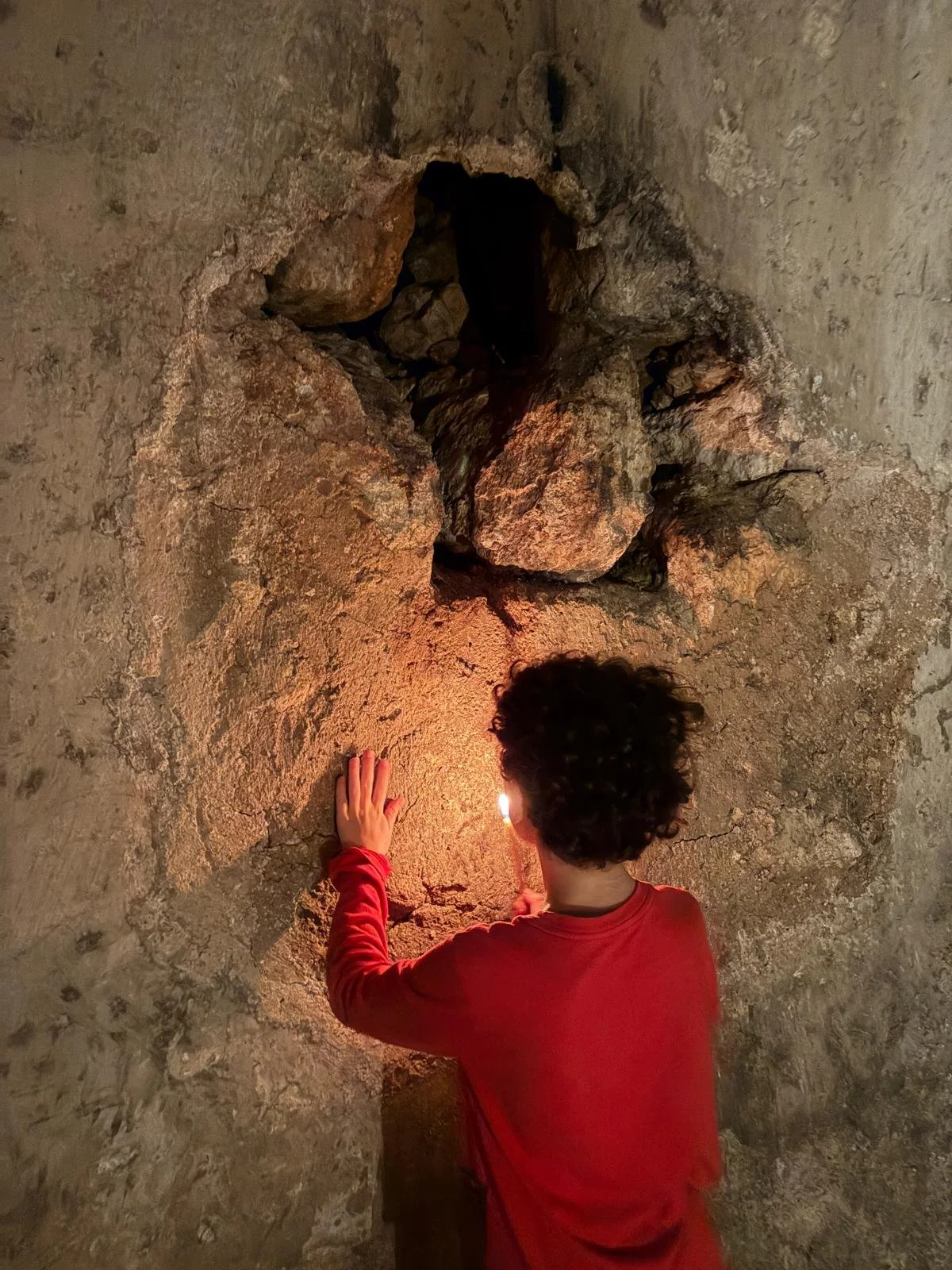
Life to the Dead
Manu at the Tomb of the Prophets
Dear friends,
Though I grew up in Jerusalem, I had never properly explored one of its holiest places, Mount Olives. This is for two reasons. First, because I never connected with the notion of the Messiah: what drove most of the thousands of Jews to be buried on the mountain is the tradition that after the Messiah comes, when the Jewish dead will rise, the first to come back to life will be those buried on Mount Olives. And second, because it’s in East Jerusalem where the Palestinians live, which was considered dangerous. So last Friday I drove over there with my wife and kids.
It was an especially holy day in Jerusalem, the first Friday of Ramadan. In Jerusalem, holiness often means conflict. The uniformed goons of Israel’s racist Minister of National Security, had spent the previous few days of the holy Muslim month menacingly walking through Al Aqsa Mosque as people prayed. For us this translated into a lot of traffic as soon as we hit East Jerusalem and its security checkpoints. Once we got through those, we took a wrong turn and stopped by a little grocery store to ask for directions.
The grocer was warm and welcoming. We asked him if he could help us find the tomb of Rabia El-Adawiya, an 8th century Iraqi sufi woman who is considered one of the most important Muslim teachers ever. Her tomb on Mount Olives is shared with the 7th century BC Jewish prophetess Hulda, as well as the 5th-century Christian saint Pelagia of Antioch. “It’s right up the road here,” he said. And proceeded to offer the boys a treat. After I told him that I grew up on the west side of town he invited us to come back a few hours later to break the fast with his family. Since we couldn’t, he sent us off with a wrapped plate of Iftar foods and crucial directions to the only place nearby where we stand a chance at a parking spot.
The mosque in charge of Rabia’s tomb was closed so we continued down the road to find an illegal parking spot and explore the cemetery. Mount Olives is directly across the wadi from Haram El Sharif, which we call Temple Mount, so the view of the golden dome, Al Aqsa Mosque, the Church of the Holy Sepulcher and the rest of the old city was perfect. We could see that Temple Mount itself was filled with people who had come there to pray.
At the top of the cemetery stood a middle-aged ultra-orthodox couple. The woman was holding her phone videotaping what appeared to be a social media post. Her husband explained to the camera that below them was the tomb of a famous rabbi, and that they had come to him to pray for fertility for several members of their family. As we walked down the steps, with graves on either side, I noticed that many of the old gravestones were broken, or had fallen. On some I could still make out the Hebrew writing, telling of mothers and fathers and brothers and sisters who loved them a few hundred years ago. I love walking around old cemeteries here in New York, some with tombs that go back to the Civil War. But this cemetery is at least three thousand years old, and probably much more.
We came upon a small courtyard with a sign that read: “Tomb of the Prophets.” This was a holy site believed to be the burial place of the two final prophets of Israel, Haggai and Malachi, who lived in the 5th and 6th centuries BC. We were welcomed by a friendly Russian Orthodox priest in a long black cloak, who invited us down the steps and into an underground cave, which was a burial chamber for around 40 souls, each with their own small niche hewn into the rock. The priest told us about the place, and handed each of us a candle to help us navigate the chambers. We walked around the cave until we came to the largest chamber, where the two prophets are thought to be buried.
I took out a Tanach, and opened at random to the Book of Malachi. It landed on the final verses in the Nevi’im, which close the Book:
הִנֵּ֤ה אָנֹכִי֙ שֹׁלֵ֣חַ לָכֶ֔ם אֵ֖ת אֵלִיָּ֣ה הַנָּבִ֑יא לִפְנֵ֗י בּ֚וֹא י֣וֹם יְהֹוָ֔ה הַגָּד֖וֹל וְהַנּוֹרָֽא׃
וְהֵשִׁ֤יב לֵב־אָבוֹת֙ עַל־בָּנִ֔ים וְלֵ֥ב בָּנִ֖ים עַל־אֲבוֹתָ֑ם פֶּן־אָב֕וֹא וְהִכֵּיתִ֥י אֶת־הָאָ֖רֶץ חֵֽרֶם׃
"See, I am sending you the prophet Elijah before that great and dreadful day of YHVH comes. He will turn the hearts of the parents to their children, and the hearts of the children to their parents; so that I will not come and strike the land with destruction.”
We paused together to consider the turning of the hearts of parents to their children, and children to their parents. It is on this, it seems, that salvation rests.
A short while later, I found myself alone in the chamber of the two prophets, in prayer. Inside the holy mountain where so many ancestors are buried, in the sudden presence of two prophets of justice and truth, I prayed the Amidah:
Baruch atah YHVH mechayeh hametim,
“Blessed are you YHVH who gives life to the dead,” I whispered, and a smile crept onto my lips. I don’t know much. Maybe Elijah will actually come and all these dead will really rise. I don’t know. I really don’t know anything at all – except this: the dead are with us. They are not gone. They speak to us like these two prophets are suddenly speaking to me. They appear in dreams and in thoughts and at special events and holy moments and in our actions and sometimes they accompany us for long stretches of time. They live.
Bless the one who gives them life.
Shabbat shalom,
Rabbi Misha
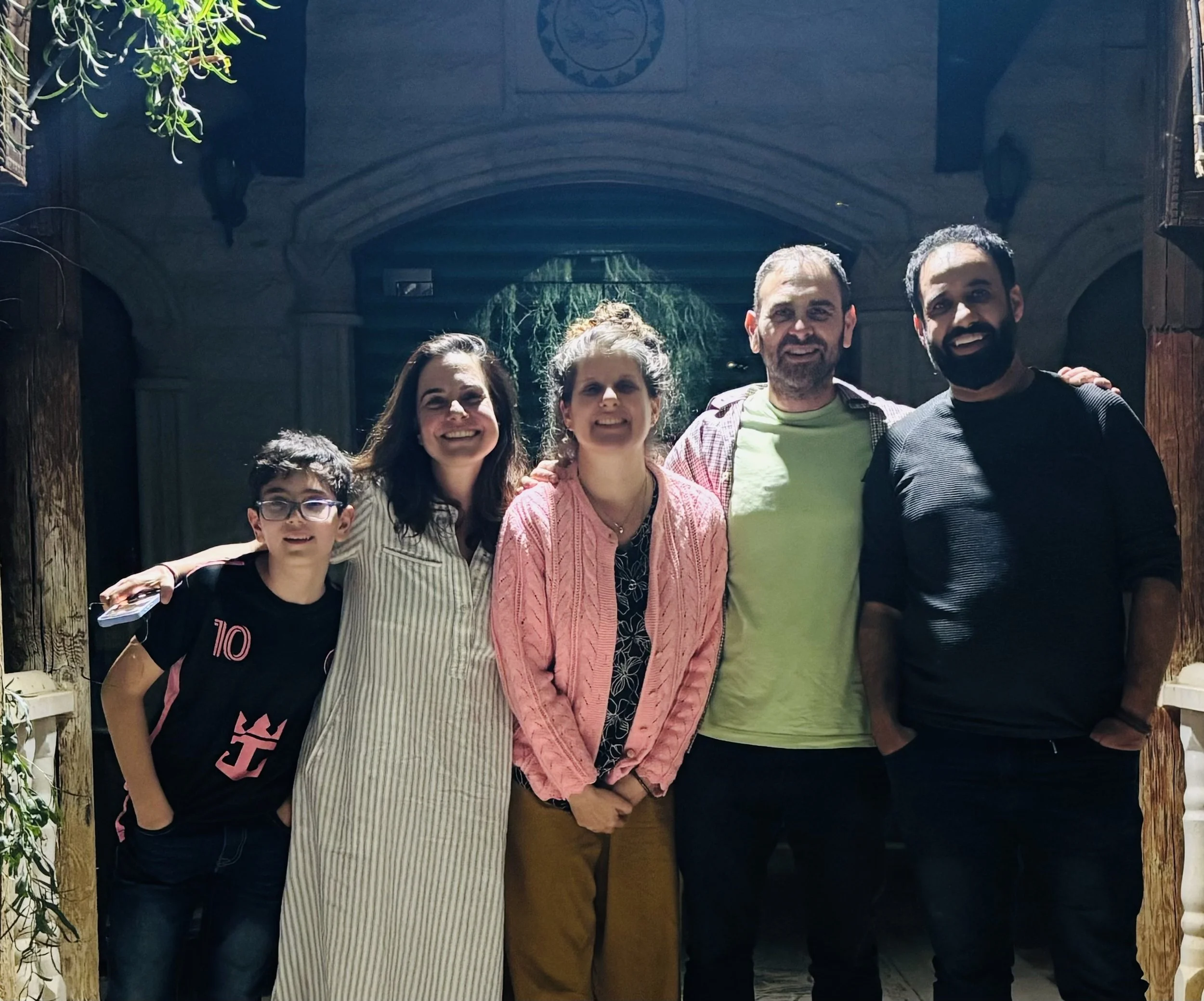
The Other Side of Anger
Ezzy, Erika, Racheli, me and Mousa
Dear friends,
We’re driving down through the Judean desert into the Jordan Valley. The rains were abundant this year, and the dusty hills are painted over with a delicate layer of green. We meet Mousa at a junction outside of Jericho. Mousa is a warm, smart, peace activist from the West Bank Village of Katana. A few hundred meters from Katana, inside the green line, sits the Jewish village of Nataf, where my childhood friend Racheli lives. A few months ago, Racheli joined a small but growing group of Israelis looking for ways to support families in Gaza through the winter. She called me asking if I would donate to Mousa‘s extended family, around 80 souls, who live in different parts of the Gaza Strip. Thanks to Maia and many of you, the Shul has so far raised $10,000 for the family. So it was exciting and important that we meet.
There are eight of us at this meeting outside an ancient Christian church by the Jordan River. Racheli and her son, Teobi, Mousa and his friend Nahla, two of my boys, Erika and me. The kids are playing soccer while the five of us sit down on a picnic table. We hear about Mousa’s family in Gaza, and their struggles. After losing many family members during the war, they were holding out okay thanks to the donations, but now, perhaps toward Ramadan, food has become scarcer, and danger abundant.
When we ask about the process of the money going into Gaza, he shares with us that his family was initially reluctant to receive money from Israelis. His mother didn’t like the idea, and neither did the others. Eventually, though, as Mousa explained more who these people donating are, and the goodwill on the part of the Israelis that he’s met in the peace movement, his family opened up to it. They also began hearing of other ventures bringing together Israelis and Palestinians that were starting to gain traction in Gaza. Soon they would stop trying to hide the fact that they’re receiving money from Israelis, and Jews around the world.
As Mousa shares with us how he’s seen people‘s attitudes change, some hope appears in his voice - not hope as some abstract concept, but as a simple reality of seeing how things change. He tells us that he thinks the most important age group we have to reach is the 16 to 18-year-olds, when Erika chimes in. She describes a long conversation she had the day before in the Jerusalem marketplace, or Shuk, with a 16-year-old settler. It began when he asked her for money to support Israeli soldiers and she said she’d rather support Gazans right now. At one point in their long conversation, after describing how he feared for his father when he fought in the war, he told her that he hadn’t contemplated the idea of having compassion for the people in Gaza. Erika could see this sweet young man opening up to different realities at that moment. And she describes the conversation as eye and heart opening for her as well.
“But is it the same conversation with a 16-year-old Israeli and a 16-year-old Palestinian?” I ask. “I don’t even understand how the two of you,” I turn to Nahla and Mousa, “are speaking to us without tremendous anger at what you’ve been through and what you go through every day. Mousa, a few minutes ago you told us that 12 close members of your family were killed in the war. Before that you shared how you held your cousin in your arms as he died from an IDF bullet. How can you sit here to have this conversation with us?”
Nahla and Mousa briefly look at each other. While I was speaking, I noticed Nahla put her hands together over her forehead in what seemed like prayer. Mousa tells us that Nahla has never spoken to an Israeli before. She was planning on staying in the car, she says. Up until this point, Nahla, a lovely young woman from Nablus wearing a black hijab, has been all smiles and warmth. If she was harboring resentment, we didn’t feel it, even after Racheli mentioned her military service. Now she becomes serious and admits her struggle.
“I’m a teacher in a high school in Ramallah,” she says. “Last week I took a risk, which I wasn’t at all sure of. I brought in a story about the coexistence group, Seeds of Peace, which brings together, young Israelis and Palestinians for a summer camp. I didn’t know how my students would react when I asked them to enact a short play in class about an Israeli and a Palestinian teenager meeting for the first time. I was surprised at how open my students were to the exercise.” The way she speaks about it gives me the sense that it was an experience that offered her a tiny sliver of hope.
Before we leave, Mousa invites us to Ramallah to break the fast of the first day of Ramadan together a few days later. “I’ll cook,” Nahla says. “No, please no,” Mousa laughs, “she’s a terrible cook!” We embrace and say goodbye.
On the way back to Jerusalem, I call another Palestinian activist friend from Jericho, who many of you know as well, because he spoke at our Yom Kippur service a year and a half ago. Then, Osama had been filled with reverence and goodwill, looking to bring some change and hope to his situation. Now, he can’t hide his anger and depression. “A week ago the army came in and killed my neighbor. Two weeks before that another one.” By “came in” he means the IDF entered Area A, the city of Jericho itself, which is supposed to be under Palestinian security control. “I’m debating between leaving for good or burying my head in the sand,” he says. “The peace industry has failed,” he says. “Even the children of my Israeli activist friends now serve in the army. What kind of progress is that?” When I ask him what we should do he admits he doesn’t know. “Think outside the box, something very different,” he offers.
That evening, as I carry the hope and despair from two different Palestinians, I find myself at another complex event: the big religious wedding of the daughter of another activist that many of you have met and listened to at the Shul, Rabbi Arik Ascherman. As you may remember, Rav Arik spends most his time in Palestinian villages under threat practicing protective presence. I’m used to seeing him act out his rabbinate in those types of situations. So when I got invited to see him oversee his daughter’s Chuppah I had to go.
The wedding is full of energy. Dozens of young religious men dance around the groom singing as he makes his way over to see his bride, herself surrounded by dozens of young religious women singing. Here and there you can spot some of the old guard of Jerusalem royalty, authors, rabbis and academics among the young, orthodox men, some with rifles hanging around their shoulders. And there is also a group of secular activists who have spent days and nights with Rav Arik in the villages. The father of the bride looks happier than I’ve ever seen him. Under the chuppah Rav Arik speaks of the many generations of family members who came before them who are present there with them, along with the Shechinah, the presence of God, which is always there at weddings.
The ceremony ends with the bride and groom again surrounded by happy hordes singing and dancing with immense power and joy. I find myself standing next to the partner of one of the secular activists. “How does Arik accept all of these religious Zionists so warmly,” she wonders. “Doesn’t it bother him?” “Arik,” I explain, “is an elevated being in that regard. He is somehow able to see the humanity in every person. He is able to do that even with the nastiest settlers who curse and yell and beat him up. So here, he is connecting to the beauty of these people, all the love and positivity that is streaming through them tonight.”
As I write this down now, this Friday afternoon before Shabbat comes in, I can see the connection between the question she asked me and the question about anger I asked Mousa and Nahla. Some people are sometimes able to maintain the presence of mind to take in the multi dimensional reality of the people in front of their eyes, even as they work through their harsh criticism and rage at what they are doing. And most people most of the time fall prey to the often justified feelings of victimization and rage, and allow those feelings to turn the living human beings in front of them into faceless, flat expressions of right or wrong. Don’t get me wrong: I’m not judging. God gave us those feelings for a reason. But perhaps part of that reason is to challenge us to see through them into the other side of anger, where there is abundant peace and endless space.
Two days after that wedding, Erika and my father went down to sit in protective presence with the families of a village that had been attacked by settlers the night before. They watched another village pack up and leave, succumbing to the devastatingly successful ethnic cleansing campaign in Area C of the West Bank. Rav Arik was there after they left and was arrested by Israeli security forces as he tried to protect another family from an attack. By now he’s back in Jerusalem with his family. I hope he’ll take a shabbat off of this holy work, and enjoy Shabbat with his now married daughter and son-in-law.
There are huge amounts of gorgeous wildflowers all over the Jerusalem Hills. We have been marveling at them all week long. Through the difficulty and Israel’s shattered reality, God seems to be whispering to us: see through the horror to the beauty sprouting everywhere beyond it. At least on Shabbat, if not the rest of the week.
Shabbat shalom,
Rabbi Misha

Winter Birthday
Dear friends,
I hope to see you this evening for a kabbalistic, musical, fruit and wine and grape juice filled multi-generational, moon celebration Shabbat-Tu Bishvat Seder.
Shabbat shalom,
Rabbi Misha
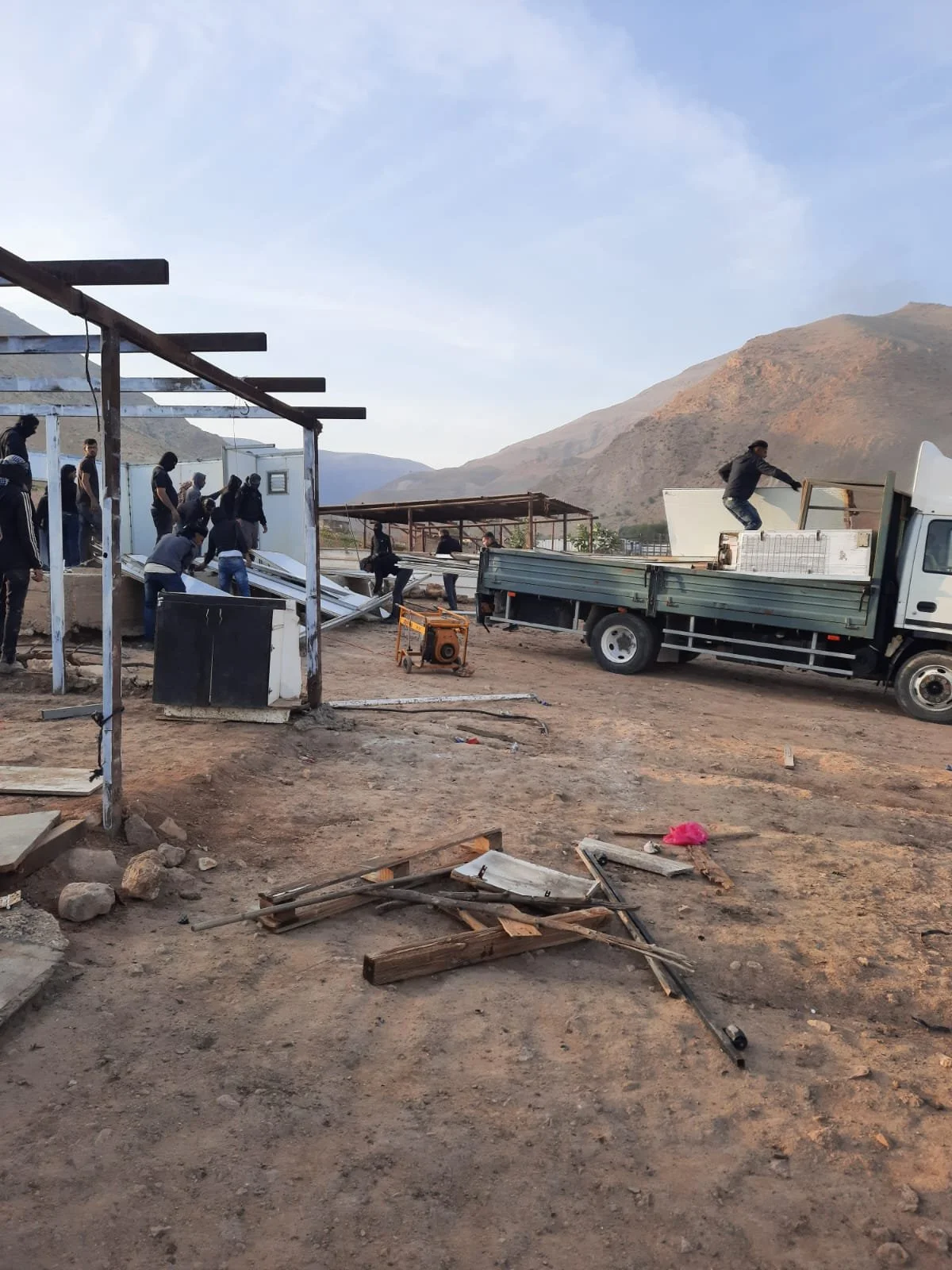
Forced Expulsion and Solidarity
Residents of Ras El Ayn puling apart their homes last week
Dear friends,
This summer I wrote to you about my visit to the Palestinian village of Ras al-Ain, in the Jordan Valley where I spent the night practicing protective presence. That village is now empty. This week the final residents of the village left after an intensification of the terror inflicted upon them by the Jewish settlers in the last weeks. Needless to say, no protection was offered to them by the army or the police. Occasionally they would come and arrest the villagers being violently attacked or the activists trying to stop the settlers from attacking them.
Naif, one of the leaders of Ras al-Ain / Al Auja wrote a note this week to my father and the rest of the activists who spent days and nights trying to keep them on their land:
"On my behalf and on behalf of all the residents of Ras al-Ain, I thank you for your efforts to protect our homes for two full years. I write these words after having suffered the injustice and oppression that have befallen Ras al-Ain. I feel pain and sorrow over what has happened there. You were the best people who stood with us in our time of need. You are the dearest friends to our hearts."
My father, who’s spent nights there on a weekly basis for two years, is heartbroken. After weeks of trying to come up with a plan, someone, anyone who might be able to shift the tide there, he succumbed as the villagers left to find a new place to live in Area A in the outskirts of Jericho. There, they received a cold welcome from the PA, who is weary of taking in Palestinians from Area C. They know well that the plan of the Israeli right involves moving all Area C residents into the cities and closing them into what one activist called reservations, using American terminology.
My mother and father went to Ras El Ayn last week to be with one of the families as they packed up their home of 60 years, broke down the house and burned whatever they couldn’t take with them. While they were there, Tzvi Sukkot, a settler and member of the government showed up with a caravan of cars to celebrate the successful erasure of the village.
The following day a moving letter was sent to the Jewish activists who have been there for years supporting the villagers. It reads like a letter of sad defeat. I’d like to ask you, though to read it not only through the eyes of brokenness, but to try to take seriously what the writer is saying. There is a real message there about one of the purposes of solidarity.
"As a Palestinian activist, I would like to express my deep and sincere gratitude to all institutions and organizations that stood alongside the families of Al-Auja during the forced displacement they endured. At a moment when these families were facing immense pressure, loss, and uncertainty, your presence and support were not only essential, but deeply meaningful.
Your efforts, whether through humanitarian assistance, legal support, documentation, or advocacy helped affirm that these families were not alone and that their suffering was seen and acknowledged. Such solidarity represents a powerful stand for human dignity, justice, and the right of Palestinians to remain on their land.
I extend my appreciation to everyone who chose to stand with the people of Al-Auja. Your commitment and courage send a clear message that forced displacement will not go unnoticed, and that collective action can make a real difference in the lives of those affected."
We don’t always win the political fights we engage in. But the right fight is itself a worthy endeavor, one that is full of purpose, goodness and holiness. I have little doubt that those of us fighting for humanity in Palestine and elsewhere, and not for some fantasy or idea are planting seeds that will one day sprout into new beginnings. What these expelled Palestinians are saying through their pain is that thanks to these committed activists, they witnessed true brotherhood and solidarity with Jewish Israelis who were there for them. For those who witnessed it, that will never go away. Such a lived memory continues to act and inspire from the Jordan Valley to Minnesota and beyond.
May those forced to wander find safety and home. May those stealing their lands return from their wickedness. May the Jewish people remember who they are before God reminds them with disaster. And may solidarity and fraternity spread far and wide and reclaim our hearts, and the hearts of all people.
Shabbat shalom,
Rabbi Misha
Don't Remember, Rest.
Tal Mashiach will be our musical guest this evening. https://youtu.be/f7QTRChIl1g?si=muEvEepDNls7_dWa
Dear friends,
In 1967 The psychoanalyst Wilfred Bion wrote a short paper that rocked the psychology world, and continues to confound and inspire therapists today. “Memory is always misleading as a record of fact,” he opens, “since it is distorted by the influence of unconscious forces.” He goes on to write that a therapist “must cultivate a watchful avoidance of memory.”
“The purest form of listening,” Bion said, “is to listen without memory or desire.”
When I heard this formulation from Susan B. this week, it struck me as a lofty ideal for everyday behavior. “Goals,” I noted.
Memory is one type of alertness, which prevents other forms from surfacing. “An analyst needs to be able to listen not only to the words, but also to the music,” Bion is known to have said. The type of thinking that cerebral remembering offers is a form of being present which is absent to much of the experience in front of you.
I am most familiar with the attempt to avoid remembering from meditation. As I have been taught to practice, any thoughts, including memories that come during meditation are best treated as objects of observation, since they are a distraction from the simpler reality of sitting in silence. Working the muscle of your mind toward memory or thinking of any kind takes you away from the moment, rather than allowing you to rest in what is.
Acting is similar. It’s when the words and blocking are no longer a mental effort that the true intuitive sparks emerge from the actor. One of the most powerful moments I’ve ever had on stage was when in front of a full Off Broadway house I completely blanked on my lines in the middle of a monologue. For what felt like two minutes but was in fact five seconds I was completely panicked, and deeply present. The words then rolled out of my throat like a wave.
Both meditation and acting, and many other dream-like experiences, can sometimes seep into your “waking life” and help you live with less attachment to your brain. These days, that can be a real gift.
Our Parasha this week, Bo, seems to be obsessed with remembering. We have to remember the exodus from Egypt every single day, and go all out on memory each Passover, we are told. But there are hints toward a different kind of remembering scattered through it like breadcrumbs leading the lost children that we are home from the woods.
וּשְׁמַרְתֶּם֮ אֶת־הַמַּצּוֹת֒ כִּ֗י בְּעֶ֙צֶם֙ הַיּ֣וֹם הַזֶּ֔ה הוֹצֵ֥אתִי אֶת־צִבְאוֹתֵיכֶ֖ם מֵאֶ֣רֶץ מִצְרָ֑יִם וּשְׁמַרְתֶּ֞ם אֶת־הַיּ֥וֹם הַזֶּ֛ה לְדֹרֹתֵיכֶ֖ם חֻקַּ֥ת עוֹלָֽם׃
"You shall observe the [Feast of] Unleavened Bread, for on this very day I brought your ranks out of the land of Egypt; you shall observethis day throughout the ages as an institution for all time."
The phrase “be’etzem hayom hazeh,” “on this very day,” or more literally “in the bone, or essence of this day” whispers to us that the liberation is none other than the one possible right now. How shall we remember the exodus? By remembering to forget everything other than what is here right now.
This evening we will try to summon that liberation with the aid of Tal Mashiach’s music. Tal is an incredibly talented guitar and bass player, and a good friend, and is just the right person to keep us warm this evening.
Kabbalat Shabbat will start at 6:30, and if you can make it by 6pm Michael, Daphna and me will be leading a study and singing of one of our central Shabbat piyyutim. I hope you can join us.
Shabbat shalom,
Rabbi Misha
Jazz to Heal the World
Tonight's musicians for Jazz Shabbat:
Hill Greene, Anthony Coleman, Dana Herz, Arnan Raz,
Frank London and Reggie Nicholson
Dear friends,
“I know that there are bad forces,” said John Coltrane. “I know that there are forces out here that bring suffering to others and misery to the world. But I want to be the opposite force. I want to be the force which is truly for good.’
Yesterday I asked several people how they are, and each of them went right into the state of the world. I stopped them and said “not outside, inside.” Everyone I speak to seems consumed with dread over the state of the world. While completely understandable, and I certainly am not free from it, this is a dangerous phenomenon because it has the capacity not only to lead us to miss out on the good things in our lives, but also to perpetuate and even strengthen the bad things we see happening in the world.
The great American musicians who gave us Jazz music and its evolutions lived through far harder political circumstances than ours. Many of them were Black and lived through the era of segregation. Some were Black Women who lived before or during the Second Wave of Feminism. These musical giants kept playing and innovating through financial collapses, depression, world wars, McCarthyism, drug epidemics and every imaginable social and political ill that we experience today.
The strengthening, illuminating, invigorating power of music as a mode of experimentation and communication has always been the heartbeat of imaginative resistance. We need joy, beauty and self-expression especially in times of anxiety and fear.
Moses tells the Children of Israel in this week’s Parashah that their liberation is at hand, but they are so caught up in their anxiety that they do not hear him. “They could did not hear Moses for anguish of spirit, and for hard labor.” Rashi explains “anguish of spirit,” (קוצר רוח) which literally in the Hebrew means ״shortness of breath״ like this:
“If one is in anguish his breath comes in short gasps and he cannot draw long breaths.”
Our anxiety and anguish leads us to shortness of spirit. We can’t breathe properly when we get consumed by our fears. Music is a way out, and the fun-loving, curious-about-sound, exploratory and open mode of improvisation present in Jazz is an especially good reminder of where we are and who we are.
That’s why we’re meeting tonight at the National Jazz Museum in Harlem for the funnest night of the year at The New Shul, our annual Jazz Shabbat. Our inimitable Frank London will be leading the band of musicians of the highest caliber in the Jazz world. On this MLK weekend, we’ll be looking for the liberation that emerges from coming together around the truly spiritual sounds of Shabbat Jazz.
“There is never any end,” Coltrane said. “There are always new sounds to imagine; new feelings to get at. And always, there is the need to keep purifying these feelings and sounds so that we can really see what we've discovered in its pure state. So that we can see more and more clearly what we are. In that way, we can give to those who listen the essence, the best of what we are. But to do that at each stage, we have to keep on cleaning the mirror.”
I hope to see you tonight!
Shabbat shalom,
Rabbi Misha
Defining Antisemitism
Dear friends,
Ten years ago, one of my commanding officers from the army, General Yair Golan, at the time IDF Deputy Chief of Staff, gave a speech on Holocaust Remembrance Day. After mentioning his parents’ experience as survivors, he went on to say that it troubles him to recognize in Israeli society trends reminiscent of 1930’s Germany. According to the IHRA definition of antisemitism, adopted by the US government and rejected this week by the Mamdani administration, he could easily be labeled as an antisemite. This is, in fact not far from what happened to General Golan, who received vile attacks by the right, was swiftly passed by to lead the IDF and sent into retirement by the Netanyahu government (today he is the head of the Democrats, a left-wing Zionist party in Israel).
As you probably know, the hot debate around the definition of antisemitism came into the headlines early this week when the new mayor discontinued Mayor Adams’ order adopting the IHRA definition of antisemitism. Most people I’ve spoken to have never heard of the other working definition, known as the Jerusalem Declaration on Antisemitism, so they assume that Mamdani simply undid the city’s efforts to combat antisemitism. There are arguments for and against what the mayor did, but it's important to understand that this is a debate that goes back many years, and certainly one that goes to the heart of what it means to be a Jew in the 21st century.
I encourage you to take a look at both definitions. The best way to come to a conclusion about them is through a close examination of the language. It is quite rare to find a person who has actually taken the time to study both. It’s worth it. This isn’t something we can really afford to get wrong, because of that sense that so many of us share that this is one of the most precarious moments for our people in decades.
When you look at the definitions, you’ll see that there is a lot of overlap. The differences revolve around the relationship between antisemitism, Zionism and criticism of the Israeli government. The Jerusalem Declaration, which came in response to IHRA, adds two sections devoted specifically to Israel/Palestine. One gives examples of what can be considered antisemitic, and the other examples of what should not on their own be considered antisemitic.
My father, who as you likely know is a well known Israeli peace activist, is one of the signatories of the Jerusalem Declaration. When I asked him why he signed it, he quickly brought it to that particular clarification around antisemitism in the context of Israel. He signed, he said,
“because it is very clear, especially when it comes to criticism of Israel. The whole point of it was to clarify that it is not antisemitic to dissent from Israeli actions and policies, to oppose such actions and policies, to resist them, and to denounce them. In some places in the world, including America, but most markedly in Germany, you can't criticize Israel without being tagged as antisemitic.”
He doesn’t think that IHRA is a terrible definition. However, its lack of clarity on whether positions such as: “opposing Zionism,” “arguing for full equality for Palestinians,” boycotting Israel or advocating for solutions other than a Jewish state - are or are not antisemitic in and of themselves, leave it vulnerable to becoming a tool in the hands of the right wing government of Israel and its allies. When the Jerusalem Declaration posits that “It is not antisemitic to point out systematic racial discrimination,” for example, that provides free speech protection for those both in Israel and abroad working to undo or reduce what they perceive to be Israel’s systemic racism. IHRA leaves that question vaguer and doesn’t offer an avenue for exploring systemic racism in the Israeli context. It only says that “Denying the Jewish people their right to self-determination, e.g., by claiming that the existence of a State of Israel is a racist endeavor” is antisemitic.
My father and the rest of the signatories to the Jerusalem Declaration are far from blind to the antisemitism too prevalent on the left. The clarifications they sought to provide are an attempt to address that problem as well.
“Mostly due to Israel's own horrible acts, extreme left groups all over the world are slipping into, or even rushing into, antisemitic statements,” he wrote. " If one could hold fast to the distinction between disgust at Israeli policies and an awareness of the wider and deeper world of Judaism, we would have an answer to those groups.”
From the perspective of the Israeli left, criticism of Israel is crucial for the survival of the Jews living in Israel and the values upon which the country was founded. Many of them are concerned that IHRA’s lack of clarity prevents such criticism. “In the IHRA definition,” my father writes, “there is a global and all-embracing assertion that fudges the Israel question just when we most need the Israel distinction, when the government of the state desecrates the very values that are the state's raison d'etre.”
You can maybe see where my heart lies on the question of these dueling definitions. I land in my father's camp. It is a question of free speech, and of how each definition plays or doesn’t play into the hands of governments I do not trust.
I know that some of you will look at both definitions and disagree with me. This is what the rabbis call “a disagreement for the sake of heaven,” meaning an important argument. I welcome your thoughts and responses, and hope that the conversations we have, and those you have with others bring greater clarity to the crucial question of combating antisemitism, and its relation to all other forms of hate.
Shabbat shalom,
Rabbi Misha
Maybe
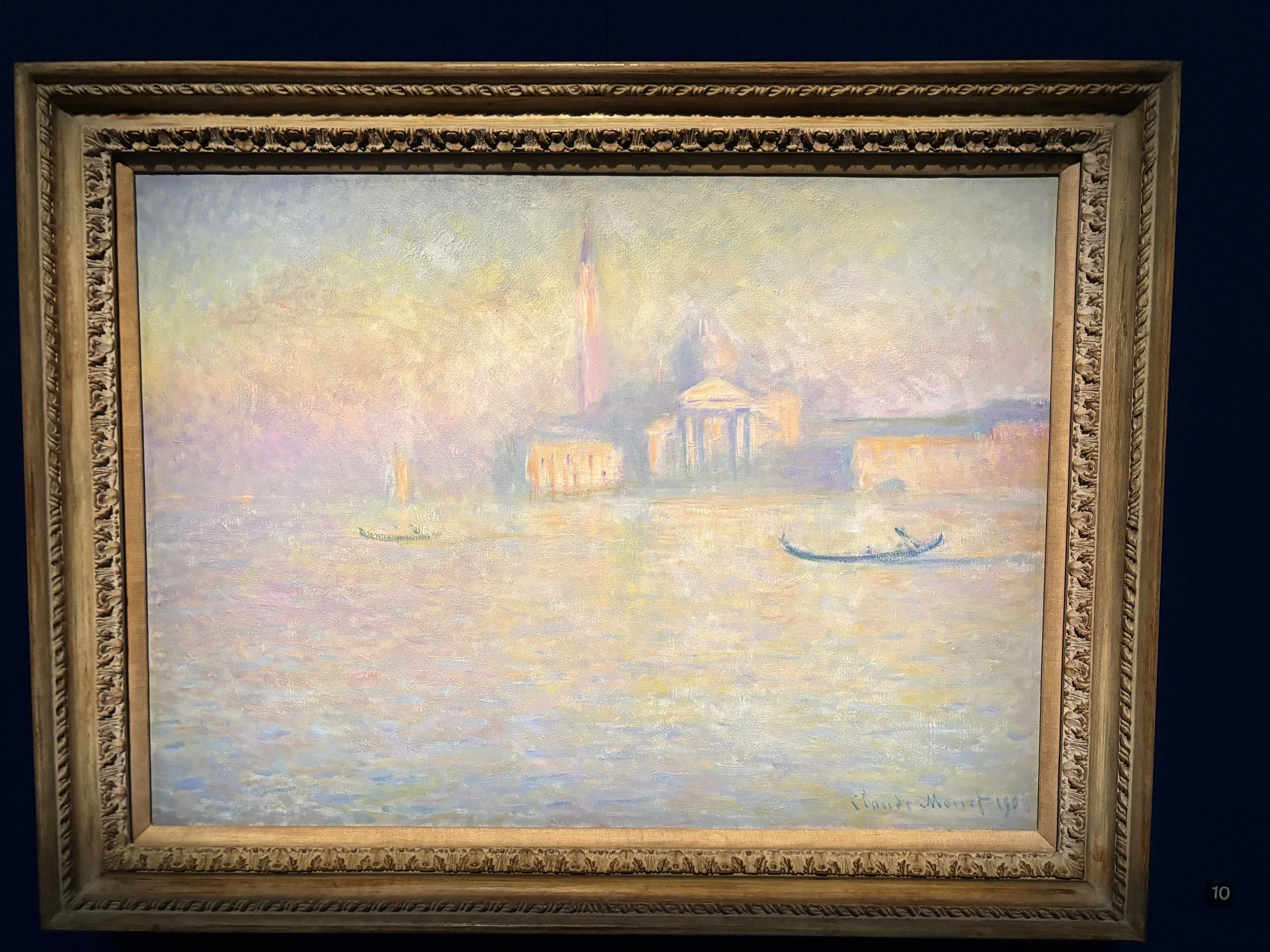
Please go see Monet at the Brooklyn Museum
Dear friends,
Maybe, just maybe, all is precisely as it is supposed to be.
Maybe a greater intellect is at work than any of us can imagine, that accepts time as a continuum longer than the life of a person or a nation or a planet.
Maybe we are being invited to see both what’s missing and what’s present.
Maybe we’re being challenged to bring our best into it all of it against everything this world tells us.
Maybe we’re up for the task.
Maybe we don’t have to look back at 2025 and see darkness.
Maybe we know there was an abundance of light by the way that we struggled against all that our guts felt was wrong, unfair, cruel, mean and false.
Maybe it really is a blessing to live in interesting times.
Maybe this very life that we are living this very day in this very place is an incredible gift that only us who are alive today get to receive, with all of its sadness and difficulty and weirdness and pain and all of its pleasures and surprises and beauty and joy.
Maybe God was wrong when God said that human instincts are evil all the time from childhood on, and actually the vast majority of our instincts are toward helping, and smiling and caring like we do whenever we see a stranger in need and feel first the desire to help and only after it fear and guilt and calculations of the panicking mind at war with itself.
Maybe God knows all of that, and even said the opposite a hundred times like when God called each neshamah a candle of God.
Maybe the world is a mirror and the reason it looks so bad is because we struggle to see ourselves as beautiful candles of divinity, or beautiful sparks of light or beautiful anything.
Maybe we can admit for a moment that we are beautiful, each one of us reading these words, and so is the world reflecting us to ourselves, and so are our lives, and so was this past year with its 365 sunrises and sunsets and moonrises and moonsets and infinite movement and unending flow.
Maybe that flow is love.
And maybe 2026 will be just as beautiful inside and out and outside and in.
Maybe we will be able to stay connected to that flow, to remember it and to see it and feel it and live it and pass it around to those we love easily and even to those we have a more difficult time loving.
Or maybe, just maybe this year will be even better than the one that ends tonight.
Before I sign off, I’d like to take this opportunity to thank you for reading my words this year when you were able to. It is a strange and intimate thing, to communicate with you all in this way, and I cherish it, as well as the lovely responses some of you send me on occasion.
As you know, our Shul doesn’t live on spirit alone, so if you’ve enjoyed my words this past year and are inclined to lend a shekkeling hand you are especially welcome to support us with a donation HERE.
Happy new year, with love,
Rabbi Misha
Jabra's Boots
Dear friends,
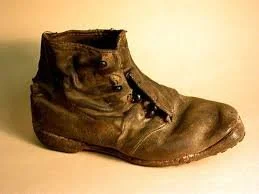
I had been arguing with my boys all week about Christmas. They said it’s not a religious holiday and “nobody treats it that way,” while I insisted that to many Christians the holiday's religious roots are alive and well, and are the opposite of the capitalist frenzy it often evokes in the US. And then, yesterday morning I happened upon a beautiful little Christmas story, which captured something of that anticapitalist essence I was trying to express to my boys. I found it in the lovely autobiography of Jabra Ibrahim Jabra, a Palestinian Christian from Bethlehem called The First Well.
Shoes were a luxury for Jabra, who grew up poor in the 1920’s. In an earlier episode we read about how his father took a tire, cut a sole out of it and made it into a pair of shoes for his son. And then, the week before Christmas, the priest at the local church gives Jabra a gift – a brand-new pair of boots. He runs home ecstatic to show his parents, and they rejoice with him. Lying in bed at night, he realizes he hasn’t tried them on for size. So he sneaks out of bed while everyone is asleep and tests one of the boots on. It’s a perfect fit. In the morning, however, his mother informs him that they have no money for the Christmas meal. They had been fasting, with no meat or eggs for 25 days, and needed to have a Christmas feast. So they’re going to sell the new boots for fifteen grush and take little Jabra to Jerusalem, where they can find used shoes for two grush in the Jewish quarter. Devastated Jabra returns from the trip to Jerusalem with his mother, and “takes off his shoes like you would take off handcuffs.”
Here is Jabra’s description of the holiday that year:
Even though we were up late, on Christmas Eve we couldn’t sleep more than three or four hours, anxiously awaiting the break of dawn. My mother woke up the family, lit the lamp and said “can’t you hear the angel’s bell?” This was the bell that would ring from the copula of the Church of the Nativity, filling the night air and announcing the final stretch of the night.
With no hesitation, my brother Yusuf, my father and I stepped out of bed and got dressed. My mom put two coats on me one ontop of the other, and we went out into the darkness, rubbing our hands together from the cold as we marched swiftly towards the Church of the Nativity. The square in front of the church was shining under the drizzling rain. The light from the few electrical lights around the square was ricocheting off of its long tiles. The halwa sellers were standing at the sides of the Piazza, shielding themselves from the rain by the large stone walls. The grilled meat sellers were fanning the coals, which colored their faces in red as they loudly invited people to buy their food. The chestnut sellers were tending their fires too, keeping the coals that heated them and their precious chestnuts hot. Old men were carrying around enormous jugs, the height of a person, at the bottom of which were burning coals, and they kept yelling, “Hot Sahlab! Hot Sahlab!” There was never ending movement coming from every direction, as if none of these people had slept that entire night.
We entered through the low, narrow stone gate into the wide church, with its high, high ceilings. It was dark inside, despite the hundreds of colorful oil lamps, whose thin flames were dancing lake stars between the large marble columns. Candles were burning in the center of the hall. Around them, thousands of pilgrims crowded together, while the choir sang Byzantine Psalms in loud voices, which blended with the bells ringing over the roof of the basilica.
We met many friends, who like us had come to participate in the post-midnight mass. We joined the tight crowd of men, women and children walking down the smooth marble stairs into the cave in which the Messiah was born. The cave was engulfed in clouds of incense and candle smoke, and was warm from the breath of all the praying people. A priest was reading the story of the nativity from the New Testament in a voice cracked with age. He read it as though it were his first time: he described the shepherds who wished to warm themselves and their flocks that night, while the snow covered the hilly grazing fields. Behold! In front of their eyes suddenly appeared the entire army of the heavens, lighting up the sky with moonbeams, announcing the birth of their savior in Bethlehem while the angels sang over and over again: “Glory to God above, peace upon the Earth, and to the people good will!”
As we walked away from the church, and the echoes of the Psalms blended with the softening ringing of the bells, the rising sun seemed to be battling the clouds at the edge of the blue horizon. I watched it with deep pleasure, imagining the choirs of angels filling the universe with song and good tidings, as though at last I actually saw them with my own eyes.
At home, I found my mother and grandmother preparing the holiday dishes. The big pot over the fire was steaming. The room was full of the smell of the meat that my mother had bought with the money that was left over from selling my beautiful boots, the boots which my heart had forgotten in the flurry of the holiday and its melodies.
Everyone delighted in the delicacies we ate that morning, concluding the grueling 25-day fast. After we ate, as my mom pulled the “tablecloth” off the floor and began to fold it up, my father leaned back on a pillow and said: “I wish, Miriam, that you hadn’t sold those boots. We took them away from him, and now it’s the holiday.”
“What has passed is passed,” my mother answered. “May God help you, and in the future we will buy him one thousand pairs of boots!”
For years later, when Christmas would come, I would remember those boots that I never got to wear – but quickly they would again be forgotten from my heart in the noise and gladness of the holiday – or in the merciless, heavy sadness that the holidays brought with them in other years.
Shabbat shalom and happy holidays,
Rabbi Misha
PS. If you haven't already, please join Maia's campaign to support the Khitawi family in Gaza through the winter.
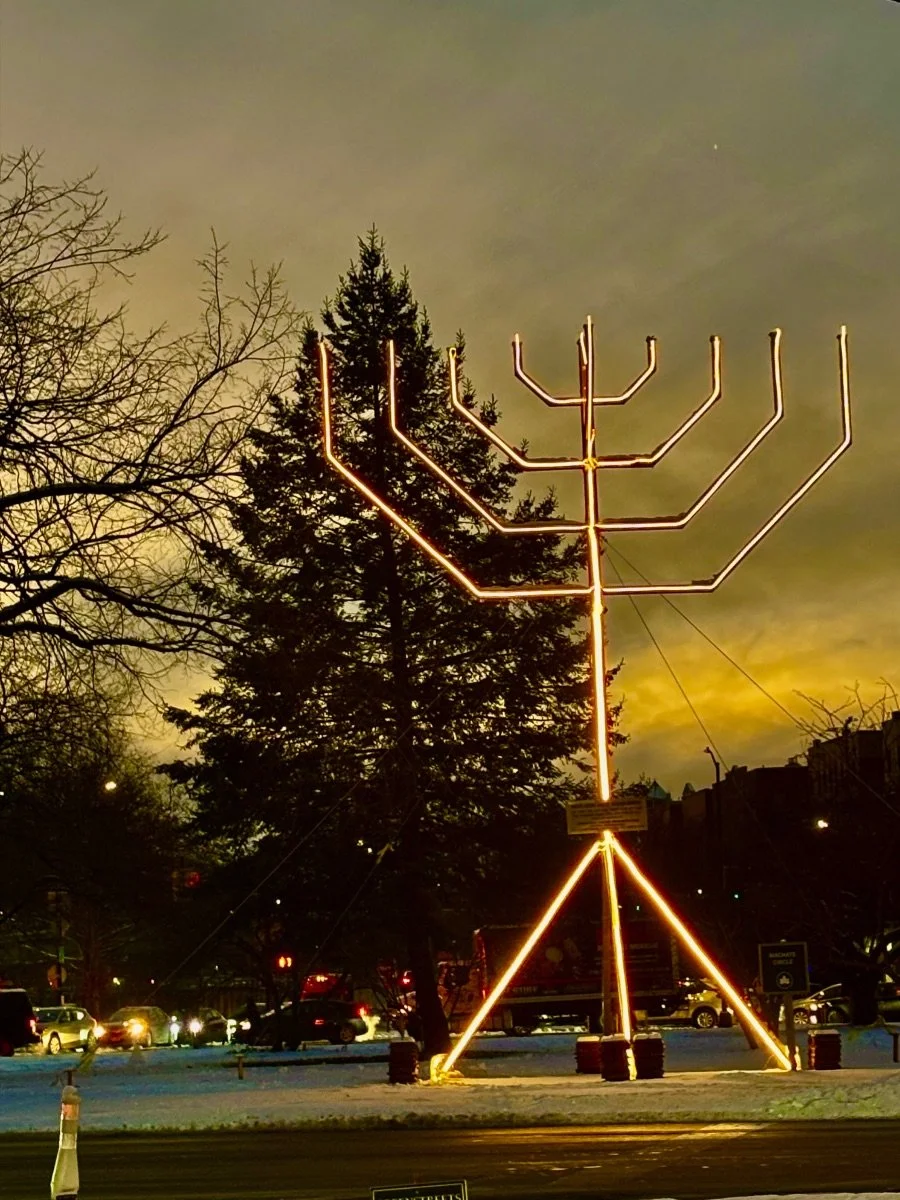
Hanukkah as Internal Civil War
The world's second largest Hanukkiah by Prospect Park
Dear friends,
"Here we find the historical miracle that Hanukkah implicitly celebrates," wrote Rabbi Jim Ponet twenty years ago. "the capacity to sustain intimate relations with another without totally ceding your own sense of self, the ability to love without permanently merging, to be enchanted by the exquisite beauty of another without losing sight of your own charms. This relational art is ritualized on Hanukkah by the lighting of separate wicks or candles that build daily toward a unison of illumination."
I find myself once again this winter holiday season contemplating the miraculous, searching for the nature of miracles, reaching for that mental state in which one can know they are miraculously blessed. And struggling to find it.
There are those moments in which it's there, like when I'm lighting candles with my four favorite people who I get to live with. Then I can sense Rabbi Jim's "love without merging." I can feel both the part of me remaining in myself and observing, and the part of me departing the self and moving out toward my loved ones.
But that blessed moment in which I am blessed with redemption passes, and then it's winter again, and I am again in the world of this 21st century, where miraculous gift-givers like Rob Reiner, and Rabbi Eli Schlanger z"l suffer a violent end.
At my minyan this morning we were just reaching the climax of the Hallel, the psalms of praise spoken on holidays, which peak with the verse:
מאת ה' היתה זאת, והיא נפלאת בעינינו
This all came from YHVH and it is miraculous in our eyes.
That blessed sense of redemption had just begun to sink in, when one of the daveners broke into a sob. Sometimes redemption does that. The broken heart can be the clearest sign of being alive - because it encompasses both aspects of the internal civil war: love and fear, wholeness and fragmentation, goodness and ego.
Rabbi Jim's piece in Slate twenty years ago is entitled Hanukkah as Jewish Civil War. It encompasses the worldly, realistic part of the holiday, which feels so comforting to name. But without searching for miracles, without attempting to "eat light," as Rabbi Jim describes latkes, this Hanukkah wouldn't be complete. In order to experience Hanukkah as internal civil war we need both the world and the eternal light.
So I offer you two holiday foods to chew on. For Sufganiyot in the form of worldly thoughts I invite you to listen to Rabbi Jim's brilliant little Hanukkah interview on WNYC from Jerusalem in 2001.
And for latkes in the form of experiencing the joy of the miraculous I invite you to join us this evening for SHABANNUKAH in Fort Greene, Brooklyn. It will, no doubt be a miraculous moment of peace and joy in the midst of our quite realistic lives. We're going to start the service promptly at 6:30 with candle lighting so please come a few minutes early.
Shabbat shalom and happy 6th night of Hanukkah,
Rabbi Misha
Sydney
Dear friends,
One of the many sad aspects of the horrific terror attack in Sydney was that it wasn't all that surprising. Instead, my first thoughts were about who did it. Was it a White Supremacist? A Muslim? A random act of violence like we saw the day before it at Brown? All kinds of options would make sense.
If this tragedy was a sign from above - and it’s hard not to view it that way when it comes on the first night of a holiday that celebrates surviving an attempted genocide - then it is signaling a few things.
First, all kinds of people of different faiths, backgrounds and politics hate us right now. If we didn't know it already, we are in a deeply precarious moment for our people. The genie is out of the lamp and takes on many forms. We have to be extremely vigilant about protecting ourselves.
The second sign has to do with the way in which we protect ourselves. A great hero of this tragedy was 43 year-old Ahmed El-Ahmed, may he heal and return to full health. It was a Muslim and his son who committed the murders, and it was another Muslim who risked his life and saved many Jewish lives. The fruit seller who snuck up on the shooter and disarmed him, and then took two bullets from the second shooter, appeared as if to tell us that just like we Jews are a diverse group, so are Muslims, and so is every other people. Our vigilance to protect ourselves can never include any trace of the same bigotry that drove the murderers to commit their heinous crimes. The test of our time is whether we can maintain our clear view of humanity even when we are under attack.
Hanukkah is about seeing the eternal light that was temporarily blocked from our view. We often see darkness where there is also light. We are not alone. We have literally billions of allies. So many more allies than foes. That should be clear from the overwhelming response to this attack all over the world. Among the many clear condemnations I read posts by Palestinians in Gaza who were horrified that the day on which they marked the death of their loved ones one year ago in an IDF bombing was the day on which all these innocent Jews were shot in Australia. People of all types and creeds are our allies in humanity. This is the light that we must kindle again this evening, and tomorrow and each evening until Sunday: the light that allows us to see who else is in the room with us. We may see the haters first. But as the light increases, more and more lovers come into view. And in that light we might also see ourselves.
Let us look at the candles and see things as they are. And let us remain true to who we are.
Finally, this tragedy tempts us to succumb to fear and sadness and not celebrate our holiday. We should remember that it took place on the first night of the holiday of resistance. The Macabees did not face an attempt to physically annihilate them, but to spiritually extinguish the flame. This holiday is about celebrating the holiday no matter what else may be happening, about continuing our traditions in the face of danger and bigotry. So let us light the candles these next seven nights as a way of re-dedicating ourselves to our age old tradition and the light it brings into our lives. Let us reconnect with its essential message of living in harmony with all of God's creatures, and fighting for the eternal light to shine.
May the wounded heal. May the mourners find comfort. May the souls we lost find rest, and their memories be a blessing.
If any of you are startled and would like to speak with me, please don't hesitate to reach out.
With wishes for a peaceful and happy Hanukkah,
Rabbi Misha
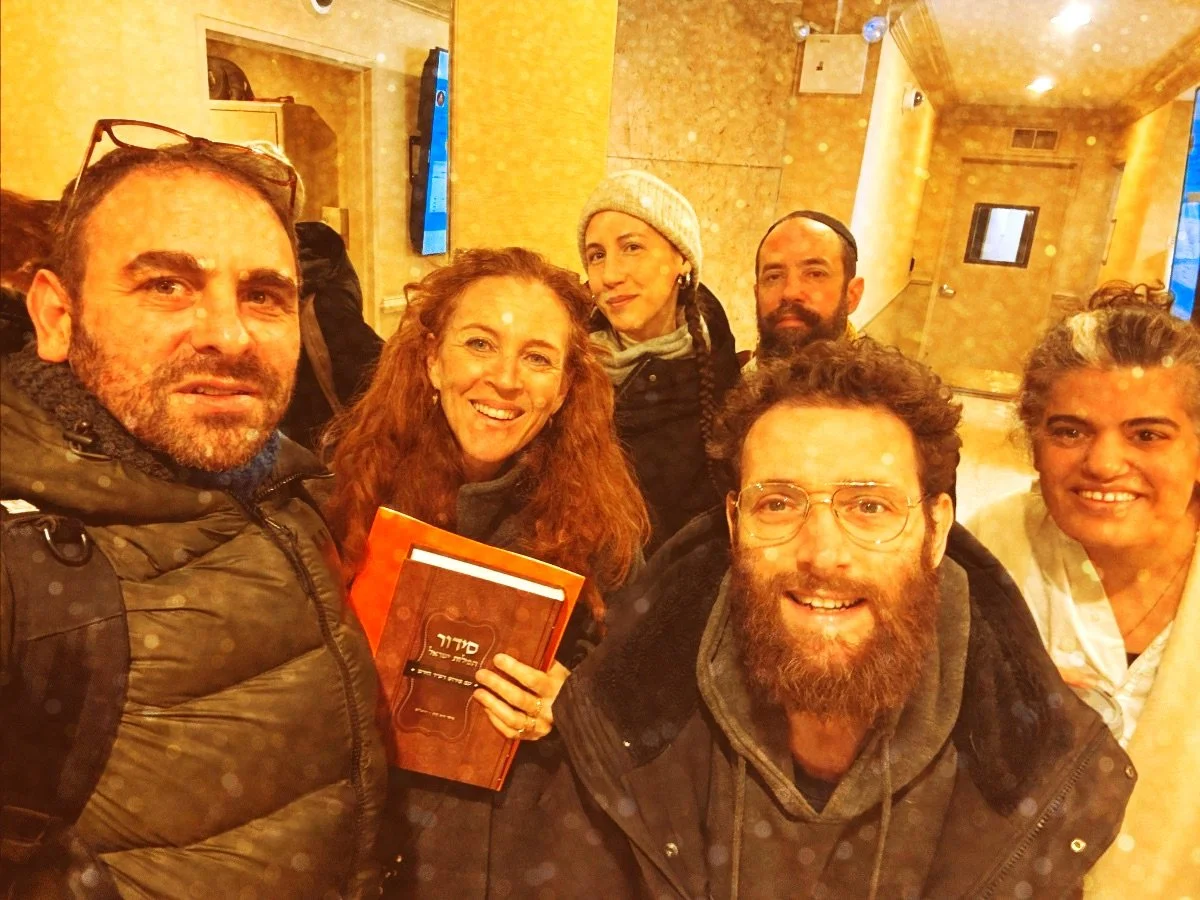
Gathering the Exiles
Naama, Arnan, Yoni, Dana, Daphna and Misha glowing after the first meeting of Kibbutz NYC last week
Dear friends,
We started something different and amazing last week. In English we call it Kibbutz NYC, and in Hebrew Kibbutz Golim, meaning the gathering of exiles.
It’s true, we are all in exile. Even Jews living in Israel feel in exile much of the time. But the exiles we are gathering into the Kibbutz are Israelis living here in New York. Fifteen years ago, I opened the School for Creative Judaism, a different type of Hebrew school where (almost) all the teachers are Israeli artists living in New York. One of the greatest aspects of the work has been seeing the changes that teaching Judaism has brought to these teachers.
It follows a similar pattern. Like I needed a gig to support my theater career in my twenties, these mostly secular Israelis needed some way to make money. So they call me up. They don’t have much of an interest in Judaism initially, coming from a place where the faith is controlled by the orthodox and ultra-orthodox, who at times impose their religious observance on everybody else. But they’re curious, creative people, and as soon as they start teaching they begin to open up to the beauty of the tradition. Exile invites them home to the faith world of their ancestors.
It’s always amazing to me to watch the icy walls of self-preservation and doubt melt, to see them begin to ask questions about Torah, to witness them developing a new relationship with prayer.
Our teachers' meetings, in which we study together, have long been a source of growth and fun for all of us. Last year, in the midst of war back home and its terrible echoes here, some of the teachers asked for more. We all wanted to ease our sense of exile by hanging out with fellow Israelis, studying in our mother tongue, connecting our artistic practice to our learning and sharing it all with our local community.
So, we brought us exiles together into this new Kibbutz.
Twice a month we meet to eat breakfast and study. Then each member creates two things out of what we’ve learned: art in whatever their medium of practice, and lesson plans for our students. Finally, they come with their art, knowledge and presence to our Shabbat and holiday services at the Shul, where they can share it all with the community.
This year, thanks to a generous donation from the Kaufelt family, Kibbutz members will write music and produce an album of new music. The text we are exploring this year is the Siddur, so we're confident that this album will offer us new paths for non-observant people to connect to prayer.
Part of the impetus for this project was that because of the last two years in Israel/Palestine it has become much harder for Israeli artists in the US to survive and create art, no matter their politics. Some of our artist/teachers have lost significant art and money opportunities. This project is designed to give the artists in our orbit a boost and a platform, while deepening their connection to Judaism.
There is certainly a lot of darkness around us these days, and that dimness is embodied by our separation from one another. Darkness naturally isolates us. We can illuminate the long winter nights by coming together out of our personal and collective exiles. We can find one another in learning.
As we light the first candle of Hanukkah on Sunday night, let us intend upon finding new ways to come together that dispel the darkness. My Shehecheyanu on that first night will be for the candles – and for our new Kibbutz!
If any of you Hebrew speakers are interested in joining in on one of our study sessions, we'd love for you to join us.
I hope you can join us tomorrow morning for Shabbat service with Nico and Ella’s Bnot Mitzvah - MAZAL TOV to them both and to Artie Freedman who also has their B Mitzvah tomorrow!), Monday for the first session of Lessons in Tyranny and next Friday evening for Shabbanukkah.
Shabbat shalom and Chag Chanukah Sameach,
Rabbi Misha
Not Alone
A short film about Rabbi Arik Ascherman's work with Torah of Justice: https://youtu.be/b8qELiPYBQE?si=DPVAEdYLM4YeAEj5
Dear friends,
The night I was ordained I asked Rabbi Arik Ascherman, who was one of the rabbis on the ordaining rabbinical court, whether he is fearless, or it just looks that way. A few years earlier I had seen a video of him being attacked by an extremist Jewish settler because he was trying to help Palestinian villagers. I've since heard Rav Arik describe this moment, when the settler raised the knife to kill him, but stopped short. Since then I've seen many other videos of him in harm's way, reports from Israeli jails, pictures of his car's windshield smashed and a host of other scary footage. Despite these many scary moments, he's still going out into the field every day.
"Only a fool is not scared," he answered me then.
Then what keeps driving an American-born Jew to spend days and nights in Palestinian villages under threat, to return over and over again to the courts to seek protection for them from judges who proved long ago they won't provide it, to stand with Bedouins in the Negev whose villages the state won't recognize, to fight for the right of poor Israeli Jews in housing developments to stay in their homes - all causes of varying degrees of hopelessness. If he's scared, knows the reality of these situations too well to have false hopes, and has seen each of them deteriorate tremendously - how does he keep doing it?
I've gotten some answers from him to this question over the years in car rides to the Jordan Valley, or walking some barren field with him as we accompany a shepherd and his goats to grazing, or sitting with him in his stone house in Jerusalem. But none were as clear as what he said last week at the Ha'aretz conference, holding back his tears:
"For so many generations we were alone when they broke our doors open to terrorize us in our homes - what would we not have done in order to not be alone? There is only one thing I can promise these people: you will not be alone."
In this week's parasha we find Jacob filled with fear and dread as he is about to cross over to the West Bank of the Jordan river, right into those grazing fields I walked with Rav Arik. Late at night, when everyone else is asleep, we are told "וַיִּוָּתֵ֥ר יַעֲקֹ֖ב לְבַדּ֑וֹ", "And Jacob was left alone." Too often, Rav Arik is left alone to do what he can to make sure the Palestinian villagers he's trying to protect are not entirely alone. He is working on creating what he calls a non-violent Lincoln Brigade, of people who can spend significant time in Palestinian villages in Area C to stop the violent attacks against them.
"And a figure wrestled with him until the break of dawn," the Torah continues, "וַיֵּאָבֵ֥ק אִישׁ֙ עִמּ֔וֹ עַ֖ד עֲל֥וֹת הַשָּֽׁחַר"
Rav Arik has been wrestling in our name with soldiers and extremist settlers and judges and rabbis and other Jews who live by an abhorrent version of our faith tradition. He did it for twenty years as the head of Rabbis for Human Rights, and now he does it as the director of Torah of Justice.
Tonight, we are incredibly fortunate to welcome Rav Arik as he joins us for Shabbat, where he will share his stories and his hopes with us. It's a rare opportunity to hear from a legendary activist from the tradition of the prophets of Israel.
I hope you can join Rav Arik and me at 6:45pm at the 14th Street Y for music, prayer, stories and conversation. Let's wrestle together this Shabbat.
Shabbat shalom,
Rabbi Misha

Grateful
Dear friends,
Jew means grateful. When the first one was born, Judah, his mother, Leah felt grateful. “This time I will thank YHVH,” she said. And with the naming of Yehudah - from the root of gratitude H-d-y, the idea of thanking God was born.
I am grateful for all of you!
Happy Thanksgiving weekend,
Shabbat shalom,
Rabbi Misha
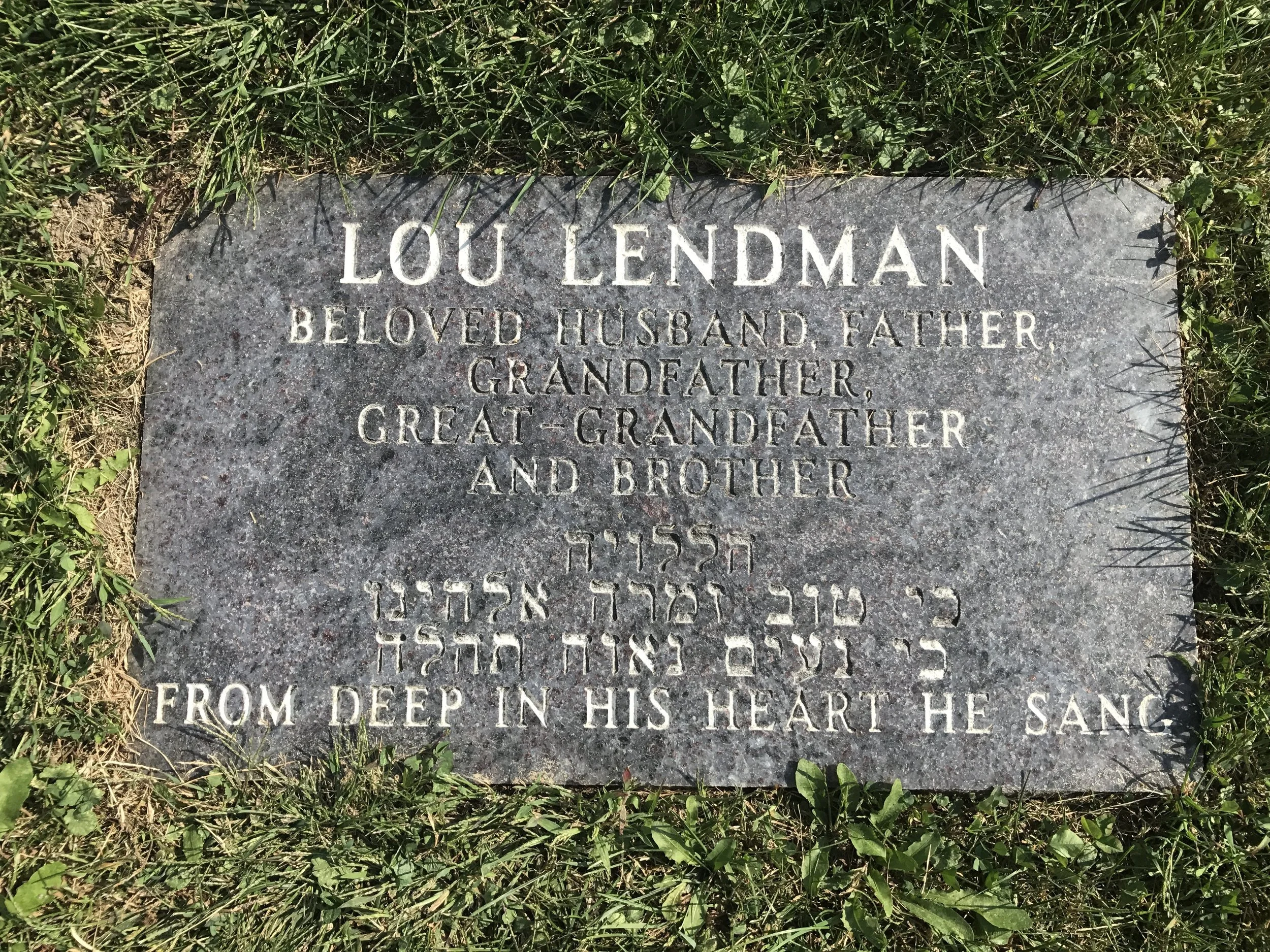
Digger of Clogged Wells
My grandfather's tombstone in Montreal
Dear friends,
One day there will be a tombstone with your name written on it. On that same stone there may be a succinct description of your life. It might say who you were to your closest people, or it may say something about what you did. My grandfather, Lou z”l’s, for example reads: “From deep in his heart he sang.” One chapter in this week’s parasha functions that way for our forefather, Isaac.
We get scant information about the life of Yitzchak Avinu beyond his relationship with his family. Both his father and his son’s adventures and misadventures are described in such detail that we get a real sense of what they brought to the world. Isaac, on the other hand, gets just one chapter of Torah, in which we learn one primary thing- he dug and re-dug wells. His contribution can be boiled down to to one verse:
“Isaac dug anew the wells which had been dug in the days of his father Abraham and which the Philistines had stopped up after Abraham’s death; and he gave them the same names that his father had given them.”
We might say - what did Isaac actually add to the world? All he did was bring things back to an equilibrium that existed earlier in his life. This seems to go against our contemporary need to fulfill ourselves as unique individuals who do something important and special with our lives.
But I say - If all I accomplish in my life is to re-dig the wells that my parents discovered and re-establish the names they gave them, I will die happy.
The reason I feel this way has to do with what wells and names signify in our thought tradition. They are neither wells, nor names.
I wrote a bad Haiku to get at what I mean:
A well is not just a well
a name not a name
I’ll call you “Living Waters.”
The metaphor of the well is captured beautifully by the Malbim, a 19th century Ashkenazi rabbi:
“There is a difference between a bor (cistern) and a be’er (well): the water of a cistern is collected from rainwater, while the water of a well springs forth from its source.
The beginning of learning wisdom is like the water of a cistern that is gathered, for at first one receives the laws of wisdom only through received tradition.
Afterward, they resemble the water of a well, for one begins to generate new insights from one’s own understanding.
And the waters of knowledge grow stronger in one’s heart until they flow outward from the well, to teach Torah and wisdom to others.”
When the Torah speaks of water it is referring to wisdom. A well, connected to a source of spring water, is wisdom flowing from the divine. When a well is stopped up, as the Philistines did to the wells that Abraham dug, they have clogged up channels of wisdom.
But why does Isaac need to name them by the same names his father named them? Shouldn’t we name things in anew in each generation?
The answer relates to what Abraham was working on by naming the wells he dug things like: "God Sees Me." 19th century Rabbi, Haktav Vehakabah explains:
“every well that he named, he gave a name that would point to the true existence of God. Through this, he accustomed the people who came to draw water from his well to say, ‘Let us go and draw water from the well called such-and-such,’ so that they would be stirred from their mistaken thinking and turn their hearts toward true understanding. And all the people became accustomed in this way to know true knowledge.”
Abraham’s names were part of his attempt to spread knowledge. Whenever anyone does that, there are forces in the world that try to shut down the dissemination of knowledge. If they are strong enough, they clog the wells and try to erase the names they stood for. We’re seeing an example of that with the government’s attempt to shut down the Department of Education.
When the forces of ignorance are successful, part of our response must include re-establishing not just the lost sources of wisdom, but the names used to draw people to that wisdom.
15th century rabbi, Tzror Hamor writes: "He named them by the names his father gave them - because truth does not change."
The living waters of wisdom are connected to a truth that is far deeper and more fluid than any single person can capture. When we reconnect with the wisdom that our parents’ generation discovered, it opens up channels to that never-ending source of wisdom - which are alive and new.
We are all Isaac, finding old wells and pulling out the rocks and sand that clogs them, so that we can use that water to plant new ideas into the shifting soil of our human story. If our lives can serve as a revival of lost wisdom, that wisdom will become a starting point, a source of new life and understanding. How sweet will it be if our tombstones one day say: "digger of clogged wells."
I hope you can join Daphna and Yonatan this evening for Shabbat in the Upper West Side.
Shabbat shalom,
Rabbi Misha