
Digger of Clogged Wells
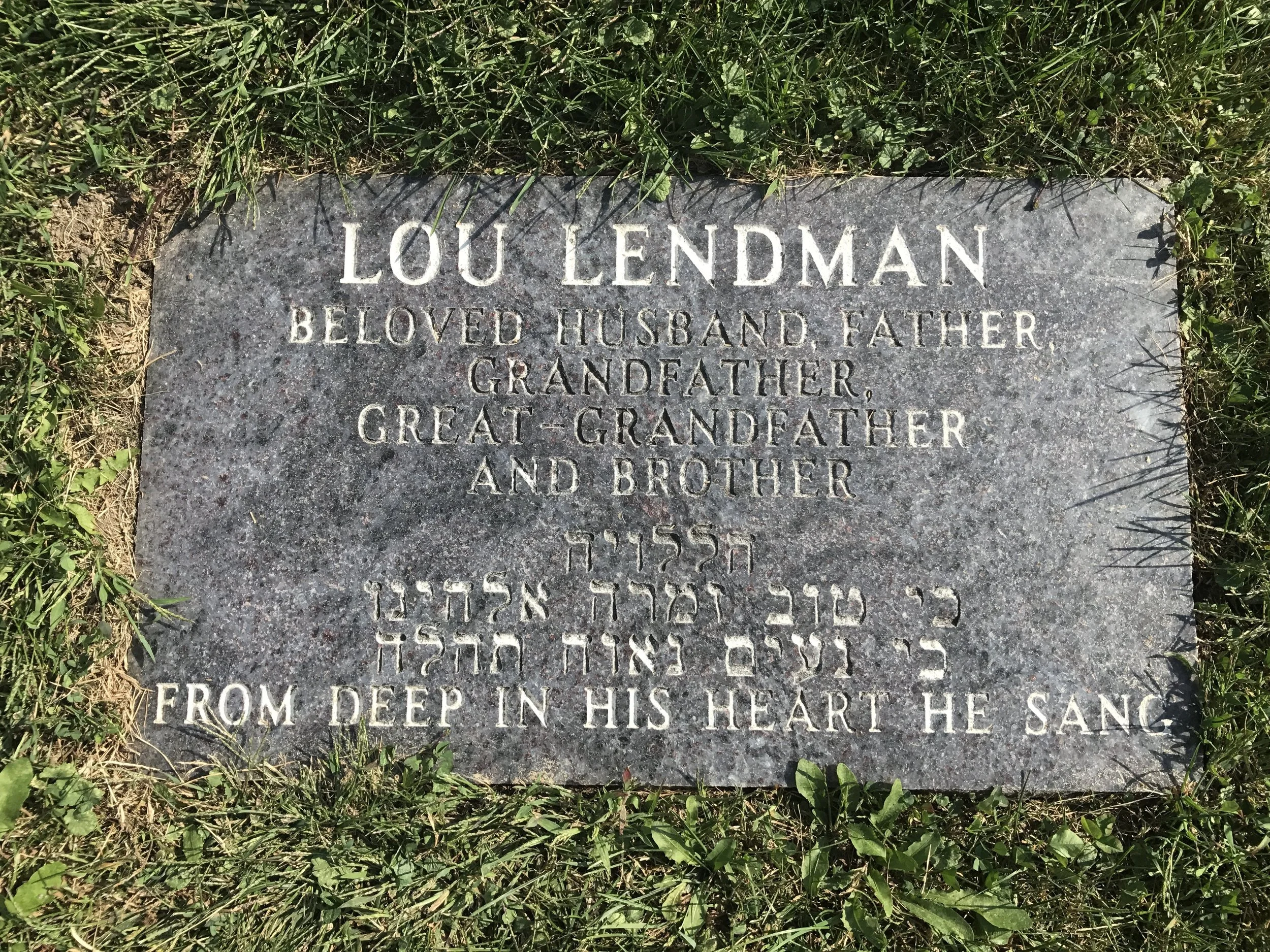
My grandfather's tombstone in Montreal
Dear friends,
One day there will be a tombstone with your name written on it. On that same stone there may be a succinct description of your life. It might say who you were to your closest people, or it may say something about what you did. My grandfather, Lou z”l’s, for example reads: “From deep in his heart he sang.” One chapter in this week’s parasha functions that way for our forefather, Isaac.
We get scant information about the life of Yitzchak Avinu beyond his relationship with his family. Both his father and his son’s adventures and misadventures are described in such detail that we get a real sense of what they brought to the world. Isaac, on the other hand, gets just one chapter of Torah, in which we learn one primary thing- he dug and re-dug wells. His contribution can be boiled down to to one verse:
“Isaac dug anew the wells which had been dug in the days of his father Abraham and which the Philistines had stopped up after Abraham’s death; and he gave them the same names that his father had given them.”
We might say - what did Isaac actually add to the world? All he did was bring things back to an equilibrium that existed earlier in his life. This seems to go against our contemporary need to fulfill ourselves as unique individuals who do something important and special with our lives.
But I say - If all I accomplish in my life is to re-dig the wells that my parents discovered and re-establish the names they gave them, I will die happy.
The reason I feel this way has to do with what wells and names signify in our thought tradition. They are neither wells, nor names.
I wrote a bad Haiku to get at what I mean:
A well is not just a well
a name not a name
I’ll call you “Living Waters.”
The metaphor of the well is captured beautifully by the Malbim, a 19th century Ashkenazi rabbi:
“There is a difference between a bor (cistern) and a be’er (well): the water of a cistern is collected from rainwater, while the water of a well springs forth from its source.
The beginning of learning wisdom is like the water of a cistern that is gathered, for at first one receives the laws of wisdom only through received tradition.
Afterward, they resemble the water of a well, for one begins to generate new insights from one’s own understanding.
And the waters of knowledge grow stronger in one’s heart until they flow outward from the well, to teach Torah and wisdom to others.”
When the Torah speaks of water it is referring to wisdom. A well, connected to a source of spring water, is wisdom flowing from the divine. When a well is stopped up, as the Philistines did to the wells that Abraham dug, they have clogged up channels of wisdom.
But why does Isaac need to name them by the same names his father named them? Shouldn’t we name things in anew in each generation?
The answer relates to what Abraham was working on by naming the wells he dug things like: "God Sees Me." 19th century Rabbi, Haktav Vehakabah explains:
“every well that he named, he gave a name that would point to the true existence of God. Through this, he accustomed the people who came to draw water from his well to say, ‘Let us go and draw water from the well called such-and-such,’ so that they would be stirred from their mistaken thinking and turn their hearts toward true understanding. And all the people became accustomed in this way to know true knowledge.”
Abraham’s names were part of his attempt to spread knowledge. Whenever anyone does that, there are forces in the world that try to shut down the dissemination of knowledge. If they are strong enough, they clog the wells and try to erase the names they stood for. We’re seeing an example of that with the government’s attempt to shut down the Department of Education.
When the forces of ignorance are successful, part of our response must include re-establishing not just the lost sources of wisdom, but the names used to draw people to that wisdom.
15th century rabbi, Tzror Hamor writes: "He named them by the names his father gave them - because truth does not change."
The living waters of wisdom are connected to a truth that is far deeper and more fluid than any single person can capture. When we reconnect with the wisdom that our parents’ generation discovered, it opens up channels to that never-ending source of wisdom - which are alive and new.
We are all Isaac, finding old wells and pulling out the rocks and sand that clogs them, so that we can use that water to plant new ideas into the shifting soil of our human story. If our lives can serve as a revival of lost wisdom, that wisdom will become a starting point, a source of new life and understanding. How sweet will it be if our tombstones one day say: "digger of clogged wells."
I hope you can join Daphna and Yonatan this evening for Shabbat in the Upper West Side.
Shabbat shalom,
Rabbi Misha