
Defining Antisemitism
Dear friends,
Ten years ago, one of my commanding officers from the army, General Yair Golan, at the time IDF Deputy Chief of Staff, gave a speech on Holocaust Remembrance Day. After mentioning his parents’ experience as survivors, he went on to say that it troubles him to recognize in Israeli society trends reminiscent of 1930’s Germany. According to the IHRA definition of antisemitism, adopted by the US government and rejected this week by the Mamdani administration, he could easily be labeled as an antisemite. This is, in fact not far from what happened to General Golan, who received vile attacks by the right, was swiftly passed by to lead the IDF and sent into retirement by the Netanyahu government (today he is the head of the Democrats, a left-wing Zionist party in Israel).
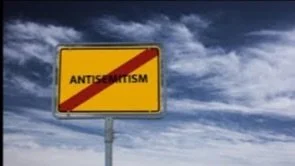
As you probably know, the hot debate around the definition of antisemitism came into the headlines early this week when the new mayor discontinued Mayor Adams’ order adopting the IHRA definition of antisemitism. Most people I’ve spoken to have never heard of the other working definition, known as the Jerusalem Declaration on Antisemitism, so they assume that Mamdani simply undid the city’s efforts to combat antisemitism. There are arguments for and against what the mayor did, but it's important to understand that this is a debate that goes back many years, and certainly one that goes to the heart of what it means to be a Jew in the 21st century.
I encourage you to take a look at both definitions. The best way to come to a conclusion about them is through a close examination of the language. It is quite rare to find a person who has actually taken the time to study both. It’s worth it. This isn’t something we can really afford to get wrong, because of that sense that so many of us share that this is one of the most precarious moments for our people in decades.
When you look at the definitions, you’ll see that there is a lot of overlap. The differences revolve around the relationship between antisemitism, Zionism and criticism of the Israeli government. The Jerusalem Declaration, which came in response to IHRA, adds two sections devoted specifically to Israel/Palestine. One gives examples of what can be considered antisemitic, and the other examples of what should not on their own be considered antisemitic.
My father, who as you likely know is a well known Israeli peace activist, is one of the signatories of the Jerusalem Declaration. When I asked him why he signed it, he quickly brought it to that particular clarification around antisemitism in the context of Israel. He signed, he said,
“because it is very clear, especially when it comes to criticism of Israel. The whole point of it was to clarify that it is not antisemitic to dissent from Israeli actions and policies, to oppose such actions and policies, to resist them, and to denounce them. In some places in the world, including America, but most markedly in Germany, you can't criticize Israel without being tagged as antisemitic.”
He doesn’t think that IHRA is a terrible definition. However, its lack of clarity on whether positions such as: “opposing Zionism,” “arguing for full equality for Palestinians,” boycotting Israel or advocating for solutions other than a Jewish state - are or are not antisemitic in and of themselves, leave it vulnerable to becoming a tool in the hands of the right wing government of Israel and its allies. When the Jerusalem Declaration posits that “It is not antisemitic to point out systematic racial discrimination,” for example, that provides free speech protection for those both in Israel and abroad working to undo or reduce what they perceive to be Israel’s systemic racism. IHRA leaves that question vaguer and doesn’t offer an avenue for exploring systemic racism in the Israeli context. It only says that “Denying the Jewish people their right to self-determination, e.g., by claiming that the existence of a State of Israel is a racist endeavor” is antisemitic.
My father and the rest of the signatories to the Jerusalem Declaration are far from blind to the antisemitism too prevalent on the left. The clarifications they sought to provide are an attempt to address that problem as well.
“Mostly due to Israel's own horrible acts, extreme left groups all over the world are slipping into, or even rushing into, antisemitic statements,” he wrote. " If one could hold fast to the distinction between disgust at Israeli policies and an awareness of the wider and deeper world of Judaism, we would have an answer to those groups.”
From the perspective of the Israeli left, criticism of Israel is crucial for the survival of the Jews living in Israel and the values upon which the country was founded. Many of them are concerned that IHRA’s lack of clarity prevents such criticism. “In the IHRA definition,” my father writes, “there is a global and all-embracing assertion that fudges the Israel question just when we most need the Israel distinction, when the government of the state desecrates the very values that are the state's raison d'etre.”
You can maybe see where my heart lies on the question of these dueling definitions. I land in my father's camp. It is a question of free speech, and of how each definition plays or doesn’t play into the hands of governments I do not trust.
I know that some of you will look at both definitions and disagree with me. This is what the rabbis call “a disagreement for the sake of heaven,” meaning an important argument. I welcome your thoughts and responses, and hope that the conversations we have, and those you have with others bring greater clarity to the crucial question of combating antisemitism, and its relation to all other forms of hate.
Shabbat shalom,
Rabbi Misha