
The Political Heart of the Jewish Tradition
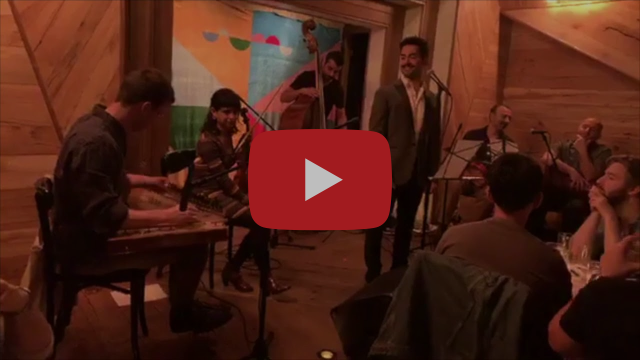
Our musical guest this evening, John Murchison on Qanun: https://youtu.be/EpjUTOPabmA?si=lZ6u4CMbGrZAy9dO
Dear friends,
The political heart of the Jewish tradition – not to be confused with the political heart of the Jewish people circa 2026 – is revealed in a flash of anger in this week’s Parashah. Moses has ascended the mountain. He has received the stone tablets engraved with the commandments written “with the finger of God.” He has been told that down below the Hebrews have created a Golden Calf, to which they bow and pray. He has walked God back from the desire to annihilate them in response, and now he is walking down the mountain. And then it happens:
וַֽיְהִ֗י כַּאֲשֶׁ֤ר קָרַב֙ אֶל־הַֽמַּחֲנֶ֔ה וַיַּ֥רְא אֶת־הָעֵ֖גֶל וּמְחֹלֹ֑ת וַיִּֽחַר־אַ֣ף מֹשֶׁ֗ה וַיַּשְׁלֵ֤ךְ מִיָּדָו֙ אֶת־הַלֻּחֹ֔ת וַיְשַׁבֵּ֥ר אֹתָ֖ם תַּ֥חַת הָהָֽר׃
As Moses came near the camp, he saw the calf and the dancing. He was filled with rage; and he hurled the tablets from his hands and shattered them at the foot of the mountain.
If there is holiness in any thing, it was there in those tablets of the covenant. But Moses shatters them to pieces in what seems like an emotional explosion. Though perhaps the exact opposite of Moses’ act, the verse recalls the Taliban’s demolition of the ancient Buddha statues in Bamiyan province in 2001. That tragic act of human idiocy also seems emotionally driven, angry, impulsive and self-destructive. But in truth it was one that took time, planning and consideration. They tried explosives to destroy the huge rock statues, and that wasn’t enough. They shot at them with a number of weapons, and still the statues refused to break. They had to continue with a series of other methods until the statues finally shattered, as Moses did to the tablets in one swing.
That one swing, however, is imbued by the rabbis with much more than raw emotion. Yishayahu Leibovitz builds on the ancient rabbinical take on this moment when he says that “Moses decided to cast the tablets from his hands and shatter them before the eyes of the people.” This is not impulsive, but a calculated teaching moment, in which Moses gives symbolic life to the underlying political and religious principle guiding our entire faith.
“His heart inspired him to break the tablets before their eyes,” Rashi, who sees this as one of Moses’ great deeds, adds. “And the Holy One agreed with him, —‘Well done for breaking them!’”
Moses, God and the rabbis all seem to agree that this was an important lesson. What are we being taught?
Leibovitz explains: “The greatness of the act lies in demonstrating that no object possesses inherent holiness. Holiness resides only in human action directed toward the service of God. Without such intention, there is no holiness—even in the tablets.”
Rabbi Meir Simcha HaKohen of Dvinsk, the 19th century born author of Meshech Chochmah, minces no words drawing line between this emotional, religious act and its political consequences:
“All sanctities—Land of Israel, Jerusalem, the Temple—are but branches of Torah, sanctified through it. Do not imagine that the Temple or Tabernacle are inherently holy. God dwells among His people when they serve Him. If they violate the covenant, holiness departs and the sacred becomes profane.
Moses demonstrated this when he shattered the tablets upon seeing that the people had violated the commandment, “You shall not make for yourself a graven image.” And this prohibition does not apply only to the golden calf. It applies to any natural entity—a nation, land, homeland, flag, army, ideology, or individual—when elevated to the status of ultimate sanctity.”
As national sentiments rise, among us Jews as among so many nations, we especially should seek to remember that our tradition absolutely rejects the idolatry of ideas over lives. Holiness is found in thoughtful actions, not in dead objects, dead symbols, dead ideas, or deadening people.
I invite you to join me this evening for some tablet-shattering peace. If you’re inclined, bring with you something to break – a glass or plate or something you’ll enjoy shattering.
We will begin with a short prayer study at 6:00pm, and Kabbalat Shabbat with our wonderful musical guest, John Murchison, and meditation teacher, Michael Posnick at 6:30pm.
Shabbat shalom,
Rabbi Misha