
Life to the Dead
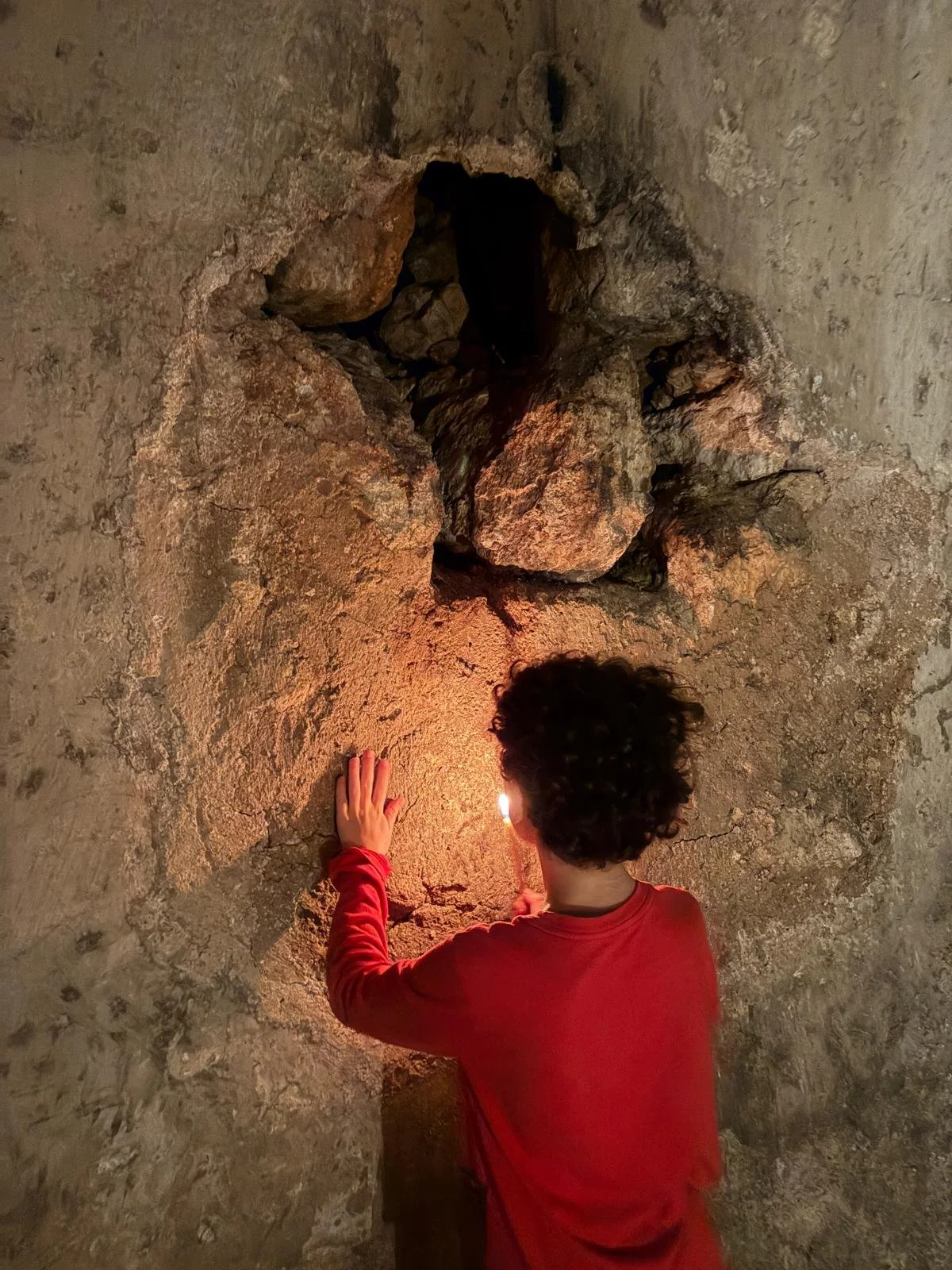
Manu at the Tomb of the Prophets
Dear friends,
Though I grew up in Jerusalem, I had never properly explored one of its holiest places, Mount Olives. This is for two reasons. First, because I never connected with the notion of the Messiah: what drove most of the thousands of Jews to be buried on the mountain is the tradition that after the Messiah comes, when the Jewish dead will rise, the first to come back to life will be those buried on Mount Olives. And second, because it’s in East Jerusalem where the Palestinians live, which was considered dangerous. So last Friday I drove over there with my wife and kids.
It was an especially holy day in Jerusalem, the first Friday of Ramadan. In Jerusalem, holiness often means conflict. The uniformed goons of Israel’s racist Minister of National Security, had spent the previous few days of the holy Muslim month menacingly walking through Al Aqsa Mosque as people prayed. For us this translated into a lot of traffic as soon as we hit East Jerusalem and its security checkpoints. Once we got through those, we took a wrong turn and stopped by a little grocery store to ask for directions.
The grocer was warm and welcoming. We asked him if he could help us find the tomb of Rabia El-Adawiya, an 8th century Iraqi sufi woman who is considered one of the most important Muslim teachers ever. Her tomb on Mount Olives is shared with the 7th century BC Jewish prophetess Hulda, as well as the 5th-century Christian saint Pelagia of Antioch. “It’s right up the road here,” he said. And proceeded to offer the boys a treat. After I told him that I grew up on the west side of town he invited us to come back a few hours later to break the fast with his family. Since we couldn’t, he sent us off with a wrapped plate of Iftar foods and crucial directions to the only place nearby where we stand a chance at a parking spot.
The mosque in charge of Rabia’s tomb was closed so we continued down the road to find an illegal parking spot and explore the cemetery. Mount Olives is directly across the wadi from Haram El Sharif, which we call Temple Mount, so the view of the golden dome, Al Aqsa Mosque, the Church of the Holy Sepulcher and the rest of the old city was perfect. We could see that Temple Mount itself was filled with people who had come there to pray.
At the top of the cemetery stood a middle-aged ultra-orthodox couple. The woman was holding her phone videotaping what appeared to be a social media post. Her husband explained to the camera that below them was the tomb of a famous rabbi, and that they had come to him to pray for fertility for several members of their family. As we walked down the steps, with graves on either side, I noticed that many of the old gravestones were broken, or had fallen. On some I could still make out the Hebrew writing, telling of mothers and fathers and brothers and sisters who loved them a few hundred years ago. I love walking around old cemeteries here in New York, some with tombs that go back to the Civil War. But this cemetery is at least three thousand years old, and probably much more.
We came upon a small courtyard with a sign that read: “Tomb of the Prophets.” This was a holy site believed to be the burial place of the two final prophets of Israel, Haggai and Malachi, who lived in the 5th and 6th centuries BC. We were welcomed by a friendly Russian Orthodox priest in a long black cloak, who invited us down the steps and into an underground cave, which was a burial chamber for around 40 souls, each with their own small niche hewn into the rock. The priest told us about the place, and handed each of us a candle to help us navigate the chambers. We walked around the cave until we came to the largest chamber, where the two prophets are thought to be buried.
I took out a Tanach, and opened at random to the Book of Malachi. It landed on the final verses in the Nevi’im, which close the Book:
הִנֵּ֤ה אָנֹכִי֙ שֹׁלֵ֣חַ לָכֶ֔ם אֵ֖ת אֵלִיָּ֣ה הַנָּבִ֑יא לִפְנֵ֗י בּ֚וֹא י֣וֹם יְהֹוָ֔ה הַגָּד֖וֹל וְהַנּוֹרָֽא׃
וְהֵשִׁ֤יב לֵב־אָבוֹת֙ עַל־בָּנִ֔ים וְלֵ֥ב בָּנִ֖ים עַל־אֲבוֹתָ֑ם פֶּן־אָב֕וֹא וְהִכֵּיתִ֥י אֶת־הָאָ֖רֶץ חֵֽרֶם׃
"See, I am sending you the prophet Elijah before that great and dreadful day of YHVH comes. He will turn the hearts of the parents to their children, and the hearts of the children to their parents; so that I will not come and strike the land with destruction.”
We paused together to consider the turning of the hearts of parents to their children, and children to their parents. It is on this, it seems, that salvation rests.
A short while later, I found myself alone in the chamber of the two prophets, in prayer. Inside the holy mountain where so many ancestors are buried, in the sudden presence of two prophets of justice and truth, I prayed the Amidah:
Baruch atah YHVH mechayeh hametim,
“Blessed are you YHVH who gives life to the dead,” I whispered, and a smile crept onto my lips. I don’t know much. Maybe Elijah will actually come and all these dead will really rise. I don’t know. I really don’t know anything at all – except this: the dead are with us. They are not gone. They speak to us like these two prophets are suddenly speaking to me. They appear in dreams and in thoughts and at special events and holy moments and in our actions and sometimes they accompany us for long stretches of time. They live.
Bless the one who gives them life.
Shabbat shalom,
Rabbi Misha