
When is Then?
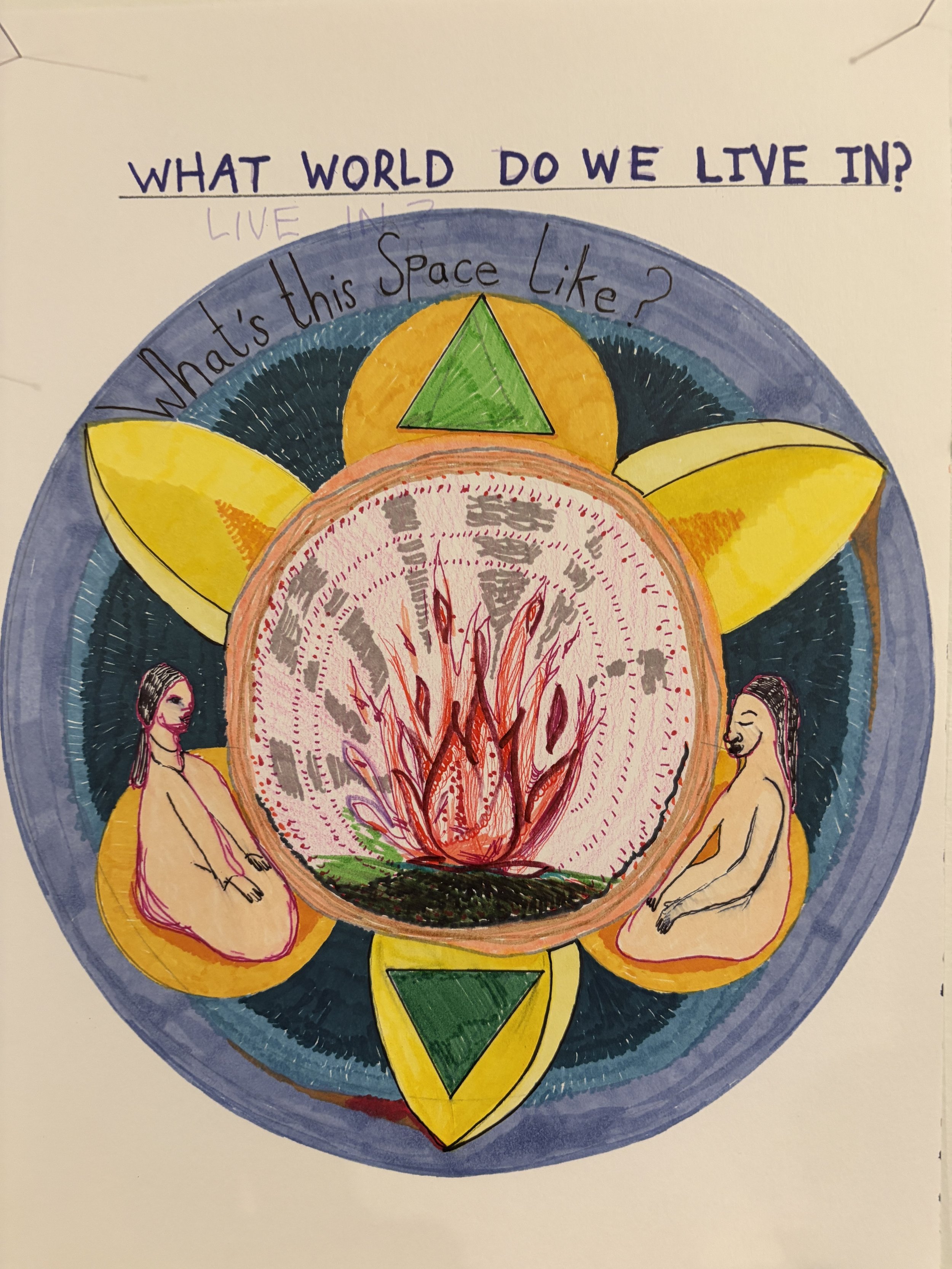
What World Do We Live In? by Jacquie Mauer
Dear friends,
The Great Sabbath is upon us, Shabbat Hagadol, as the Shabbat before Passover is called. It gives us a chance to orient ourselves toward this Festival of Freedom, and to contemplate how we might celebrate it this year. Ma Nishtana halayla hazeh, how is this night different, we ask again, knowing that here we are again in the same situation we were in a year ago, and two years ago, and well, just about every year in memory, which is to say celebrating freedom in a world that seems everything but free, in the midst of war and conflict, rising poverty, hatred, bigotry and violence, a time when the Land of the Free is doing all it can to impose its iron fist on anyone in its way, and the Jewish state makes Pharaoh its hero and calls itself a freedom fighter. In the heart of the current storm, in the clench of the stronghold of chaos, we are called upon to see ourselves as slaves who have been liberated.
Perhaps that is the very lesson of Passover.
I think of heroes like Jean Genet, who in the midst of WWII, in prison in France, took the paper the prisoners used to make camouflage for the German army, and wrote on it two of the greatest novels of that time period, the imaginative gems, Miracle of the Rose and Our Lady of the Flowers. I think of the Esh Kodesh, the Piazetzner Rebbe, who teased out hidden beauty from the Torah every Shabbat for three years in the Warsaw Ghetto, and then hid his sermons in milk cans buried under the ghetto until the war’s end. I think of the American heroes of civil rights, women's rights and gay rights, who imagined their way out of much narrower and darker times.
The rabbis identify one small word as key to liberation, the Hebrew word אז, Az, meaning “then.” It’s the first word that appears in the Torah after the Hebrews realize they are free, and is followed by song - אז ישיר, “Then they sang.” The Maharal, in 17th century Prague, wrote that Az can be understood as referring to either the future or the past. And indeed, אז ישיר, is understood as “then they sang,” but literally means “then they will sing.” In other words, the vision of a future in which we are redeemed, when we are able to sing, is directly connected to moments in the past when we were redeemed and able to sing.
Between those two possibilities, of course, lies a third possibility. We could be redeemed right now, and sing. That is Passover. Looking ahead to the times beyond the storms, looking back to the times when the clouds lifted, and seeing through the current fog that is preventing us from enjoying the beauty in front of our eyes.
The word Az appears dozens of times in the bible, many of which invite us to find that “then” time today.
Then the eyes of the blind shall be opened,
and the ears of the deaf shall be unstopped. (Isaiah)
אָז תִּפָּקַחְנָה עֵינֵי עִוְרִים וְאׇזְנֵי חֵרְשִׁים תִּפָּתַחְנָה.
Then the lame shall leap like a deer,
and the tongue of the mute shall sing for joy; (Isaiah)
אָז יְדַלֵּג כָּאַיָּל פִּסֵּחַ וְתָרֹן לְשׁוֹן אִלֵּם כִּי נִבְקְעוּ בַמִּדְבָּר מַיִם וּנְחָלִים בָּעֲרָבָה.
Then your light shall break forth like the dawn,
and your healing shall quickly sprout; (Isaiah again)
אָז יִבָּקַע כַּשַּׁחַר אוֹרֶךָ וַאֲרֻכָתְךָ מְהֵרָה תִצְמָח
Then you shall delight. (Last Isaiah)
אָז תִּתְעַנַּג
Then our mouths shall be filled with laughter,
and our tongues with song. (Psalms)
אָז יִמָּלֵא שְׂחוֹק פִּינוּ וּלְשׁוֹנֵנוּ רִנָּה
Then I shall rest. (Job)
אָז יָנוּחַ לִי
On Shabbat Hagadol the rabbis instituted as the haftarah a vision of redemption that came to the Prophet Malachi. In it he depicts a surprisingly troubling time, when the wicked seem to be thriving, leaving the good people of the world at a loss.
“Then,” he sings, “those who live with wonder will talk with one another as friends, and YHVH will listen carefully, and hear them. A scroll of remembrance will be written in His presence containing the thoughts of these wonder-full people.”
אָז נִדְבְּרוּ יִרְאֵי יְהֹוָה אִישׁ אֶל רֵעֵהוּ וַיַּקְשֵׁב יְהֹוָה וַיִּשְׁמָע וַיִּכָּתֵב סֵפֶר זִכָּרוֹן לְפָנָיו לְיִרְאֵי יְהֹוָה וּלְחֹשְׁבֵי שְׁמוֹ
This, I believe, is a description of us all at our seders, in honest conversation with each about the beauty we get to enjoy, our battles with the ugliness we don’t, and between bites of delightful food, a song of happiness on our lips. We will also be reading an older scroll of remembrance, which our ancestors put together for us called the Haggadah.
I hope you can join us tomorrow at the protest to sing the Patti Smith psalm The People Have the Power. And on Tuesday evening at 8pm we will have a special pre-Passover Torah class, where we will explore some Passover teachings of the great 20th century prophet, Yishayahu Leibowitz. I hope you can join me.
Shabbat shalom,
Rabbi Misha