
Sort by Category
Leibowitz
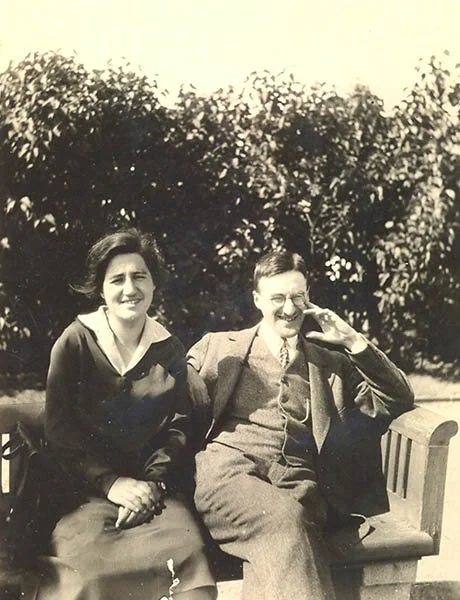
Nechama and Yishayahu Leibowitz
Dear friends,
Before I share some thoughts about two of the greatest Jewish minds of the twentieth century, I’d like to invite you to our Shabbat this evening at First Pres. I know we’re all a bit Jewed out after the holidays, but it’s going to be so nice to come back to our musical Shabbatot. And there will be dinner!
Two of the greatest teachers our people produced in the last century came from the same household. They were born in 1903 and 1905 in Riga, then part of the Russian empire, where they were homeschooled with private teachers and raised as Orthodox Jews. After the revolution they moved with their family to Berlin, where both would pass the matriculation exams at age 16 without ever having attended school. A few years later they earned their PHD’s, and then in 1930 fulfilled their ancestral dream and moved to Jerusalem, where they would grow into such legendary stature that by the time I came around about fifty years later, their name, Leibowitz was couched in an aura of awe and reverence unlike any other.
This isn’t just a history lesson. It’s an invitation. But I’ll get to that in a minute.
The younger of the two siblings, Nechama received the Israel Prize, the state’s highest honor already in 1956, for her tremendous influence on Torah study. Especially at that time this wasn’t a field flush with feminine voices. Besides teaching at Hebrew University, she was the teacher of thousands of students:
“In 1942, some of Leibowitz’s students decided that they wanted to continue studying her material even after the school year had ended. Acceding to their request, Leibowitz began mailing them her worksheets, which contained commentaries unavailable at the time and, furthermore, challenged them with difficult questions, with every answer checked personally by Leibowitz. Word spread to friends and neighbors, who also wished to fill out these sheets. Eventually the correspondents ran into the thousands: young and old, religious and secular, kibbutzniks and city-dwellers. Thus Leibowitz functioned as a one-woman Open University correspondence course for over thirty years without ever receiving remuneration.”
Yishayahu, in the meantime made a name for himself far beyond his work as a Professor of Biochemistry at Hebrew University. Considered the greatest Israeli philosopher to this day, Yishayahu had high hopes for the Jewish state when it came into being. Zionism, he believed, offered a "historic opportunity for the renewed political independence of the Jewish people to test the values of Jewish heritage against the realities of modern statehood." Within a few years he had begun to sense that the Jewish state was completely failing to uphold the values of their tradition. When 1967 came around he immediately warned that if Israel held onto the conquered territories it “would necessarily become a secret-police state, with all that this implies for education, free speech, and democratic institutions. The corruption characteristic of every colonial regime would also prevail in the state of Israel.”
When that occupation was nearing three full decades Leibowitz was announced as the winner of the Israel Prize. He used the platform to call on Israelis to refuse to serve in the army in the Occupied Territories, where they would be forced to act like what he called “Judeo-Nazis.” Nowadays, one of the most common T-shirts at pro-democracy or anti-war protests in Israel is a picture of Leibowitz over the words: אמרתי לכם, “I told you so.”
Both Nechama and Yishayahu were driven by Torah. They lived through some of the most dramatic upheavals our people have ever known and remained deeply religious until they passed in the 1990’s. Both left us traces of their deep understanding of Torah in their highly approachable books about the weekly parsha.
Which brings me back to my invitation.
A group of us have been meeting weekly on Zoom to study Torah for some years now. This year, we are going to devote our study to the teachings of Nechama and Yishayahu Leibowitz. We have a great deal to learn from them, not only about Judaism, but about how to live in challenging times.
I’d like to invite you to JOIN US. We meet every Thursday at noon for an hour, and this year we will also add some evening meetings for those who can’t take a mid-week lunch break. No prior knowledge, nor commitment is needed. Everyone is welcome. The first evening meeting will be Tuesday, November 4th. Studying Torah is one of the great things we Jews know how to do. If you haven’t done it in a while, it’s worth a go.
I’ll give a teaser with some of Yishayahu’s thinking on the contemporary echoes of the story of Noah’s Ark this evening at Shabbat.
I hope to see you there.
shabbat shalom,
Rabbi Misha
Accepting Creation
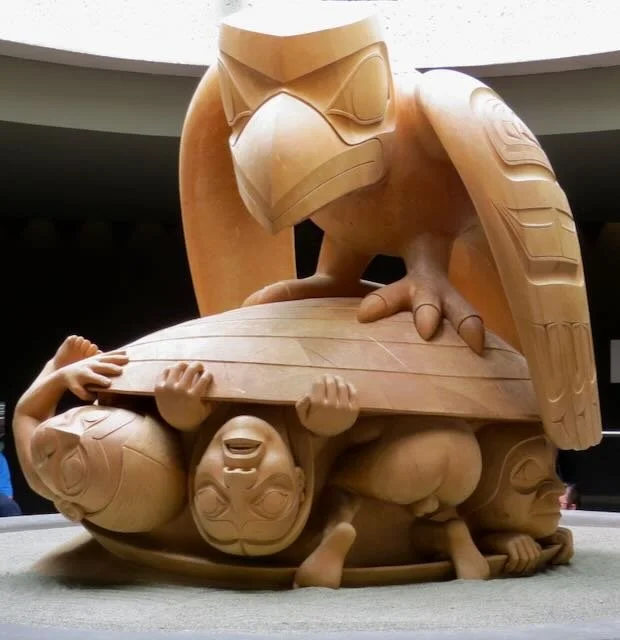
The Raven and the First Men by Bill Reid
Dear friends,
“In the beginning was the gift.
And the gift was with God and the gift was God.”
So began radical theologian, Matthew Fox his new creation story for a human species at war with itself and its surroundings. This Shabbat, on which we restart the Torah, we go back to creation, searching for the sense of goodness that God saw at the close of each day, when וירא אלוהים כי טוב״ “God saw that it was good.”
With the war seemingly behind us, the hostages and prisoners (many of whom were innocent) home, thank God, perhaps we will have an easier time sensing the new horizon. Maybe now we can know “the certainty of the reality of the possibility,” as Erich Fromm put it. What appears to be dark may be an unexpected path toward light. What looks like chaos may turn out to be contractions before labor. We really don’t know what’s going on.
Heschel laid out three options for people to respond to creation: “We may exploit it, we may enjoy it, we may accept it with awe.” A few years after he was expelled from the Dominican Order of the Catholic Church for his so-called radical theology, Fox wrote: “to accept (creation) with awe would mean a complete conversion for Western Civilization.” From a patriarchal, dualistic civilization of you versus me, to a Buberian one in which the only truth exists in the space between us, what Fox calls “relations.”
Neither Heschel nor Fox understood “accepting creation with awe” as a passive endeavor. Accepting with awe means hearing and heeding the call to participate in creation. Creation, Fox insisted, is in our hands. We are partners with God on making this world. I hope you’ll join our New Shul group at the No Kings rally tomorrow (meet at the George M. Cohen statue at the corner of 46th St. and Seventh Avenue. This is the south end of the Tkts plaza. We will be there with our 12-foot banner at 10:30am) to practice creation.
Or if you can’t make it, I hope you at least enjoy the creation gift that happens upon you this Shabbat.
shabbat shalom,
Rabbi Misha
What do we do with our love?
Dear friends,
As we wait with bated breath for the return of the hostages and the partial withdrawal of the Israeli troops, we are all praying for this awful war to truly be over. Perhaps our fervent prayers on the holidays contributed to reaching this deal.
So many of you have reached out to me asking for the text of my Kol Nidrei dvar Torah that I decided I'd share it with you all here. The text is below, and the recording above. And at the bottom of the email you can also find the recording of my father's moving speech, in case you missed the morning service.
What do we do with our love? / Kol Nidrei 5786
I once asked Rabbi Arik Ascherman, who ran Rabbis for Human Rights for 20 years and is active in the West Bank with his organization Torat Tzedek, why he is a Rabbi and not just a regular activist. What is your Jewish drive? I asked him. “I go back to the very beginning of the Torah,” he said. “The first two words, Bereshit Bara. In the beginning, God created. These words tell me that there is ultimately a structure to the universe. For six days we go around, acting as though the world is up to us, and on the seventh day we remind ourselves that it is a created world, meaning it has a structure. It has meaning. It has something we might call justice.”
It’s actually easy to see this justice. All you have to do is go take a walk in the woods, or look at the ocean, or the stars somewhere that isn’t New York City. You can look at your body, the intricate, incredibly complex system that somehow keeps going, allowing us to see and move and walk and talk and breathe.
These days, it seems very much like there is no structure, there is no justice, and even truth seems up in the air. But that’s not the case. We each know inside of us what is good and what is not, what is right and what is wrong, what is just and what is not. Like the universe has a structure and laws that cannot be broken, even if you try, something inside of us knows the structure of human justice. We know that behavior has consequences.
I know that what I do, whether for good or bad, will have emanations outward into the world. I don’t know about reward and punishment in this life or the next. But I do see how what I do keeps moving out there in the world and becomes a part of everything else. I see how what other people do impacts me. I see how the actions of those who came before me make me walk and think a certain way.
When I was in Jerusalem, this summer, I spoke to a Palestinian man in the Old City. In the middle of a conversation about politics, he said something simple to me. “You and I don’t decide what happens.”
I want to tell you something that I think is very important to understand. In the eyes of our tradition, under the gaze of the eternal God, you are only responsible for your own actions. You are not responsible for what the person who’s sitting to your right or to your left is doing, nor are you responsible for the behavior or choices of your elected representatives, neither here nor anywhere else in the world. When you come at the end of your days in front of yourself and are asked, did you live properly, the question is not about anyone but you.
Today we ask ourselves: Did you live properly this year? When your partner was sick, did you show up and take care of them? When your child needed you to help them cross the monkey bars did you come? When your parent called did you stop what you were doing, and answer? Were you there for your loved ones? These are the basic questions. And then there are other questions that go far beyond this, like what did you do when your people committed horrible crimes against another nation? When your neighbor was stripped of her rights and her family, how did you respond? When you saw authoritarianism descendupon your country, did you act?
In all of these questions, the answer has nothing to do with the result. You were not in charge of healing your loved one, you were just in charge of making them chicken soup. Or calling the doctor or taking them to the emergency room. Neither were you in charge of stopping the starvation campaign in Gaza, or of returning the hostages home, or of ending antisemitism or of keeping the non-profit sector from collapsing, or of protecting Trans rights or of keeping the world from continuing to heat. You are not the person who is going to do any of that. No single person is. It’s true, as Heschel said, that in a certain sense, all of us are responsible. But our responsibility is to do the right thing. Whether what we were working toward happens or not is in the hands of God.
If you were standing in front of God right now, God would simply want to know if you did your part. Were you walking towards Jerusalem this year or not? And I don’t mean Jerusalem, the capital of the modern state of Israel, that historical oddity. I mean Jerusalem, the abode of peace and wholeness, the place of goodness and justice and truth.
And as it happens, you are standing before Her right now. So, ask yourself: were you walking towards the city of wholeness this year? How much of it did you spend frozen? Hiding? Avoiding? Delaying? Conveniently compromising? Self-flagellating? How much of it did you spend walking in the wrong direction?
We are here to correct course. Not of world politics, of the United States of America, or New York City. We are here to correct the course of our own feet.
The foundation of the world is a single rock that sits behind the Western Wall under the golden dome in the holy city of Jerusalem. That same rock is planted deep in our souls. Sometimes, when we manage to get far beyond the appearances of this world and know the truth and see the goodness, we are able totouch that rock. Then we are suddenly reminded that we don’t only have anxiety, fear, disappointment, rage. We also have a huge surplus of love.
I think that one of our central problems these days is that we do not have an answer to the question: what do we do with our love? What do we do with our love of Israel, which so many of us have been tending to our entire lives? What do we do with our love of this country that we live in, and this town we walk around in? What do we do with our love of humanity, and each member of it? What do we do with our love of this earth and all of the creatures and plants and wonders in it? What do we do with our love of ourselves in the face of what we perceive to be ongoing failures?
In order to answer this question, we might be wise to examine one historical tale that kept our people alive when it looked like all was lost.
Two thousand years ago the Romans were laying siege to Jerusalem. Just like today, people felt entirely helpless. Inside the walls the ultra-nationalist Jewshad taken over, demanding everyone join in a suicide battle against the Romans. But there was one person in Jerusalem who read the map with cold clarityand saw an opportunity. He was the only one at the time who knew what to do with his love.
Rabban Yochanan Ben Zakai got his students to smuggle him out of Jerusalem the only way that the Romans let anyone out - in a coffin. At the cemetery outside the walls, he got out of that coffin and went straight to the headquarters of the Roman legion to speak to their commander.
The rabbi did not ask for mercy. He knew it was over, and both Jerusalem and the temple would burn. He saw that the Jewish people had lost their way and wasn’t about to try and convince the Roman commander to spare the holy site where they prayed for war and vengeance. He asked for something else instead: a place where the sages could study and create a new version of Judaism. “Give me Yavneh and its sages,” he famously said. Yavneh had no significance whatsoever at the time. It’s as though he asked for Secaucus instead of New York City. It was the learning that was important, not the place.
Thanks to him, when the temple burned, and that chapter in our history ended, a new one began. Everything that we are doing tonight comes out of Yavneh. The entirety of what we call Judaism is from there. The Talmud is from there. These rabbis created a new Judaism based on studying and re-interpreting the old one that had run the people toward what the sages called “Sinat Chinam,” baseless hatred, which is what the rabbis considered to be the root cause of the destruction of Jerusalem.
We are Yavneh. Right here. We are tasked not just with keeping the flame alive, but with rediscovering the humanity and the revolutionary spirit within our ancient tradition. No matter who may be against us, our faith is not one that calls on us to starve millions, to bomb hospitals, to kill thousands of children, to abandon our own captured loved ones to their deaths. This community and so many others like it in New York, in LA, in Tel Aviv and all over are Yavneh now. Today we are the Ben Zakai’s being smuggled out in that coffin, about to face the Roman commander. Tomorrow, we begin the exciting task of honoring our predecessors by re-interpreting the holy Torah, so that those who come after us can embrace our Tree of Life, and grow new branches and leaves onto it.
What do we do with our love? Bereshit bara. We invite it to guide us towards new ways of caring for one another and lifting up the image of God. We use thislove as the foundation of our new temple.
My friends, we are on a pilgrimage. One day it will end we will come in front of that shining rock of our lives and see ourselves. When that happens, we need to be able to tell that rock: I spent my life walking towards You. I did what the prophet Micah suggested: “act justly, love kindness and walk humbly with your God.” I did that when I could see the fruits of my actions, and I did that when I couldn’t. I walked the paths of this beautiful, beautiful world with kindness and love for all of Your creations. I didn’t stop. Even when I had no idea how to love and everyone told me to stop, I kept on loving. I kept seeking the peace of Jerusalem with every step I took.
Moadim lesimcha, shabbat shalom,
Rabbi Misha
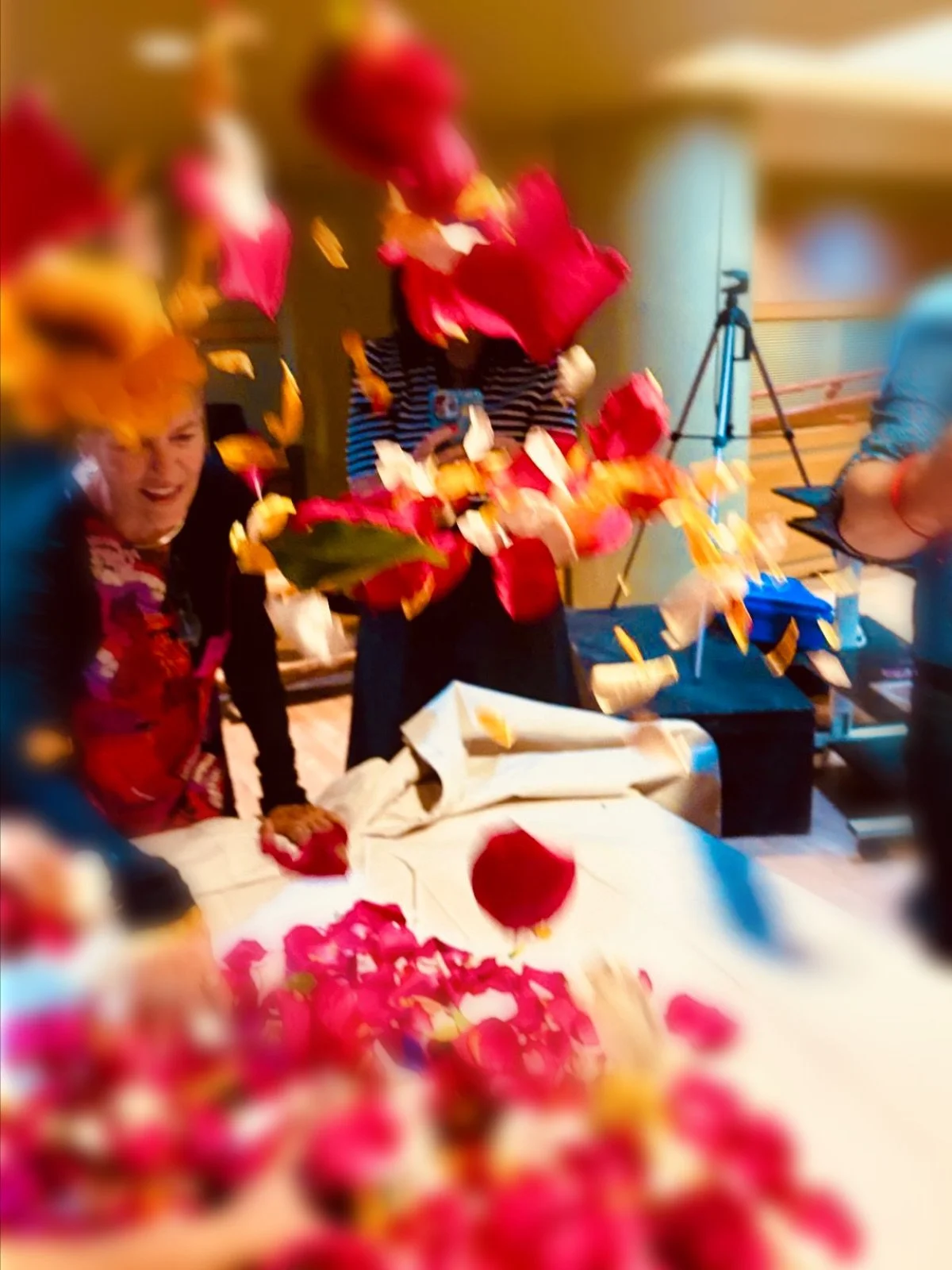
Thank you for an incredible Yom Kippur.
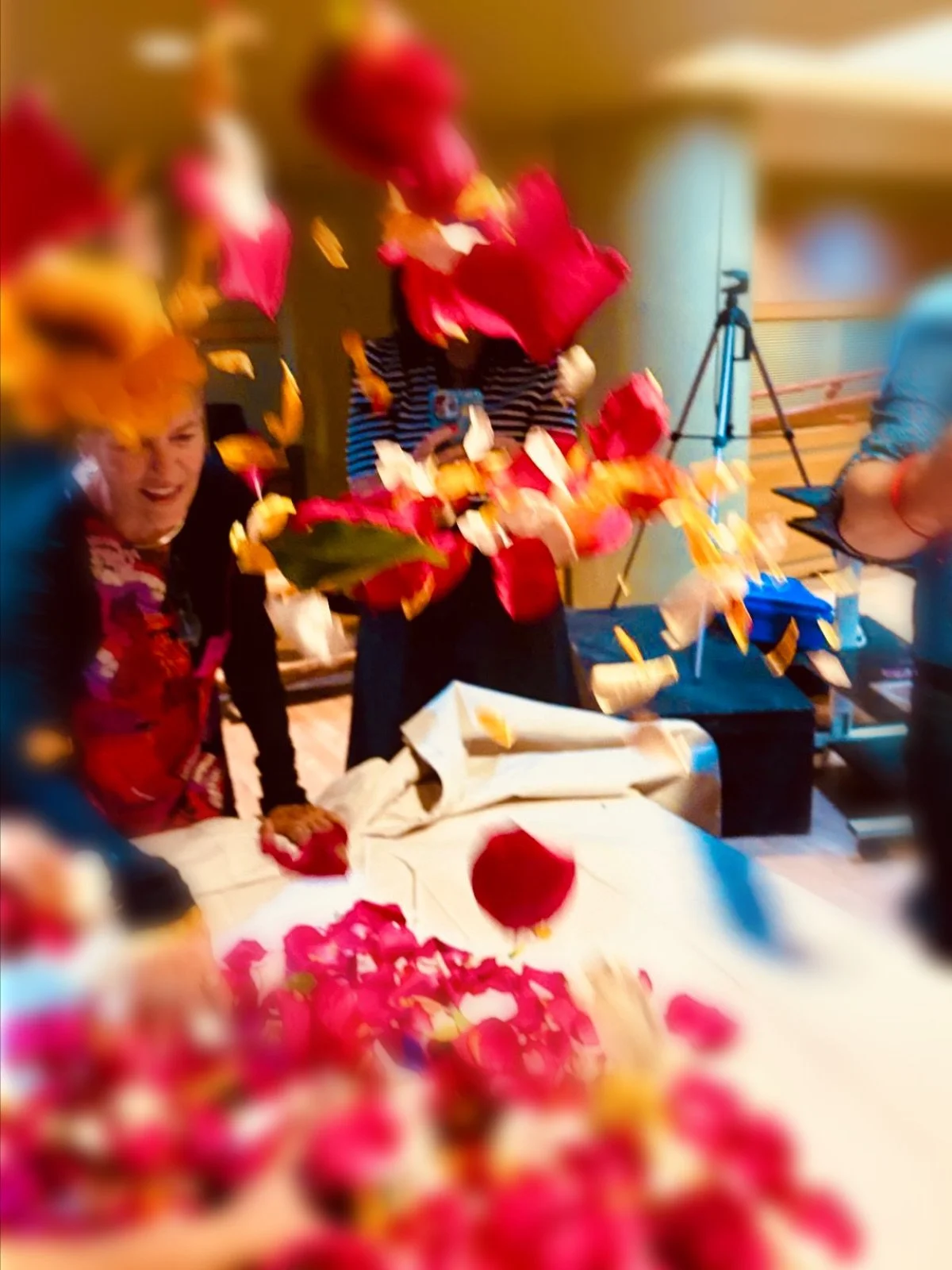
Releasing the flower Mandala from its form
Dear friends,
Thank you for such a deep and meaningful Yom Kippur., for bringing the best, most open and self-searching parts of yourself, for singing and lifting each other up. I'm overwhelmed with gratitude for all of the people who created that powerful, joyful experience with me. I'm especially grateful to the musicians and fellow prayer leaders who held the spirit for us. To the whole Susan-lead team behind the scenes. To all of our Torah chanters and young singers. To the artists who filled our space with beauty. And to all those who led those beautiful sessions in the afternoon, and to my father for his amazing search into the meaning of being a Jew. We will all carry the beauty of that little word, NO with us, as we are filled with the YES of being a part of this community.
For 24 hours we built a beautiful world together. Let's keep building it.
Shana Tova, Shabbat Shalom,
With love,
Rabbi Misha
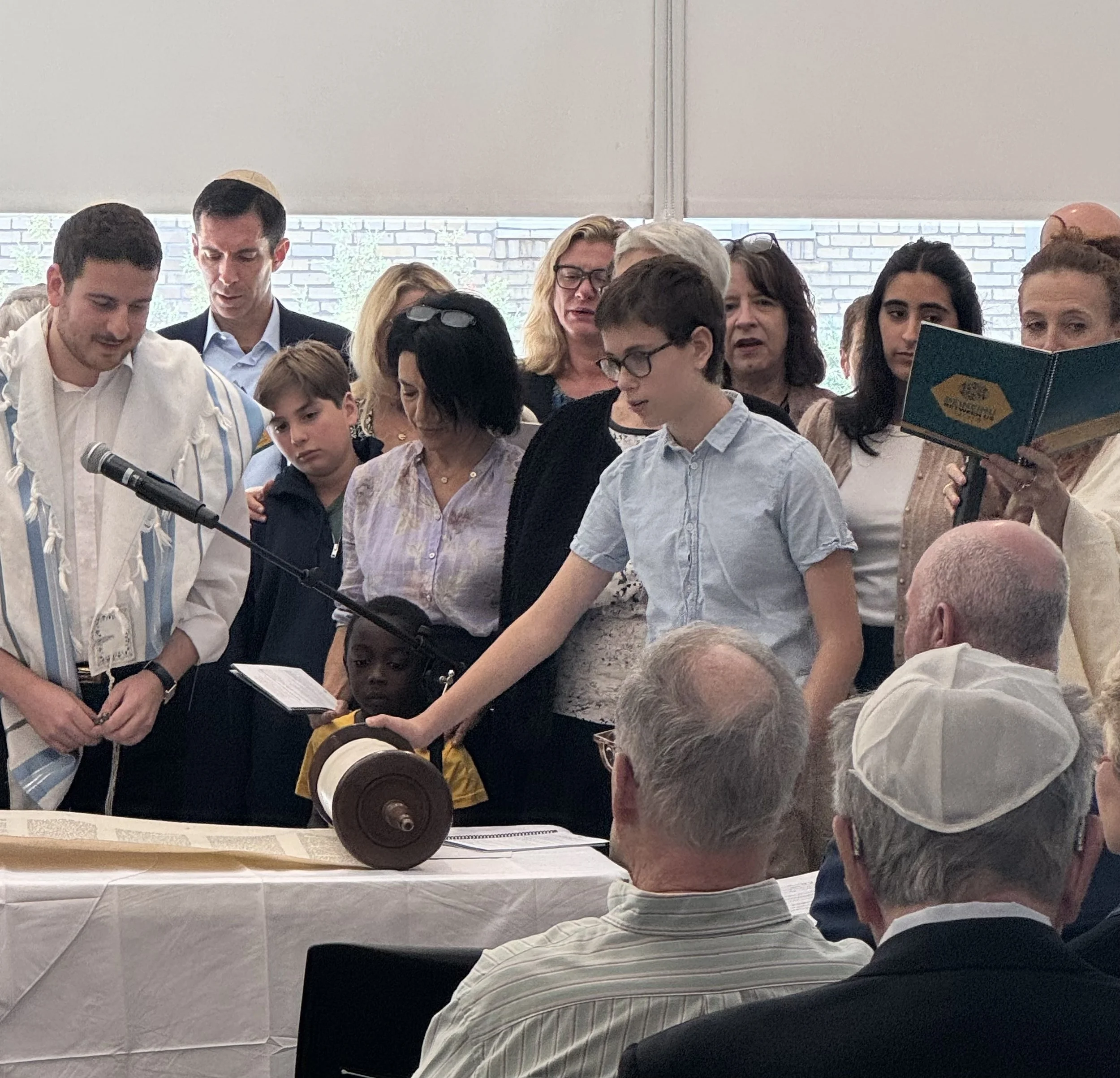
What a beautiful opening to our pilgrimage.
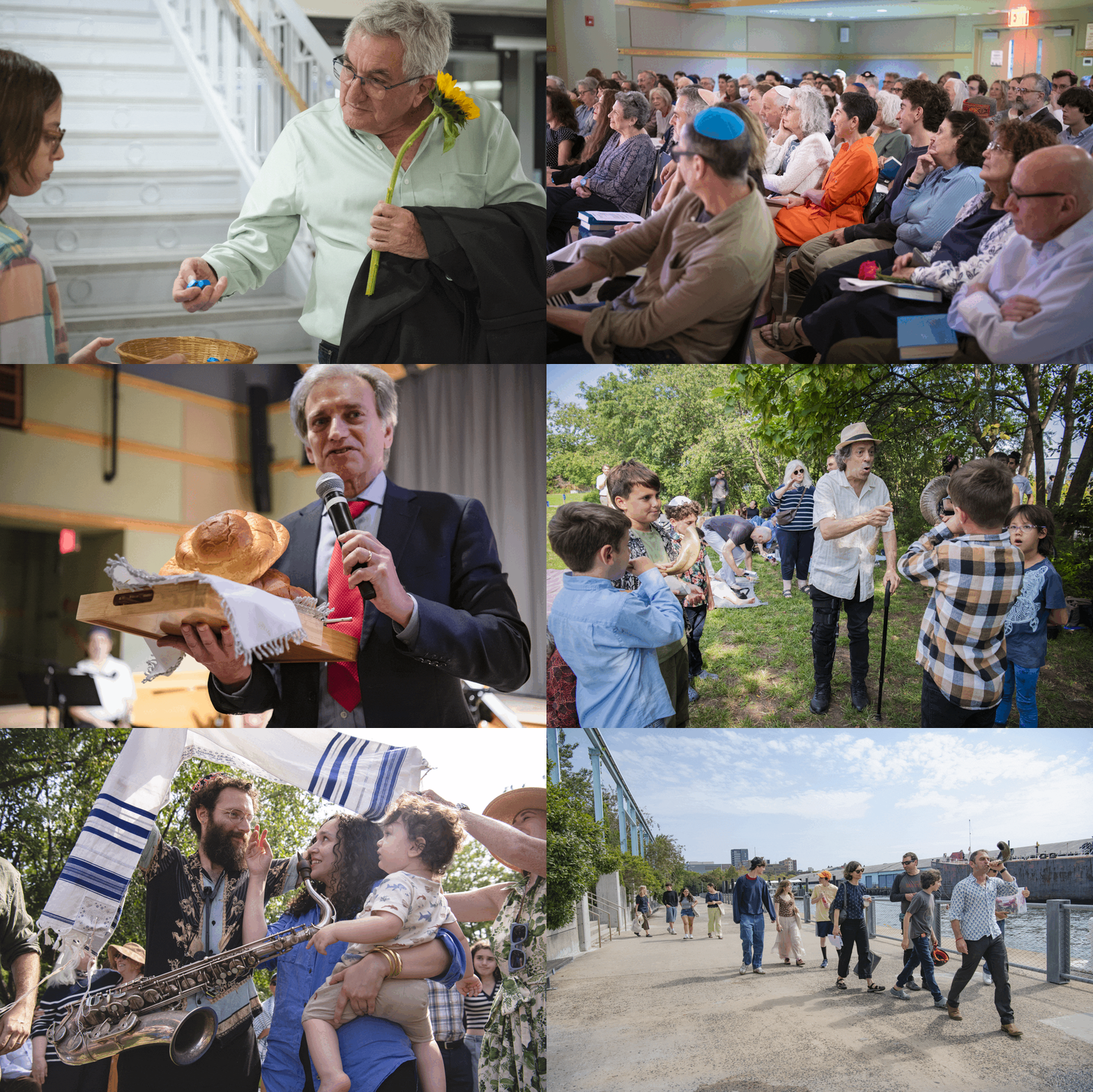
Scenes from Rosh Hashanah, as captured by Nichol Hutsel
Dear friends,
If the rest of the year will be as uplifting as our Rosh Hashanah we’re going to be just fine.
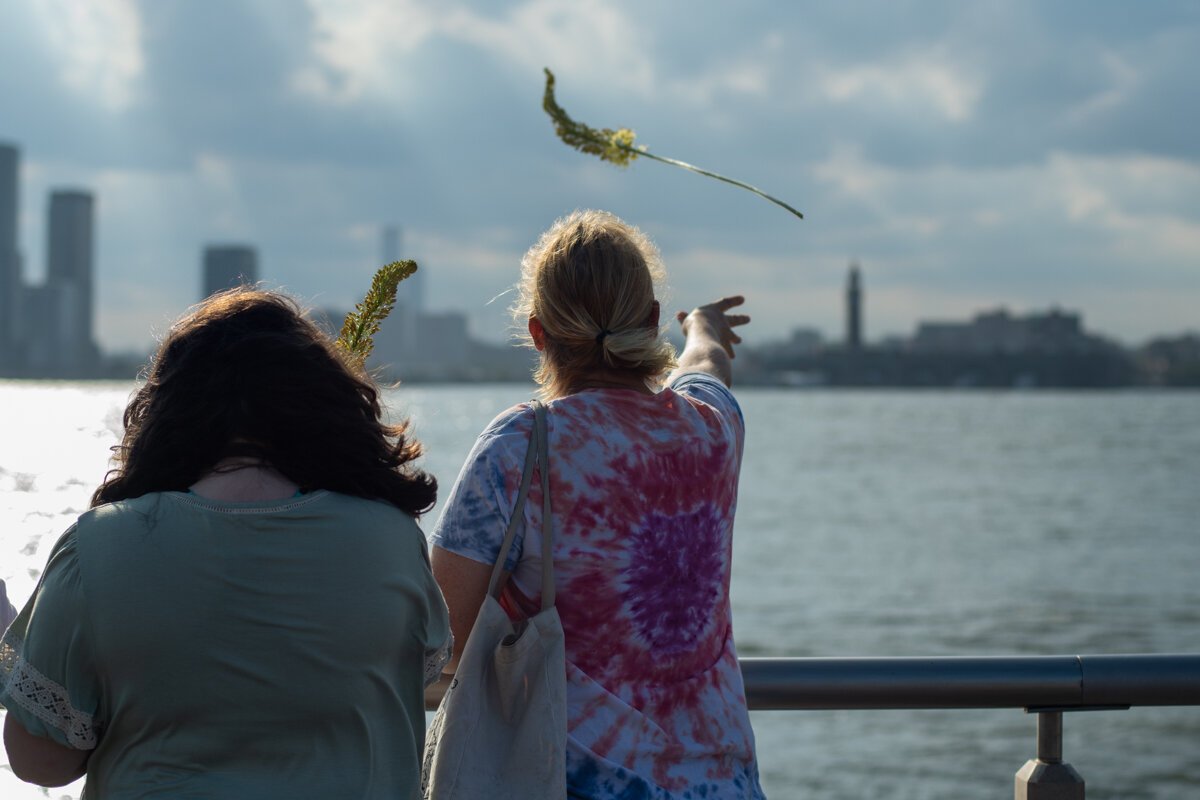
The power of coming together around ancient rituals, of music and faraway languages, of igniting the imagination towards transformation was on full display. So many breathtaking moments, in no particular order: observing the kids watch Owl, our friend from the Ramapo-Monsee-Lenape tribe burn sage and sing in his ancient language a song to invite the spirits to our gathering. Taking the gorgeous Mandala led by Suzanne Tick at the end of the night and mixing it all up into a bag of flower petals. Throwing those petals into the river the next day with a group of bright teens. Hearing Nancy thank God in Hebrew for surviving her near-death Illness, and the whole community saying in Hebrew - “may the one who granted you kindness give you every type of kindness.” Blessing 14 month old Shaya under the sun. Hearing a group of kids blow shofar under Frank London’s instruction. Walking silently, kissing the ground with the sole of my foot as per Michael Posnick’s instruction at Tashlich. And possibly the greatest moment, for me, was watching Cindy Ruskin’s Pilgrimage scroll unfurl foot by foot until this incredible piece of art that she made over the summer was fully open - all of its 33 feet(!!!), and Cindy saying “I know I had said it’s 3 yards long, but it came out 10.”
It was especially moving to me to share with you on Monday evening the stories of father-son pilgrimages that I made - with both my father and my sons in the room. For those of you who missed it, I shared how when I was 16 my dad took me to a temple at the western most point in India, and that this past year I got to take my own 16 year old (now 17), Matan on pilgrimage along the Jacobean Path to Santiago de Compostella in Spain. I offered an activity you might consider doing as part of these Days of Awe between now and Yom Kippur: go on a pilgrimage. It could be a visit to a loved one’s resting place, or some place that is especially meaningful to you in the city or around it, maybe stopping by the Bialystocker Shul in the Lower East Side, or the spot on the Bowery where CBGB’s once was, or to Mahatma Ghandi’s statue in Union Square, or anywhere else that feels like a pilgrimage to you.
On Tuesday I was wishing I could be at two places at once, because the I knew that the BeineiNewShul service uptown with Daphna and Saskia and a bunch of you was fabulous. Some of you have inquired about my words in the park in Brooklyn under that radiant sun. If you already heard them - see you on Kippur! Bring your friends. I can’t wait. If you haven’t, here they are:
We don’t know where to go. Let’s admit it. We’re living in a time that freaks us out, in a country that is going against who it’s supposed to be, while the Jewish state is behaving exactly the opposite of how we think Jews are supposed to behave. We need a change, a new direction, but we’re not sure which way to turn. Where is the holy place to return to when the whole world seems unholy? Where is the true Jerusalem, City of Peace, that we should walk toward it?
This was exactly the state of mind of the first Jews, Abraham and Sarah, at the very beginning of our people. We come from this state of mind of feeling lost in a world that is all wrong. At the height of that feeling, in the grief of losing Abraham’s father, at that moment God said to them:
לך לך מארצך וממולדתך ומבית אביך אל הארץ אשר אראך.
Walk - away from your country, from your birthplace, from your parents’ home, to the land that I will show you.
How would you feel if you heard those words? It’s scary. God isn’t even telling them where to go! They're just supposed to know where “The land that I will show you” is when they get there. These are not words that would have made me feel secure and comfortable.
But listen – beginnings don’t happen when you’re comfortable. When you know what to do. When you’re in control. When the world behaves like you expect it to. Rashi says Kol Hatchalah Kashah: every beginning is difficult. The year that my life began for real was the most challenging, most chaotic year of my life, when everything I counted on to be solid fell apart. All of my greatest blessings grew out of that year. Thank God for that year.
The Torah tells us that light was created out of chaos. Because chaos, when everything is crazy and you can’t make out any rhyme or reason for anything, doesn’t only breed fear, it also offers a type of unexpected freedom – an invitation to try things out, to wander, what Henry David Thoreau called Sauntering – walking for the sake of exploration.
That’s the freedom that Abraham and Sarah felt when they made their way to some new type of living in this “Land that I will show you.” Rashi tells us that God even told them to “enjoy their walk.” Our ancestors found ways to enjoy their walk into the unknown.
Contrary to common belief, this walk that Abraham and Sarah took was not toward the holy land. The Torah uses the name Canaan. Even when they got to Canaan, there was nothing especially holy about the place. They were the ones who made it holy, who turned it from Canaan to Israel. They walked all over it in search of holiness until they found that it had become holy. “And Abraham journeyed, walking and journeying southward,” Always toward Jerusalem. As our rabbis clarify. Always toward Jerusalem, when Jerusalem did not exist, and wouldn’t for another thousand years. Abraham understood that he had the opportunity to create new type of holiness by walking toward what he knew to be holy.
That is our task. To find new ways to walk toward what we know to be holy, just and good even when we don’t know what is going on, and we’re lost, and what was once holy suddenly looks like an abomination. To leave what we know, find new paradigms, and walk toward what we sense to be holy, until one day, which may be tomorrow and may be long after we’re gone, the paths we walked will be sacred paths, and the cities we saw go to war will be bastions of peace.
"If you’re ready to leave your mother and father, and brother and sister, and wife and child and friends, and never see them again," said Thoreau, – "if you have paid your debts and made your will, and settled all your affairs, and are a free person – then you are ready for a walk."
Are you ready for a walk?
Shabbat Shalom and gmar Chatimah Tova,
Rabbi Misha
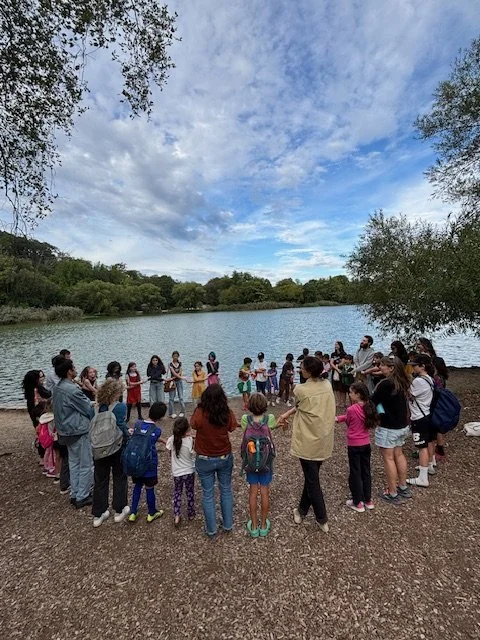
We must celebrate.
by Rabbi Misha
The night I was born, my parents, young North American Jews who had made Aliyah less than a decade earlier, walked to the Western Wall.
Dear friends,
This week I was reminded that we are about to celebrate. We opened the year at our Hebrew school with Shehecheyanu and apples and honey and blasts of the shofar and cries of Shana Tova Umetukah! And I felt all of the impediments to celebration fall to the side, and the spirits rise up into the place from which we can see how beautiful this world is.
It’s true, there are horrors in the world, in which us Jews are implicated and involved. And still, this Rosh Hashanah we are going to celebrate. We are going to rejoice. We are going to sing to the Beloved. Not even now, but especially now. Because we need it and the world needs it and if there’s a God somewhere in this upside down, pained world, as I firmly believe, God needs it more than any of us.
In his podcast, The Emerald, Joshua Schrei said: "when all that had to be done had been done, And all that needed to be let go of had been turned over to the prevailing winds, Beloved, I have a feeling our ancestors sang- they sang aloud to You."
Our ancestors no doubt sang in Babylon and in Egypt and in Jerusalem under siege, and in the new lands that so many generations found themselves in after being forced out of their homes, and in the ghettos of Europe and even in Auschwitz. Our prophets sang when the leaders of the Kingdoms of Israel and Judea brought destruction upon their people, and when they saw with perfect clarity the horrors their societies were wreaking upon the poor, the hungry, the immigrants, the widows and the orphans. In all of these times they responded to the commandment to “Rejoice on your holiday” with song.
“So I’ve been called in the midst of it all to remember You, Beloved, ”Schrei continues. “Because outrage alone, that short burning flame, is not going to cut it. I need to articulate mighty rivers of unmet longing. And cry out to the great maddening mysteries and sing songs that do justice to a Beloved that feels at times here, and at times very far away- The world we want to create.”
“Celebration is a confrontation,” Heschel taught, “giving attention to the transcendent meaning of one’s actions.”
We have to confront the world we live in. We have to confront the doubts about the meaning and purpose of our lives.
“Despair,” preached Heschel, “is due not to failures but to the inability to hear deeply and personally the challenge that confronts us,”. He raves on: “God is both present and absent. To celebrate is to invoke his presence concealed in his absence…To celebrate is to contemplate the singularity of the moment, to enhance the singularity of the self. What was shall not be again.”
The great rabbi was right. What was shall not be again. We are endowed, as Hannah Arendt taught, with the capacity to begin. Natality, she called it. That is the miracle of humanity, the source of our capacity to be “endlessly destructive and endlessly creative,” as my father says.
“I am beginning to despair, and I can see only two options, go crazy or turn holy,” said Adelia Prado, “And the times perhaps call for a type of holy madness.”
Monday evening we dive into this new year with sweetness, song and as holy a madness as we can muster. I can’t wait to celebrate with y’all.
Before I sign off two invitations - join me at 9:00am this morning for meditation and study to kick off our pre-High Holidays speech-fast.
And please add your name to this Jewish-American call to end all atrocities in Gaza on this week in which Israel intensified its offensive there this week.
Shabbat Shalom,
Rabbi Misha
The Usefulness of Despair
by Rabbi Misha
The night I was born, my parents, young North American Jews who had made Aliyah less than a decade earlier, walked to the Western Wall.
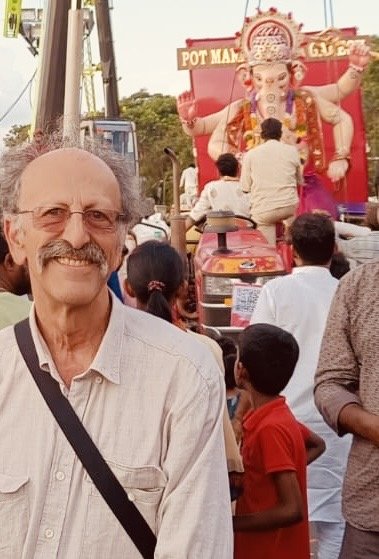
My father, David Shulman last week in Hyderabad, India, at a Hindu festival in which 50,000 statues of Ganesh were drowned in the Hussein Saggar Lake. You can see one of them being pulled up with a crane behind him.
Dear friends,
I'm excited to share with you that my father, David Shulman will be visiting from Jerusalem for the holidays and will be our main speaker on Yom Kippur morning. Many of you have met him, read his writing in the NYRB or other publications or heard him speak at the Shul.
There are all kinds of reasons to hear him speak this year: His principled, uncompromising insider's read on Israel/Palestine, gained by decades of activism to end the occupation and protective presence in the West Bank. His world renowned expertise on the ritual life, music, arts and religion of India, (which earned him a MacArthur Award and the Israel Prize, among many other accolades), where he has gained a deeper understanding than anyone I know of the concept of pilgrimage, our theme this year. My dad has made pilgrimage to more temples in Southern India than most Hindus complete in ten lifetimes, spent time in half the mosques and holy sites of Iran before the revolution, and tells me his favorite place in Jerusalem when he was a young American student at Hebrew University in the late sixties was, of course, Haram El Sharif, which the Jews call Temple Mount. His profound storytelling talent, expansive mind and restless search for beauty, even amidst the ruins.
But the reason I invited him to speak this year is because of his relationship with despair. It's a real relationship that strengthens him and plays a big role in keeping him actively following what his heart knows he should do. His never ending work on protective presence for Palestinians under threat in the West Bank
is infused, to a large degree, with this liberating despair that allows him to walk the paths of righteousness with his fellow activists week after week.
In the opening chapter of his book, Freedom and Despair, which outlines some of his uplifting thinking on this question, he writes about the internal struggle of the activist:
"But the real problem with getting out of bed before dawn is the insistent, unnerving inner voice that says: it’s all for nothing. It’s anyway a lost cause. We can’t make much of a difference. A monumental crime is going on, literally our by hour, and we are not able to stop it. We are banging our heads against a wall. No one even notices what we do. Our victories, such as they are, our minute, our ultimate defeat certain. And so on. This voice is astonishingly versatile in its range and cleverness. It’s much smarter than I am. So why not stay in bed?
But I always go anyway, and I’ll tell you why."
I invite you to read the full chapter HERE.
We are looking for the internal, energizing force that will keep us walking the road of goodness with equanimity and strength. I'm hopeful that my beloved father will help us find it.
If you haven't signed up for the holidays, please do, (and if the finances are tough this year, as they are for many of us, let us know. No one will be left out).
Shabbat Shalom,
Rabbi Misha

The Place Where Peace is Visible
by Rabbi Misha
The night I was born, my parents, young North American Jews who had made Aliyah less than a decade earlier, walked to the Western Wall.
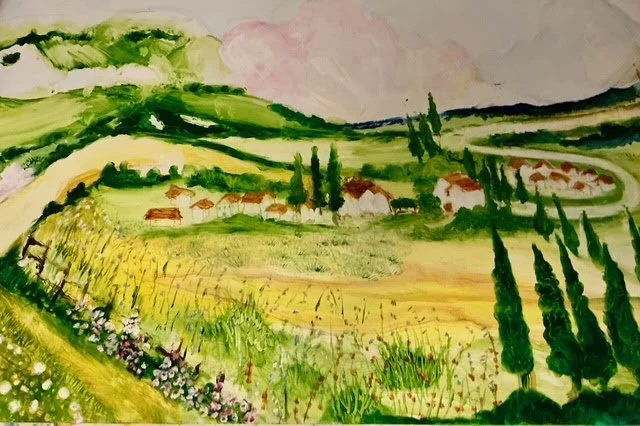
A piece from Cindy Ruskin's Pilgrimage Scroll
Dear friends,
The night I was born, my parents, young North American Jews who had made Aliyah less than a decade earlier, walked to the Western Wall. It was Tisha B’Av, the fast commemorating the destruction of Jerusalem and the Temple within it, and there were hundreds of other Jews gathered to pray. A few hours later I came out into the world.
Growing up in that city, I fully believed the rabbinic expression:
"עשרה קבין של יופי ירדו לעולם, תשעה מהם נטלה ירושלים ואחד כל העולם כולו"
“Ten measures of beauty were given to the world; Jerusalem received nine while the rest of the world received one.”
As those of you who have been there know, it is a beautiful city, with a strange power that seems to emanate outwards from the seat of holiness in the old city.
This past year, I wasn't able to visit. To assuage my longing, I spent a few months exploring what is probably the most important Psalm about Jerusalem, Psalm 122.
“Our feet stand within your gates, Jerusalem
Planted upon your wholeness:
Jerusalem, The city that was joined together.”
I grew up on these lines without knowing where they come from. “The city that was joined together” wasn’t the expression of yearning for wholeness that it served as for 2000 years of Jewish exile, but a political reality that we lived with since 1967 when East Jerusalem was conquered and annexed. It went along with common slogans like “the eternal capital of the Jewish people.”
This summer I finally made it back, and embarked on a pilgrimage of sorts with my parents to the place they visited the night I was born, the Western Wall. As we walked into the space in front of the wall, I paused at the official sign: “Welcome to the Western Wall, remnant of the Holy Temple.” And right underneath it another line from Psalm 122:
“Pray for the peace of Jerusalem
Pray that all who love her will be well.
May there be peace within her troops
Tranquility in her palaces.”
I touched the wall, prayed to my God, and then woke up from my dream and looked around. What I saw in front of me was so radically different from the faithful words of the psalmist; I felt rattled. Men with kipas and tzizis were walking around the men's section with rifles with the cartridge inserted, ready to shoot. Many of those that didn’t carry weapons wore t-shirts with militaristic jargon. Instead of “peace within her troops,” there was war within her citizens. The toxic blend of religion and power had never been so clear to me.
Earlier that day I had been reading 18th century philosopher Moses Mendellsohn’s book Jerusalem: or On Religious Power and Judaism. Considered the prime early expression of humanistic Judaism, it is a treatise on separation of church and state.
“When (church and state) go out into the battlefield against one another, humankind is the victim of this rivalry,” he wrote. “And if they live peacefully one with the other, the most valuable diamond of human happiness is lost.”
It is the latter half of the sentence that I experienced at the Wall. Our beautiful jewel of a faith tradition had been fused with a political national project, and the result is ugly. In Israel it has produced a militaristic and exclusionary version of religious Judaism that has taken over the mainstream. In the US and the rest of the diaspora it's created a softer but equally sick version of what devout Judaism looks like.
For decades the State of Israel has been at the center of our Jewishness. Its flag has adorned our bimahs. At the moment of holiness, when the Torah is taken out of the ark, we have been speaking the “prayer for the state of Israel.” Standing in front of the Western Wall I saw the impact of that fusion of religion and state on our faith world. I saw the mistake of melding faith - an uncompromising striving for justice and truth, with politics - a necessarily compromised striving for functionality. What I saw at The Wall is the same thing Mendellsohn saw taking shape in Europe in the 18th century, and the same thing we see happening here in America.
I know there were and are reasons for connecting Jewishness with Israel. I am not interested in litigating that history, nor in discussing its politics. What I am interested in this year, quite desperately, is the following question:
What are our guiding values - What is the Jerusalem toward which we are striding – and what is not? What is Yerushalayim shel mata, earthly Jerusalem, and what Yerushalayim shel mala, Jerusalem above? And, as we seek to correct our misconceptions, illusions and mistakes – which parts of our faith world are directed toward the compassionate Holy One of Blessings, and which at something else, far more earthly?
The Jerusalem I grew up in is beautiful. I love it and will continue to love it until the day I return my spirit to its source. But today I know that those nine measures of beauty didn’t all descend upon the physical Jerusalem. That city’s beauty is an emanation from a higher, deeper, more internal and far more abstract city that lives in our imaginations. When I pray, I pray not toward the city in which 40% of the population are not citizens and cannot vote in national elections, but toward the city where peace is visible. As a matter of fact, if the word Jerusalem could be translated into English it might be look like that: Yeru - to see, shalayim - peace. Together: the place where peace is visible.
These upcoming High Holidays we will search for that perfectly constructed ירושלים של אור, city of light, which will guide us in bringing light to our city here, and our world; it is that Jerusalem of the here and now that calls us to make the joyous pilgrimage of this season toward it.
I hope you can join me.
PS.
Thanks to those who joined me on the shopping fast yesterday.
Thursday, September 11th, please join me in a memorial fast, and at 6pm I invite you to join me at Prospect Park for an informal Slichot gathering on the grass by Grand Army Plaza.
Shabbat shalom,
Rabbi Misha
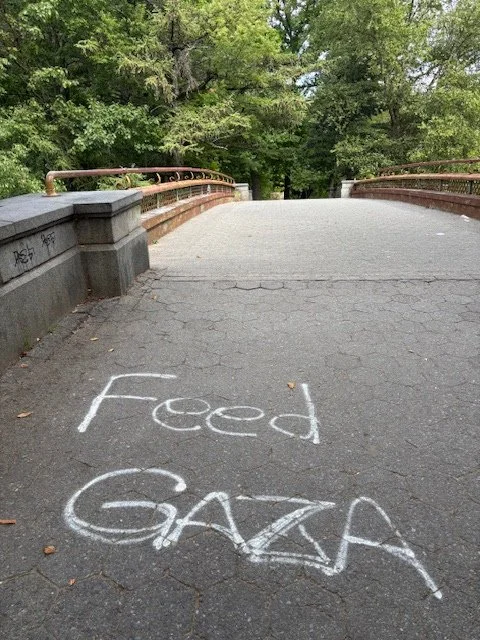
The path starts here
by Rabbi Misha
The month of Elul began on Sunday, inviting us to take stock of our lives, the year that past and the present moment. As always, each of us has a lot to think about personally, where we’ve strayed, where we’ve gone wrong, where we want to improve and where we can return to ourselves.
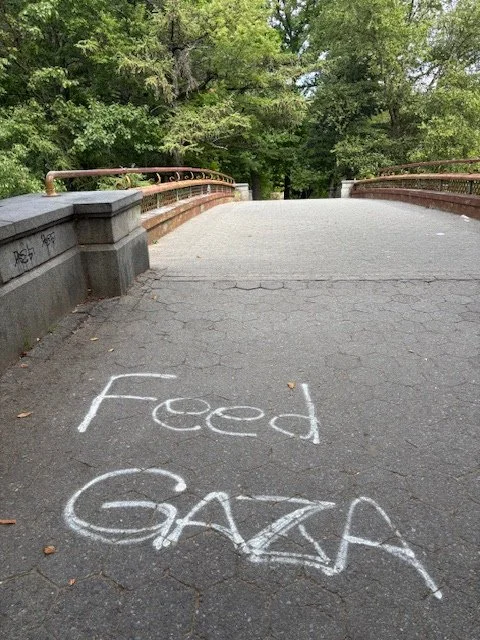
The path starts here
Dear friends,
The month of Elul began on Sunday, inviting us to take stock of our lives, the year that past and the present moment. As always, each of us has a lot to think about personally, where we’ve strayed, where we’ve gone wrong, where we want to improve and where we can return to ourselves. And the world around us, which we participate in even when we try not to is in dire need of repair. The Jewish people are, this year more than most, in dire need of self-examination, recommitment to our guiding values and repentance.
Today I sat in prayer during Tachanun, the daily repentance prayers, and was overcome by tears: I am not doing enough. I am letting the disaster continue. Gaza has been destroyed, its people starved or killed, and I keep going about my life. Is the hostage Evyatar David even still alive? At a shiva earlier this week I heard an elderly Jew say: “I saw pictures of emaciated children in Gaza. It is unbelievable that the Jews, only a few decades after what the Germans did to us, are starving and murdering children.” We are killing Palestinians, and we are killing our own brothers held hostage in Gaza suffering from the same famine. “Down in the bible belt,” the old Jew continued, “they’re going to be telling each other – look what those Jews did. If you’re worried about antisemitism now, just wait til that attitude takes over.”
This month is given to us as a gift to bring ourselves back into balance so we can walk down the path of sanity and goodness the rest of the year; so we can look not only at the surface of our problems but dig at what is behind them. The state of the world is not the product of one person or one issue or one event. We are on a continuum that began long before we were born, and touches upon our general health or illness in every aspect of our lives. Similarly, the personal problems we face are the external shell of deep oceans of internal happenings that began in the womb.
As I mentioned a couple of weeks ago, one way our people have found to center ourselves is through the practice of different types of fasts.
This Elul, I’d like to invite you to join me in whichever of the following fasts and intention settings you can. Some you can do on your own, others will be enhanced by communal moments over the course of the month.
Thursday, September 4th please join me in a shopping fast. Simply stated: DON’T BUY ANYTHING.
Thursday, September 11th, please join me in a memorial fast on this sad, holy day. I will refrain from food from sunrise to sunset, though I do plan to drink. Then, that evening at 6pm I invite you to join me at Prospect Park for an informal Slichot gathering. I think it is important that we see each other before the High Holidays, so the main purpose will be to hang out, meet new people and picnic. And we will also sing some traditional slichot songs on the grass by Grand Army Plaza. (everyone is invited whether or not you’ve fasted!)
Saturday morning, September 13th will be a Shabbat gathering in Brooklyn, which will include Kika’s Bat Mitzvah. Joy is maybe the single most important piece of our repentance puzzle.
Thursday, September 18th please join me for a news fast: No news for 24 hours.
Friday, September 19th please join me for a speech fast. We will gather on Zoom at 9am for a meditation and morning study, where I will explain that this type of fast does not mean you refrain from speaking the entire day, but that you limit your speech only to divine purposes, including prayer, study and caring for others. No chit chat, no talking about politics. Think about it as a Mikvah, or ritual bath for your tongue. (again, everyone invited even if they don't plan on fasting.)
Sunday, September 21st, please join me at 4pm for the weekly Israelis for Peace protest in Union Square to call for an end to the war and return of the hostages. The speakers that day will be powerful. May Pundak and Dr Rula Hardal are the Israeli and Palestinian women running the organization A Land for All.
My hope is that by September 22nd, when the new year begins, we will come ready to dive into the Days of Awe together with awareness and love.
Please sign up for the gathering events HERE. And please write to me to let me know if you will be joining any of the fasts, and what impact they had on you.
Shabbat shalom,
Rabbi Misha

Walking
by Rabbi Misha
A friend told me this week that he walks 12,000 steps every day. I don't walk around with my phone on me much of the time so I have no idea how many steps I take. But since I was curious, I started counting my steps.
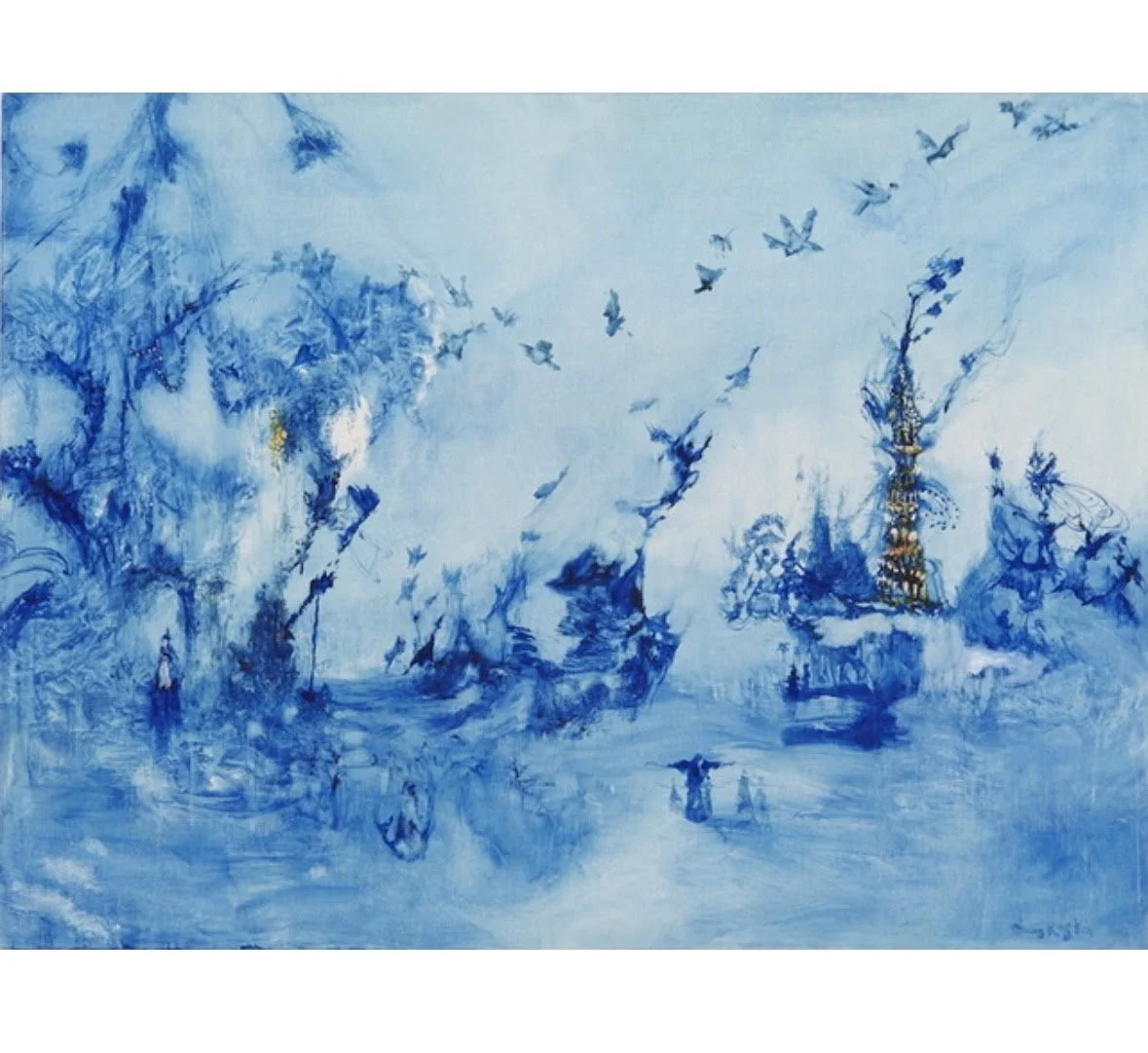
by Cindy Ruskin
Dear friends,
A friend told me this week that he walks 12,000 steps every day. I don't walk around with my phone on me much of the time so I have no idea how many steps I take. But since I was curious, I started counting my steps. I was amazed to discover that walking to the end of my block, less than a minute walk, takes around 100 steps. Walking from my bedroom to the kitchen takes about 50. Even on lazy days we each walk thousands of steps, almost all of them without paying attention.
I'm thinking a lot about walking since our theme for the holidays this year is Pilgrimage. In this Shabbat's parasha we are given the commandment to make pilgrimage three times a year to Jerusalem. How many steps did it take our ancestors to walk from wherever they lived to Jerusalem and back? Once they were in front of the temple there were an additional fifteen steps to walk up. And once they were in the temple, how many steps did they take there? The answer is: who cares?
The more interesting question is how many of the steps they took did they pay attention to? I imagine that those fifteen steps up were mindful steps. These final fifteen steps were taken barefoot. The Levites would stand at either side of the stairway singing the fifteen Songs of Ascent, one poem for each step. They called on the pilgrims to notice, to be present, to pay attention to where they were and how they were bringing themselves into the temple.
Now that the temple is gone, we don't have a commandment to make pilgrimage. Instead, the rabbis encourage us to be in a state of pilgrimage at all times; to treat every step we take as though it were one of those final fifteen steps into the temple.
These High Holidays we are planning on including some walking meditation, a practice which I learned at Blue Cliff Monastery, a Zen Buddhist monastery in the Catskills in the tradition of the late master Thich Nhat Hahn. Every day at noon the sisters, brothers and guests gather to take a walk. They sing a song of gathering, and then embark together silently on their way through the woods, walking slowly so as to feel their feet on the ground, to notice their breath and the nature around them.
In his book, How to Walk, Thich Nhat Hahn writes:
"Walking brings the mind and body together. Only when mind and body are united are we truly in the here and the now. When we walk, we come home to ourselves. If you’re busy talking while you walk, or planning ahead, you won’t enjoy your in breath and out breath. You won’t enjoy being fully in the present moment. We don’t have to force ourselves to breathe in, because we are breathing in and out all the time anyway. We only need to focus our attention on the breath and the walking. In no time at all you go home to your body, and there you are, well established in the here and the now."
Maybe this Shabbat we can take a few pilgrimage-type steps toward that God of our feet, who often showers us with gifts of calm and peace, the present moment.
Shabbat shalom,
Rabbi Misha

News Fast
by Rabbi Misha
Ten days ago I was talking with Shai and Monica, two fellow New Shuler Israelis living in New York. Naturally, we got to talking politics. But I noticed that it was primarily a conversation between Monica and me.

אדיר במרום
Dear friends,
Ten days ago I was talking with Shai and Monica, two fellow New Shuler Israelis living in New York. Naturally, we got to talking politics. But I noticed that it was primarily a conversation between Monica and me. And then Shai explained why. A month ago, he said, he was in a terrible state of news addiction. Much like me, and most Israelis I know he was checking Israeli news sites many times every day. as well as the New York Times for good measure. And an extra glance a couple times a day at a few other American and international news sites. Then he found himself at a retreat on which he wasn’t allowed to be on his phone for a few days. Since then he hasn’t gone back to checking the news. And is more relaxed and much happier as a result. “Cold turkey,” he advised, “it's the only way.”
I decided to try it out. For the last week I did not check the news. Just like Shai said would happen, I got the main headlines from conversations or emails. And I also found myself much more relaxed, less agitated, more focused and in a better mood.
I learned a few things while on my news fast this week. First, that most of the times I check the news it is simply out of an addicted, bored habit. My news addiction is very much related to my phone addiction. Improving my relationship with one has a major impact on my relationship with the other.
Second, it taught me something about why I read the news. When I check the news many times a day, I tell myself that it comes out of an instinct for informed citizenry, care for my friends and family back home, and the desire to impact and fight back against horrors I see happening here in this country. All of that may be true to a degree, and I certainly did not come to the conclusion that we all need to stop being informed. That’s the last thing I would like to advocate for. But I do think that underneath the instinct to obsessively check the news there lies an unhealthy grasping for emotions and feelings that the terrible news we keep receiving often creates. A piece of the addiction is about feeding the dark emotional hole that sits there within our consciousness.
Feeding that monster drains us. We don’t emerge stronger from it most of the time, but more distracted, anxious, sad and despairing. These are feelings that, for the most part, make it harder to take a stand, to go to a protest, to sign a petition, to reach out and speak to friends we disagree with, to see the political world with a clarity that is connected to our instinctive and healthy sense of right and wrong.
The month of Elul is upon us. It is a time our tradition gives us to center ourselves and prepare for the righting of wrongs that have infiltrated our behaviors, before we begin a new year. During this month, I will invite those of you who are interested to join me in a number of fasts. News fasts will be one category. Speech fasts, a tradition developed primarily by Tunisian Jews in the 18th and 19th centuries will be another. Each of us might also decide to take on a personal fast of sorts by way of a vow. The traditional, biblical version of these Nazarite vows includes abstaining from wine and from cutting one’s hair, but we might each look for our own vow. What might we commit ourselves to abstaining from for part or all of the time of the month of Elul?
And then of course, there are fasts of food and drink. Many people around the world have been observing such fasts to express their solidarity with the people of Gaza. In Ireland, a string of such personal fasts, in which one person fasts for 24 hours, has been going on for 418 days. Some Israelis have been observing fasts for long periods of time, some in front of the Knesset , as a way to call on the government to do much, much more to return the hostages.
With the ongoing hunger and starvation in Gaza, a fast seems like a more significant and powerful response than reading more headlines and analysis as we prepare to celebrate a new year.
The world is a rushing river pulling us in with all it might. We need to look for the ways to step out of it, breathe and observe so that we can be energized, clear-eyed participants in it. Both for the sake of our mental health, and for the mental and physical health of this world.
The Psalm for Friday reads as follows
מקולות מים רבים
אדירים משברי ים
אדיר במרום יהוה
More powerful than the thunder of the mighty Waters
Are the frightening waves of the ocean as they crash onto the shores.
Above the waves sits the most powerful: The Eternal God of Being.
This Shabbat, try a news fast. You won't regret it.
Shabbat shalom,
Rabbi Misha

The Sacred-Everyday
by Rabbi Misha
I once asked Erika’s teacher, Ray Deal, a traditional medicine man from the Navajo nation whether his tradition has a Sabbath. “We don’t differentiate,” he answered, “all days are sacred.” I remembered this conversation this morning when I woke up with the phrase “the sacred-everyday.”

Dear friends,
I once asked Erika’s teacher, Ray Deal, a traditional medicine man from the Navajo nation whether his tradition has a Sabbath. “We don’t differentiate,” he answered, “all days are sacred.” I remembered this conversation this morning when I woke up with the phrase “the sacred-everyday.”
It’s sometimes easier to connect with for me when I visit the enormous part of our planet that is not shaped by human beings. I look at a tree, standing still performing its task with constant stillness. I see the mist on the water in the early morning. I hear the various sounds of the birds, and I know that sacredness abounds all the time, it’s just a question of paying attention to it.
In our meditation chevrutah this week Amy said: “When I focused on my breath I could hear the birds. When I was busy with my thoughts I couldn’t hear them.” Sacredness is a lot about listening, or some might say uncovering. We uncover the sheen of dullness and notice something beautiful.
Harav Kook, chief rabbi of Palestine in the early twentieth century wrote about this concept in his book Orot, Lights:
הקודש שבחול, שירד עד לידי החולין הגמורים, הוא יותר נשגב וקדוש מהקודש שבקודש, אלא שהוא מסתתר הרבה. ואין קץ ותכלית לתיקוני העולם שיבאו מכל הטוב הבא לעולם בדרך חול,
“The holiness that is in the mundane, when it goes down into the fully mundane, is higher and holier than the type of holiness that is in holiness. However, it hides a lot. There is no end to the healing that will come to the world from all of the goodness that comes into it by way of the mundane.”
One way to think about this is through the eyes of parenthood. As a parent, I am completely in love with my boys. This doesn’t mean I always feel love for them, but that my attention is turned toward them, that I think about what they need and that I live with them as part of my own existence. When others might see them as cute or sweet or annoying (all of which I see too!), what I see in their behavior, or hear in their words comes within a context of deep intimacy and love. The sacred, in the form of love, pervades the mundane and changes the way I see them, and them me.
That last example is a type of the sacred-everyday, which points to the connection between holiness and love. When we are commanded: והייתם קדושים, “be holy,” we are being invited to play our role in the grand story of universal love. In the evening prayers, before the Shma we acknowledge the sacred gifts we live amongst with the blessing: “Baruch atah YHVH ohev amo Yisrael” “Blessed are you YHVH, who loves His people.” We are loved by the universe, a simple type of love that is hidden within the everyday. When we listen to it, we sometimes are able to hear it.
Yesterday, one woman who knew how to live with the sacredness despite tremendous devastation passed away after 96 years on this planet. Rita Berger z”l, Mother of Susan Berger and grandmother of Talia Feldberg passed away peacefully surrounded by loved ones. Rita, which many in our community knew, was a deeply loving person with incredible elegance, strength, and fortitude. Her steadfast belief in her capacity to create a better life for herself and those she loved, following childhood experiences in the Holocaust, enabled her to live a life full of family, joy, and humor. Along with Simon, her husband of 73 years, she inspired all who knew her. In addition to Susan and Talia, she is survived by her children Ellen and Mark; granddaughters Amy, Lexi, and Rachel; and great-granddaughters Liat and Noa.
Shiva will be at Susan’s home
65 W. 13th St., Apt. 5I New York, NY 10011
Tuesday 4pm to 8pm
Wednesday 4pm to 8pm
Thursday 4pm to 8pm
May Rita’s memory be a blessing, and her life a continuous reminder of our ability to peel off the shell of the cruel and the mundane and find within it love and sacred purpose.
Shabbat shalom,
Rabbi Misha

The Sacred-Everyday (Copy)
by Rabbi Misha
There is only one person I’ve ever met who could quite literally make a room full of people fly. I understand your skepticism. I had it too once. It vanished one Monday afternoon in the early 2010’s in a yoga studio in Chelsea, when I saw Rabbi Burt Siegel do it.
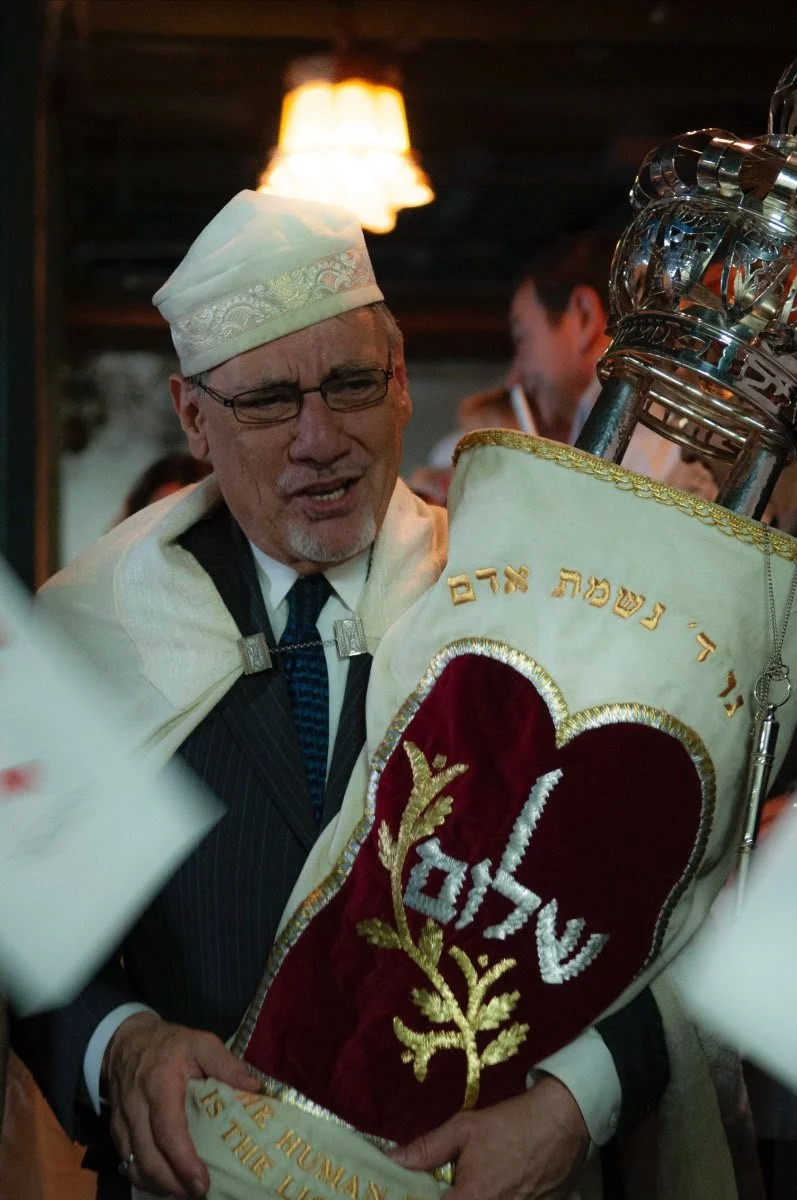
Rabbi Burt Siegel,
my dear friend and teacher, the founding rabbi of the Shul of New York and member of the New Shul's Rabbinic Chavurah, passed away last week.
Dear friends,
There is only one person I’ve ever met who could quite literally make a room full of people fly. I understand your skepticism. I had it too once. It vanished one Monday afternoon in the early 2010’s in a yoga studio in Chelsea, when I saw Rabbi Burt Siegel do it.
I had come early to the Shul of New York’s Hebrew school, where I had been teaching for a few years, in order to study with the rabbi. After years of observing him in action, taking in his approach and being infected by his unique mode of being Jewish, Rabbi Burt had agreed to become one of the rabbis preparing me for ordination. He suggested we start with Rabbi Zalman Schechter Shalomi’s book, Davening; A Guide to Meaningful Jewish Prayer. Our conversation dug into the intangible source of prayer, which goes far beyond words written in a prayer book. The rabbi had told me previously that he “doesn’t smoke marijuana because he’s naturally high.” This was one of the many moments in which I understood what he meant.
The other teachers arrived. Then Adam, the Shul's musical director, the rest of the team, and finally the children and some of their parents. We all gathered for the opening prayers. During the first couple of songs I could tell that Rabbi Burt was still “high.” When we reached the Mi Khamocha the rabbi stood up mid song, smiling. When he invited everyone else to stand too, I thought “Uh oh.” When he began walking around in a circle around them, inviting them to join, my embarrassment kicked in. And when he began flapping his arms to the music as if they were wings, I was awe struck. I felt myself rise to my feet, my voice switch from pronouncing Hebrew to letting out whatever sounds it naturally sang, and my arms begin to flap as I joined the circle. The rabbi was crying out “Fly! Fly!” And we were all doing it. Smiling, bewildered, happy, mortified, singing, dancing, joyful beyond the capacity of a New York Monday afternoon: kids, grownups and elders all experiencing prayer as if for the first time.
The happiness we experienced in that circle was at the core of Burt’s rabbinate. I remember the first time I attended one of his services, before I ever met him. It was Yom Kippur, and I sat with Judith Malina, the legendary director of the Living Theatre, of which I was a member at the time, and we both marveled at the Yom Kippur celebration he led. No fist thumping and moaning, only the ecstatic joy of being alive, being together, being lifted by each other and God.
This near irreverence took me by surprise when I began following him to his Friday night services. I had never seen Torah read on a Friday evening, which was novel enough. But what both scared and exhilarated me was when he took the Torah out of the arc to the band’s raucous Torah Orah and passed it on to other congregants who danced around with it in the aisles, before passing it onwards. There was a danger in the air, which brought me inescapably into the present moment, and allowed happiness to appear.
After Torah reading, which he did himself speaking the Hebrew words clearly, without trop, the rabbi would preach. Hi sermons were – on paper – short. They usually contained one simple idea, which took on profound meaning with Burt’s slow, direct and concentrated delivery. He had some magical ability to open the channels between his listeners’ ears and their hearts, so that when his message was delivered it made its way through their cerebrum and into their bodies.
In those years his sermons often contained some Indian flavor. He would take congregants annually to India, and spend time in Ashrams. But at a certain point his never-ending search for God - which he told me once was the most important question in his life - led him away from India and back into the Ashkenazi Hassidic tradition from which he came. He began studying with Chabad rabbis, exploring the impact of their teachings on his soul. For the first time in his life, he would prepare a bowl of water by his bedside so that as soon as he woke up, he could wash his hands with the traditional blessing and thank God for giving him one more day. At this stage, he had already lived about fifteen years longer than any of his parents and siblings, so he had a real appreciation for time.
And then, quite suddenly, his several years love affair with Chabad was over. He couldn’t take the politics, the misogyny and especially the homophobia. He was done hiding. The following week I saw him at the Mazals, the annual gala of Jews for Racial and Economic Justice, the lefty organization that is home to many of this city’s LGBTQ Jews.
This very real search was one of the great lessons I learned from Rabbi Burt. One of the hardest things for human beings is changing from a mold they are used to. For him this was a simple matter. Like we eat and breathe, we also need to honestly listen to ourselves and make changes accordingly. This is what led him to leave his congregation in Riverdale decades back, and to start The Shul of New York, which he led for close to twenty years before retiring.
But what drew me to this rabbi, the likes of which I had never encountered, was his larger-than-life stage persona, which simultaneously carried seriousness and play, depth and silliness, truth and nonsense. When he would conduct a conversion, for example his entire self was present to the reality of the transformation taking place - even as he knew that the words spoken were just words, the actions just actions, and any change that would emerge from it dependent on the imagination of those present. There is no ground to stand on in this world, he taught, other than what happens between us.
After watching him for a decade I began to copy what he did. At Bar Mitzvahs I would give the same introductions to prayers I had heard him give time and time again. I’d even perform his over the top, absurd version of Uzi Chitman’s Adon Olam in the same Tevye meets Sinatra style to end the ceremony. When people would rave after the service, exactly as he told me they would, I would honestly say “I was just channeling Rabbi Burt.”
Though I’ve developed my own rabbinical style by now, I know that I would not be doing what I do today had Rabbi Burt not shown up in my path over twenty years ago. He ignited and nurtured my curiosity, guided me, and presided over Erika and my wedding. A teacher is an ultimate gift, worth more than all the money in the world. When your teacher is your friend as well, the gift multiplies many times over.
In his final years, after beating off multiple critical illnesses that brought him to death’s door, Rabbi Burt retained his strong body (“Strong like a bull!”) his natural positivity, his curiosity and love of learning (in his last decade he studied both Spanish and Arabic for extended periods) and what I would call his love of God, as manifested in his gratitude, his love of people and his spiritual quest.
This quest continued beyond his death. True not to dogma and tradition but to the source that transcends them, the rabbi ordered his body cremated and his ashes scattered in the Hudson River.
May we merit such a life of generosity and mitzvahs. May we continue the song he sang. And may the seeker’s quest be fulfilled in God.
Shabbat shalom,
Rabbi Misha
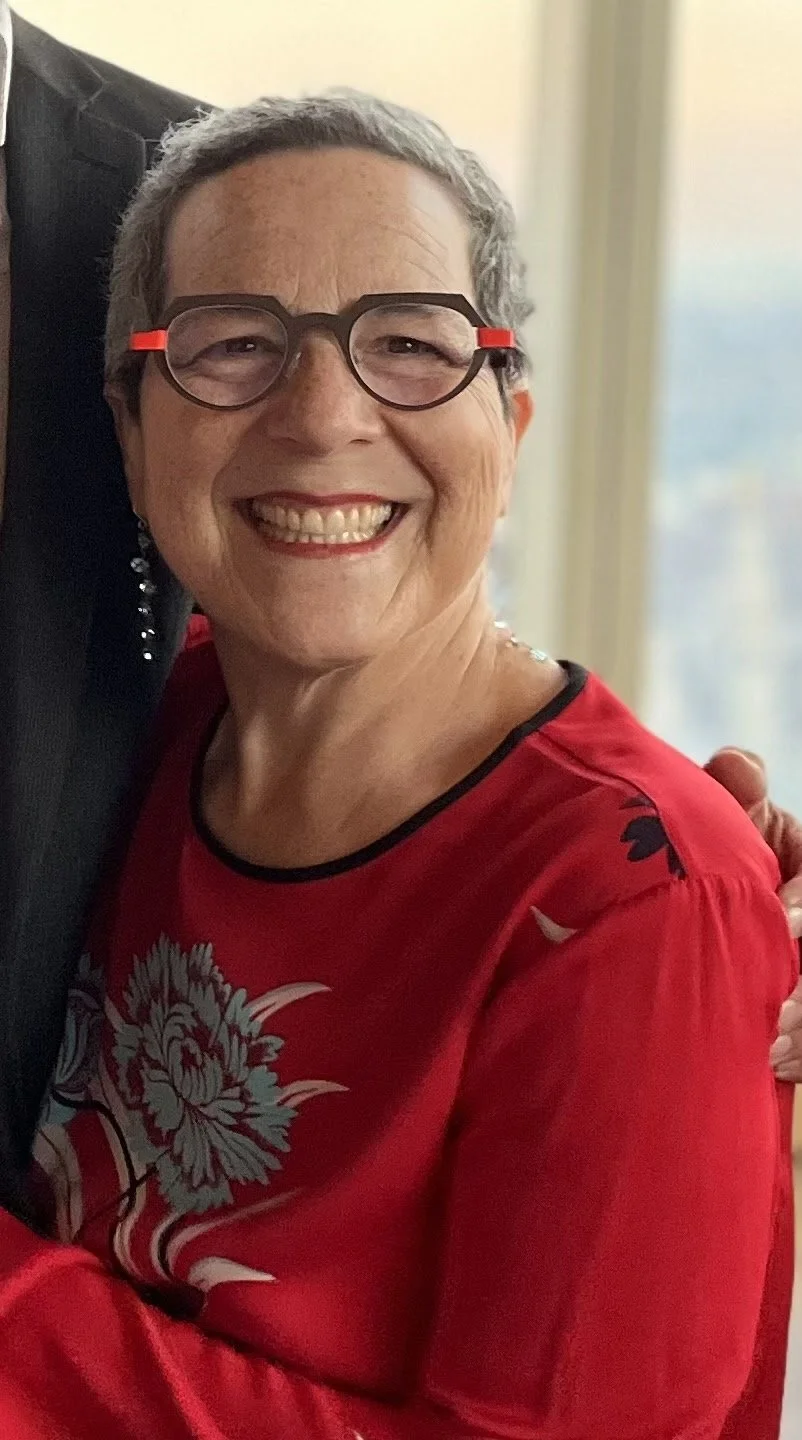
No Hurry To Find Out
by Rabbi Misha
This week we lost my dear friend and teacher Rabbi Burt Siegel. As I've been collecting my thoughts to share with you about Rabbi Burt, I’ve been reminded several times of another great teacher, the wonderful Rabbi Laurie Phillips z”l, who ran Beineinu with Daphna until she passed at age 55 in 2023.
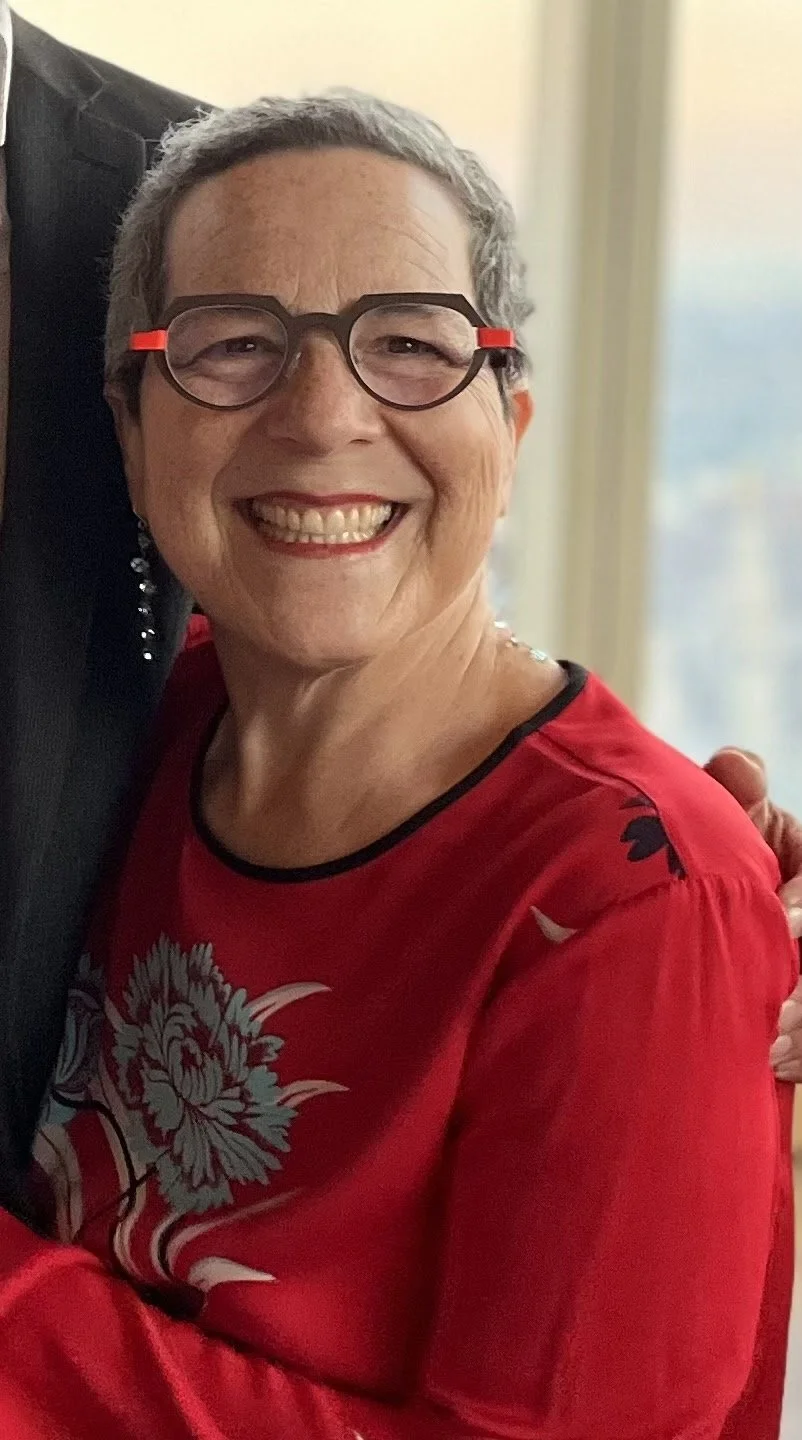
Rabbi Laurie Phillips z"l
Dear friends,
This week we lost my dear friend and teacher Rabbi Burt Siegel. As I've been collecting my thoughts to share with you about Rabbi Burt, I’ve been reminded several times of another great teacher, the wonderful Rabbi Laurie Phillips z”l, who ran Beineinu with Daphna until she passed at age 55 in 2023. I had the honor and pleasure of meeting her not long before she passed, and I’ve been hearing stories about her from Daphna and other Beineinu friends since. When we met, she gave me one of her famous Be Kind pins, as she did with anyone she met, be it in her house, in a cafe or on the subway.
In Jerusalem I visited teacher/guru Melilla Helner Eshed, my Kabbalah guide, and saw one of Laurie’s pins on her wall. When I attended her class at Hartman Institute, Melilla spoke about her friendship with Rabbi Laurie to the audience of a hundred or so American rabbis.
This week Daphna sent Yonatan and me a wonderful poem, which she had received from Mia, a young Laurie devotee, who has been praying with us at our New Shul-Beineinu shabbatot in the Upper West Side all year. Mia had read some poems that reminded her of things Rabbi Laurie used to speak about during High Holidays. Below is one of those lovely poems. Is there a greater privilege than continuing the work of the teachers on whose shoulders we stand?
No Hurry to Find Out
by Rosemary Wahtola Trommer
Joan asks me what happens after we die,
and I don’t know, but I do know
how to stand beside the river
and see a shrine in every rock I find,
which is how I spent the day yesterday.
And I know that walking today
in the snow, every step felt like
a prayer, which is to say
I feel so very lucky to be alive,
even though I don’t know who
the prayer is to—nor what the point
of praying is—except that on days like today
I overspill with gratitude
and it feels so good to say thank you
for this life that happens before we know
what happens after we die.
Shabbat shalom,
Rabbi Misha

The Runaway Prophet
by Rabbi Misha
The ancient port of Jaffa is alive
Dear friends,
I was in Jaffa this week, at the very port where the prophet Jonah found a boat going as far as possible to run away from facing God. And another Jonah was there, except he couldn’t find a boat that sails further than Tel Aviv. That didn’t seem far enough to him, so instead he sat around chatting people up and comparing stories of escape.
“Where are you from,” he asked me.
“Jerusalem,” I answered, “but I live in Brooklyn.”
“Ah,” he smiled, “Which fault did your ancestors find in me that they went so far away from me?”
“That’s what Jeremiah spoke,” I retorted, “But I follow King Solomon:
‘Like a bird wanders from its nest, so a person wanders from his place.”
“It’s that simple,” he cried, and broke into a happy laugh. “He’s just w-a-n-d-e-r-i-n-g away!”
“What’s so funny,” I asked.
“It’s not you,” he said, suddenly staring at me with his piercing blue eyes, “it’s me!”
The next day I thought I saw him at the demonstration. But it may have been some other runaway prophet.
Shabbat shalom,
Rabbi Misha

Seeing Reality In the Land of Israel
by Rabbi Misha
It took some serious manuevering, many hours spent on internet travel websites, days of worry and stress and a bucket of luck or divine support, but I landed in Ben Gurion airport a few days ago. I write to you from what was my early childhood bedroom and is now my father's study, with the familiar view of olive trees, bougainvilleas and houses built from old Jerusalem stone.
Clouds roll out as storms break? by Susan Weinstein
Dear friends,
It took some serious manuevering, many hours spent on internet travel websites, days of worry and stress and a bucket of luck or divine support, but I landed in Ben Gurion airport a few days ago. I write to you from what was my early childhood bedroom and is now my father's study, with the familiar view of olive trees, bougainvilleas and houses built from old Jerusalem stone.
This morning around 5:30 I had a strange moment of dejavu. I was awakened from my deep, jet-lagged sleep by my father touching me lightly and saying "there's an alarm. We have to go down to the safe room." It was a confusing moment, not only because I was so fast asleep, but because I remember so clearly that very same wake up 35 years ago during the Gulf War. Then we used to go upstairs to the sealed room, because the greater concern was that Saddam Hussein would send rockets with chemical weapons, and those chemicals are heavier than air so the whole country went upstairs instead of down. This morning we huddled together in the coat closet under the stairway for ten minutes, in the middle of which we heard the interception of the rocket, until the announcement to leave the safe rooms came, and we went back to bed.
The Gulf War was the first time I ever came to New York. My parents decided they need to get me out. Despite my protests - teen age me felt guilty abandoning my people in their time of trouble - my father and little brother dropped me off in New York with my friend Eytan, whom I'd spend much of that war with. Now I came the other way.
Coming here is a bit like waking up into a strange twilight. Most of us Jews in the diaspora live with a rich connection to this place, that is primarily in the imaginative realm. Things happen here and we fill with emotion over there, and it creates realities in America that we take to be real. But they're not. At least not in the sense that you get when you come here and connect with the reality as it appears at the source. We are captive to our feelings and ideas about a place that we live oceans away from. So, for example I was surprised when both my sister-in-law and my good friend told me that the hardest moment in the last month was when the war with Iran ended and they were all expected to transition swiftly from fearing for their lives to the regular every day. The insanity of the whiplash was too much.
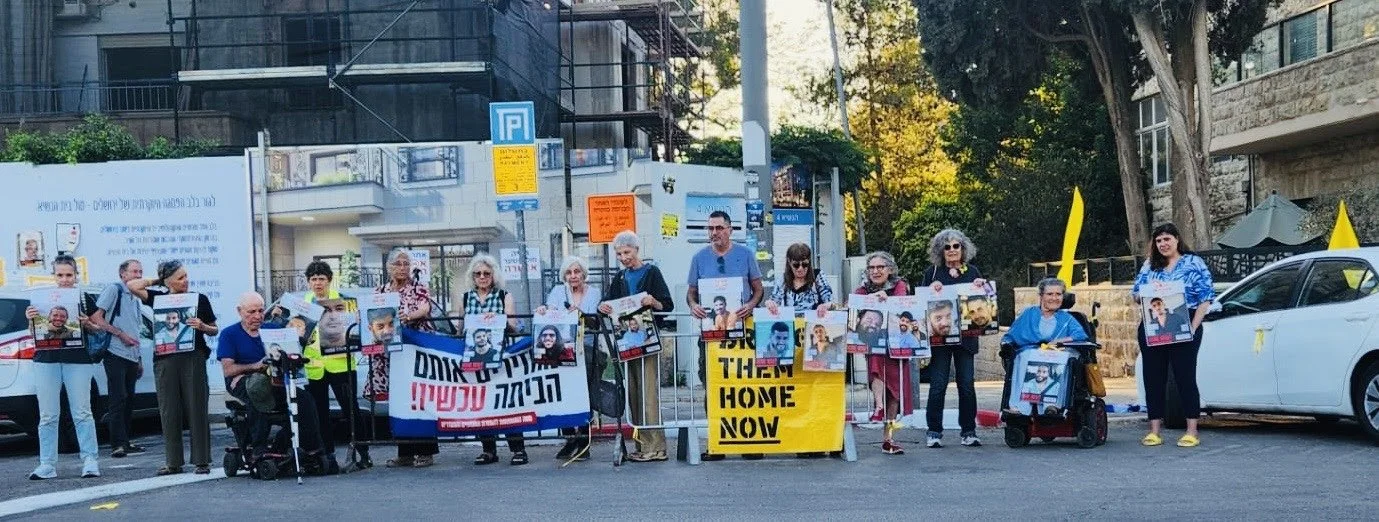
Or my mother, whose day-to-day reality includes a shift at the protest in front of the president's residence demanding a return of the hostages. When I sang her a verse from the Psalms yesterday - "Had I not believed that I would see the goodness of God in the land of the living..." She said: "That's hard." "True," I answered, "but you just came back from an afternoon with your grandchildren." "I'm thinking about the hostages and the Gazans," she said simply.
There are two images that are simply everywhere in this country: the hostages and Israeli flags. "עד החטוף האחרון""Until the last hostage (is returned)," the signs you see all over the place read. In America the yellow ribbon means something quite different than it does here. Though more nuanced, over there it ultimately implies support for Israel. Here it means primarily a rejection of the government who is considered to have brought about October 7th ,and then proceeded to break the basic social covenant upon which the state is built, that we are responsible for one another. Over and over you walk by signs blaming the government for abandoning the hostages, and prolonging the war that endangers them, and has killed many of them.
But by far the most dream-like, strange experience I had so far on this trip, which was also the most connected to simple reality, was my near-sleepless night in Ras El-Ayn. I went down with my father and another two activists to perform what's known as protective presence in a Palestinian village in the Jordan valley. The neighboring village, Mu'arajat succumbed last week to years of settler harassment, intimidation, threats, theft and violence, and all of its inhabitants left. After a night in which settlers raided the village, pepper sprayed children in their homes, stole large amounts of money and destroyed property, all under the protection of the Israeli security forces, they decided it's time to leave.
The village we came to has gone through similar things. The settlers have already built an (illegal under Israeli law) outpost right next to the village. Each day and night volunteers from Mistaklim LaKibush Ba'eynayim, Looking the Occupation in the Eyes, and other groups show up to be with the villagers in every frequent event in which the settlers descend on their village. The police and the army have long stopped responding to Palestinian calls for help. And now they don't respond to the Jewish activists’ calls either. Only when settlers call do they respond. The regional chief of police announced this week that supporting the settlers is a higher priority for the police than the rule of law. Nonetheless, the presence of activists prevents a lot of violence and damage. My short videos below will give you a sense of the beauty of the landscape, of the situation villagers and activists face, of what it all looks like. But I'll tell you this - no reading, viewing of videos, talking to people who have been there or anything else can sink what is actually happening into your body. Only being there and seeing it with your own eyes does that. The main commandment of Jewish pilgrimage to Jerusalem is called "seeing." Because only seeing with your eyes, experiencing with your senses has the ability to make you truly understand certain situations.
What did I see?
An old Sheikh sit with us and tell us over tea of how he used to live in the building where we were spending the night in 1980, how warm his relations used to be with the Jewish settlers in the kibbutz nearby, and how he doesn't think the water from the spring has dwindled this year because of the settlers nefarious actions, but because there was too little rain this winter.
Several warm, appreciative villagers trying to learn Hebrew, and teaching us Arabic.
The lights of Aman blinking all night long, where the villagers’ extended family live a very different reality on the same strip of land.
A 17 year old Jew with a big baton leading a flock of sheep right up to the house of a Palestinian woman and her two year old kid to intimidate them and show her who owns the land.
A Tel-Avivi Jew in his late forties stand confidently between those sheep and the house and speak with no fear to the wild 17-year-old.
A brilliant 28-year-old woman who was forced out of her village, building a new life a few kilometers away, on a hill overlooking her old home. "We will plant," she told us, since the new location does not allow for the family to keep sheep, as was their trade for centuries.
Palestinian strangers on the side of the road in the outskirts of Jericho come up to this kipa-wearing Jew who's writing these words with outstretched arms saying "peace be upon you!"
I saw the Land of Israel caught in the terrible grip of the State of Israel.
"I can't tell if we're on the cusp of a big transformation, a new day rising out of all this shit," my brother said to me, "or if we'll never get out of it."
In Ras El Ayn I didn't sleep. Not because of the fear or the settlers. Just because the dog and his friends wouldn't stop barking. At 3am I walked out to look at the stars and the nearly full moon. Then the dog quieted down, and I finally slept.
Shabbat shalom,
Rabbi Misha

This Is What You Shall Do
by Rabbi Misha
This Is What You Shall Do, from the Walt Whitman's preface to Leaves of Grass.
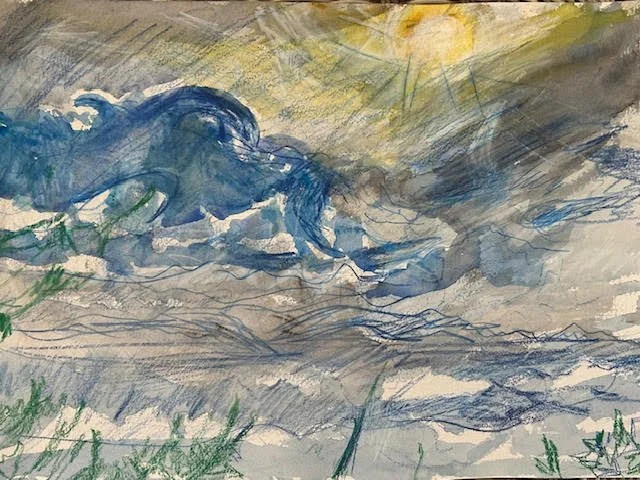
Clouds roll out as storms break? by Susan Weinstein
Dear friends,
This Is What You Shall Do, from the Walt Whitman's preface to Leaves of Grass.
"This is what you shall do: love the earth and sun and the animals, despise riches, give alms to every one that asks, stand up for the stupid and crazy, devote your income and labour to others, hate tyrants, argue not concerning God, have patience and indulgence towards the people, take off your hat to nothing known or unknown, or to any man or number of men, go freely with powerful uneducated persons, and with the young, and with the mothers of families, read these leaves in the open air every season of every year of your life, re-examine all you have been told at school, or church, or in any book, dismiss whatever insults your own soul; and your very flesh shall be a great poem, and have the richest fluency, not only in its words, but in the silent lines of its lips and face, and between the lashes of your eyes, and in every motion and joint of your body."
Wishing you all a happy 4th. May this country live up to its ideals.
Shabbat shalom,
Rabbi Misha

Seeing Those Who Don't See Us
by Rabbi Misha
This week made me reflect on the all-to-human experience of feeling unseen.

Darshan in Dwarka, India
Dear friends,
This week made me reflect on the all-to-human experience of feeling unseen. We all have moments in which we think, sense or know that a person, or a group of people are not seeing us, neither for the totality of who we are, nor sometimes even for our basic sense of safety in the world. For whatever reason they seem incapable of, or they simply don’t want to see us.
We also have a part of us that understands that we are as guilty as anyone else of refusing to see. Our ability to see others is limited to our viewpoint. But this understanding doesn’t necessarily help us step out of our hurt invisibility and help us see others. Usually, the feeling of not being seen only makes us feel justified in fortifying our viewpoint, and with it our entitlement to not push ourselves beyond our comfortable viewpoint.
The Hindu tradition has a beautiful concept that is designed to heal this dissonance, and help us to gain enough confidence to expand our seeing circle. I know this concept because my nephew, Darshan is named after it. Darshan means to see and to be seen. “It's a reciprocal experience where a devotee sees a deity or holy person, and in turn, is believed to be seen by the divine, receiving blessings in the process.”
I recently contemplated Darshan when discussing the Talmud’s tractate on pilgrimage with my father, who’s spent much of his life teaching Indian languages and religion. In that tractate, Chagigah, we learn that the primary Mitzvah of pilgrimage is called ראיה, literally “seeing.” It is often translated as “appearance,” because the Torah tells us that we must all “appear before YHVH.” (יראה לפני ה״). When I described this to my father, I found out that the same ambiguity that us Jews express with the word ראיה, Hindus express with the word Darshan. “Darshan is the purpose of pilgrimage,” I was taught.
Three times each year Jews would make the journey to Jerusalem for the purpose of seeing and being seen. This goes to show us how much crucial significance the ancients in different parts of the world placed on the sense of being seen - for all who you are – which, they thought, might allow us to see others in the same light. Without feeling like we are truly seen we have a hard time seeing others. Without seeing others, we don’t feel fulfilled, as if we are failing to live up to our potential of goodness and care.
The Talmud expresses this through a beautiful story about a trip that the most important rabbi of his generation, Rabbi Yehudah Hanasi, (so revered that he was called “Nasi” or prince) took with another Rabbi:
Rabbi Yehuda HaNasi and Rabbi Ḥiyya were walking along the road. When they arrived at a certain city, they said: Is there a Torah scholar here whom we can go and greet? The people of the city said: There is a Torah scholar here but he is blind. Rabbi Ḥiyya said to Rabbi Yehuda HaNasi: You stay here; do not demean your dignified status as Nasi to visit someone beneath your stature. I will go and greet him.
Rabbi Yehuda HaNasi grabbed him strongly and went with him anyway, and together they greeted the blind scholar. When they were leaving him, the blind man said to them: You greeted the face of one who is seen and does not see; may you be worthy to greet the face of the One Who sees and is not seen. Rabbi Yehuda HaNasi said to Rabbi Ḥiyya: Now, if I had listened to you and not gone to greet him, you would have prevented me from receiving this blessing!
The blind scholar and Rabbi Yehudah Hanasi taught us a few lessons here. First, that we must be “mevakshey panim,” seekers of the face, meaning we should always strive to see others no matter what their social, physical or political category. Second, that we must do that even in cases in which we know that they cannot possibly see us. And third, that this kind of striving can offer great blessings in return.
In this story, the rabbis were not deterred by the fact that this will be a uni-directional seeing. In our lives this amounts to imagining the experience of and being attentive to the needs and feelings of those who are not attentive to ours. Even so we seek their face, strive toward encountering them through our sight, out of faith that our effort can bear fruit, and love, which asks for nothing in return.
May we be able to see one another and know in our hearts that we are seen.
Shabbat Shalom,
Rabbi Misha

No Mi Molesta
by Rabbi Misha
Before I start, let me wish all of your loved ones in countries at war safety. We have in our community people with family in both Israel and Iran, and we wish them all well in this scary moment.

Bitachon. Trust.
Dear friends,
Before I start, let me wish all of your loved ones in countries at war safety. We have in our community people with family in both Israel and Iran, and we wish them all well in this scary moment.
Tuesday morning, I walked out of 26 Federal Plaza with Rabbi Ellen Lippmann and a young Mexican man who had just finished his hearing. We walked him out through the platoon of 10 ICE agents in full military gear and face masks at the exit of the courtrooms, where they wait for their prey. They stopped and surrounded him, checked his paperwork and eventually let him through. Rabbi Ellen and I were part of a group of 20 volunteers who had shown up as protective presence for our immigrant neighbors (along with Comptroller Brad Lander who you probably heard got arrested that day). Without people to accompany them out of the courthouse, immigrants are often taken into custody, at times with no proper cause, and many get lost in the system with no one knowing where they are or what happened to them. As we walked out into Foley Square I said to our Mexican neighbor in my broken Spanish, “that was aggressive.”
“Yes,” he answered. “But it doesn’t bother me,” he said calmly as we walked toward the 1 train. “No me molesta.” He pointed up toward the gray sky and said, “I only fear God.”
In that moment, I felt honored to be by his side. I felt inadequate in my trust in the universe. I asked myself why I expected the world to always treat me with satin gloves. I was inspired, strengthened, invited to keep walking the path seeking what Rabbi Bahyeh Ibn Paquda called Bitachon, full trust. Here is a person who made it into the country God knows how, escaping God knows what, with a legal work permit, a standing application for asylum, a job and a new life in a new country, all suddenly and for no apparent reason at risk because the government lawyer asked the judge to drop the case. And this man is walking confidently with his God.
The day before, I was sitting with Lucy, talking about the Torah portion for her Bat Mitzvah in the fall, where it tells us that Noah, in the midst of a completely crooked and nasty society, “walked with God.” I explained to Lucy that the Hebrew is much richer than the English (as is often the case!), and the untranslatable phrase “את האלוהים התהלך נח” actually means something like “Noah walked God.” I had to qualify - “not like you walk your dog, but Noah’s walk was actually God’s walk.”
We might be living in Noah’s world. We all feel like we are sometimes. Whether it’s our personal lives or the world around us, we have moments in which we want to stop walking. To freeze in place with our anxiety, to cocoon in our parents’ lap and cry, to stray from our good way in order to rage at some person or some God who doesn’t seem to care. But we also possess the ability to remember deep into our bodies that like the blade of grass popping out of the ground, we also know what to do. We can say “no” to all of the forces of oppression surrounding us: the anxiety, the fear, the anger, the bewilderment, the depression, the despair, the call to darkness. That brave "no” in our neighbor’s “no mi molesta” can allow us to be the God-walkers of this world.
In his book, Freedom and Despair my father wrote a soliloquy to the word “no” from the perspective of a peace activist fighting a seemingly unwinnable fight.
"“No,” the music of defiance, is a word that, in some situations, creates the alive human person. I stand in the middle ground between the attackers and their victims, I am doing my best to protect the latter and also to take care of my friends and colleagues, and no matter what happens to me, by standing there I am saying "no." This word has the most remarkable plenum of being that flows inside it. It must be the most capacious and elastic word in the language, any language. It can unravel in a second the whole tissue of lies that we live with hour by hour, especially those that envelop us on all sides from without, the specious inanities of the government and the self-righteous mendacity of the nationalists. "No" belongs to the zone of risk. It's like alchemy: you take the risk, opening yourself to it out of the most diverse and paltry motives, you embody the protest, and the next thing you know is that you are a little more free. But there is a necessary condition: the freedom that is ours to win comes from the attempt, successful or not, to enhance the freedom of another being, whereas even the slightest complicity in denying another’s freedom condemns the denier to servitude."
Let’s keep walking the path we know will lead us toward freedom.
Shabbat shalom,
PS. If you'd like to volunteer in the courts please reach out and I'll connect you with our friends at JFREJ.
Rabbi Misha

Tzedakah Saves from Death
by Rabbi Misha
We have transitioned into a new stage of insanity in the Middle East. In my overwhelming concern for my loved ones back home I turn to our biblical book of wisdom, Proverbs, that says: “צדקה תציל ממוות” “charity saves from death.”

Clouds over the Holy Land. Photo by Margaret Olin
Dear friends,
We have transitioned into a new stage of insanity in the Middle East. In my overwhelming concern for my loved ones back home I turn to our biblical book of wisdom, Proverbs, that says: “צדקה תציל ממוות” “charity saves from death.” As a mode of praying for the safety of our family and friends in Israel in this precarious moment I offer two paths to feed the hungry and protect the oppressed. First, Maia sent a letter a week ago, about an organization that manages to feed the starving millions in Gaza despite the scarcity, that I share with you. A few of us on the Kumah staff are donating big parts of our proceeds toward this cause. She wrote:
“I know many of us have been feeling helpless in the face of news of people starving in Gaza. How can we let this happen? As we read every year on Passover, “Let all who are hungry come and eat."
I am writing to ask you to please donate to the Gaza Soup Kitchen, an extraordinary organization that has been feeding thousands of Gazans since it was founded in 2024 by two brothers, Hani and Mahmoud. Hani lives in the U.S. and Mahmoud ran the ground operations in Gaza until an Israeli drone killed him last December. In spite of this unfathomable loss, Gaza Soup Kitchen is still feeding famished Gazans.
Here’s what we can do:
1) Donate generously to the Gaza Soup Kitchen GoFundMe. And if you go to the site, you can read Hani’s update from May 26.
2) Read this op-ed piece in The Forward about the soup kitchen and the brothers. Watch the media coverage about the organization on the Gaza Soup Kitchen website.
3) Spread the word and share the GoFundMe.
4) Call your representatives in Congress and demand that the U.S. support immediate, life-saving humanitarian aid to Gaza. "
Secondly, one of ordaining rabbis, Rabbi Arik Ascherman was badly beaten yesterday by extremist West Bank settlers trying to kick Palestinians out from their village in the Jordan Valley. He was taken to the hospital, treated and drove right back to the village of Mikhmas, which he was trying to protect. Last week Rav Arik sent a desperate plea for people to come and participate in Protective Presence in the West Bank. He invited everyone of any political opinion to join what he called a “non-violent Lincoln Brigade,” because the new tactics of the settlers, and the complete lack of protection from the army and the police have recently forced several villages to disappear. The situation in all of Area C is worse than it's ever been. Last week he wrote:
“This afternoon, the fact that we were seven when the settlers and their flock invaded was such a difference from when we are two or three. If we could have the ability to place twenty or more engaging in protective presence in every endangered community....”
To learn more about Rav Arik’s work with his organization Torat Tzedek, Torah of Justice, click HERE. To support their work click HERE.
Let us pray that this attack on Iran yields something positive, and reduces the threat of nuclear war. And that our actions toward a safer and more peaceful world for all grow and strengthen.
Shabbat shalom,
Rabbi Misha