
Personal Business
Dear friends,
When my boys were little, every night when I put them to bed I’d say: אין כמוך בכל העולמות.״ “There’s no one like you in all the worlds.” Like any parent, I could see then - and still see today – the absolute uniqueness of who they are. I wanted them to have a fundamental knowledge of their singularity, so that as they grow and find out how similar they are to all other human beings, they never forget that they are one of a kind; a specific combination of spirit, flesh and circumstances that exists only for the duration of their lives.
I view this as a deeply religious sentiment that comes from the wells of Jewish tradition, and is re-enforced by every prayer we speak. I recall the Hasidic teaching that God decides for every single leaf that falls off of a tree which side of it will land face down, and which face up. Whether that is the case or not, I do believe that we who live today on this planet were chosen to live. Whoever is alive today is part of the chosen people, and our tradition cannot disentangle itself from that notion. Believing in the Jewish God necessitates the belief that each of us is meant to be here, with our specific ways and tasks. But of course I also see how religion, and Judaism in particular often works in the opposite direction, leading people to lose their individuality and affirm sameness. It comes down to the place of subjectivity in faith.
This week’s parashah examines this question through the key religious concept of holiness. The parashah is called Kedoshim, Holy, or more precisely Holies and opens with God saying to Moses:
דַּבֵּ֞ר אֶל־כׇּל־עֲדַ֧ת בְּנֵי־יִשְׂרָאֵ֛ל וְאָמַרְתָּ֥ אֲלֵהֶ֖ם קְדֹשִׁ֣ים תִּהְי֑וּ כִּ֣י קָד֔וֹשׁ אֲנִ֖י יְהֹוָ֥ה אֱלֹהֵיכֶֽם׃
Speak to the whole Israelite community and say to them:
You shall be holy, for I, the ETERNAL your God, am holy.
On first read it can come across as exactly the type of pompous religiosity that cancels out the individual. But a closer examination reveals a different attitude. It’s important to note that what is translated as “you shall be holy” is actually in the plural in Hebrew: Yous shall be holies would be more accurate. God is holy in the singular, kadosh, but we are called upon to be holies, Kedoshim suggesting a plurality of ways of holiness.
The nineteenth century Naftali Zvi Yehuda Berlin, known as the Netziv, explains that the key word in this verse is “Kol,” “all.” The phrase “Speak to the congregation of Israel” appears many times in the Torah, but here we find an added word: “Speak to all the congregation of Israel”. He writes:
'אל כל אחד ואחד מישראל';
Speak to each and every one of Israel.
Moses is being told by God to speak not to the collective as a whole, but to every person who composes that collective. Yishayhu Leibowitz explains:
The Netziv;s point is that the meaning of “You shall be holy” differs for each individual, according to one’s nature, character, capacity, understanding, and perception. While practical commandments apply equally to al—young and old, scholar and layperson—the complexconcept of holiness resists uniform definition. Each individual must strive toward holiness in a way suited to their own unique abilities.
To me it makes perfect sense that holiness is individual. God is personal business that is thought about and understood by each one of us differently. My God is different than yours because my inner world is not the same as yours. Our God is necessarily experienced differently than theirs.
I get a sense of this uniqueness at every B Mitzvah, when inevitably the young person conveys something I’ve never quite heard before about the same words I had read a hundred times before. It’s a miracle of individuality, of engaging with the same text we’ve been exploring collectively for thousands of years and somehow identifying and expressing something new in it.
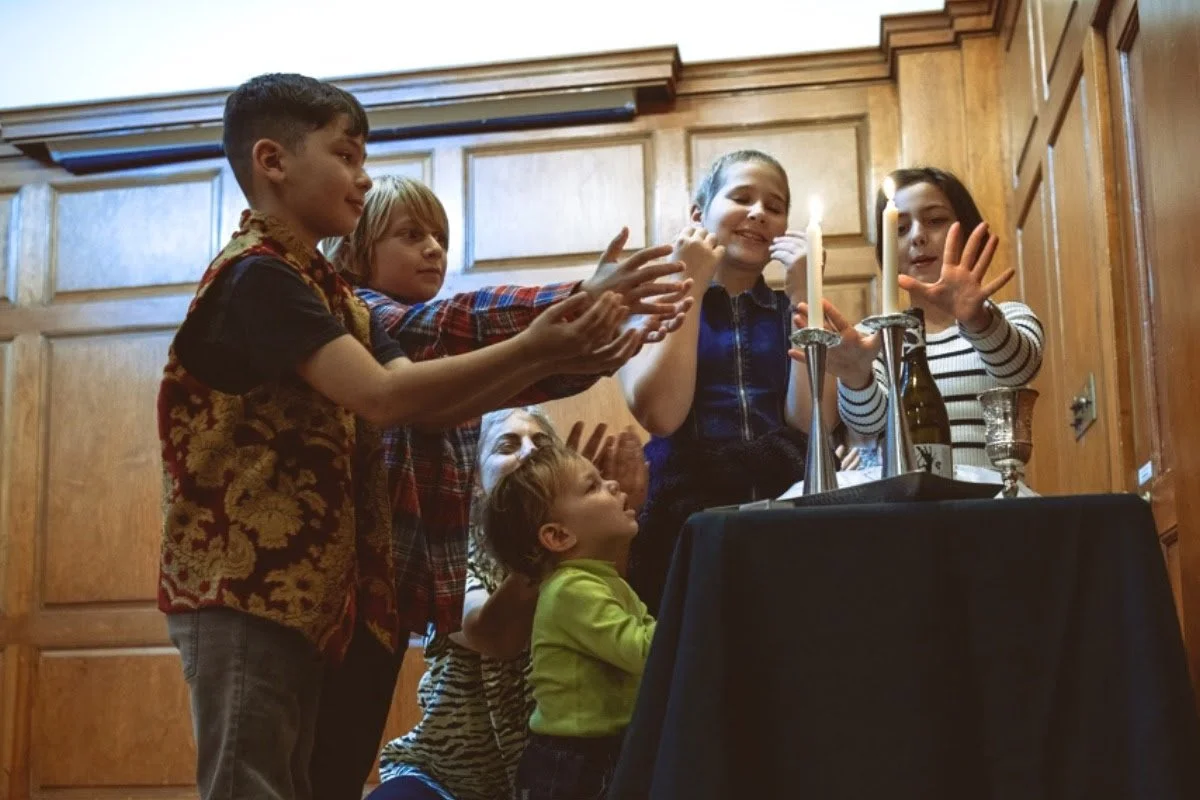
This evening at our Kabbalat Shabbat in Brooklyn we will be honoring a few of our upcoming spring Bnai Mitzvah (including my son, Ezzy!).They will join me in leading songs, prayers and Talmudic teachings, and I can’t wait to see each of their unique neshamas shine throughand fill us with pride and hope. I hope you can join us!
Shabbat shalom,
Rabbi Misha