
Foxes of the Mind
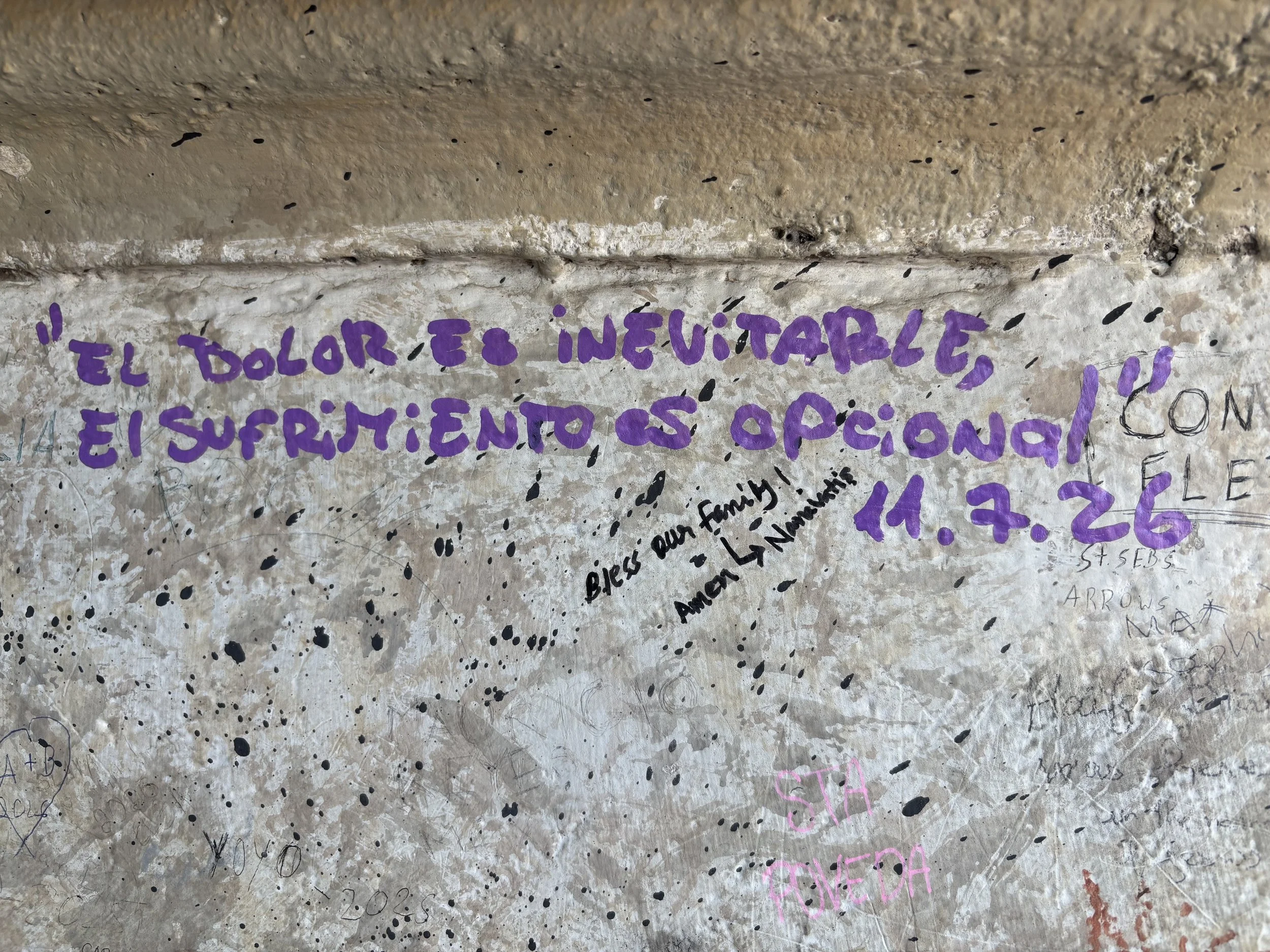
"Pain is inevitable. Suffering is optional.'
Holy Desecration on the walls of St Peter's Basilica at the Vatican.
Dear friends,
This weekend I’ll have the pleasure of officiating the wedding of my first student in New York, who I taught from age 3 through his bar mitzvah in 2009. When I discussed with him and his fiancé some options for the language which will consummate their vows under the chuppah they both quickly landed on the simple and beautiful line from the Song of Songs, אני לדודי ודודי לי, “I am for my beloved and my beloved is for me.”
Under the chuppah these words amount to a sacred commitment to maintain the union. But in their varied appearances in the Song of Songs, they signify something else. There, they are a description of a passing moment of deep union. You could read it as a physical union between two lovers in the act of lovemaking, as a union between God and the Jewish people at the conclusion of Yom Kippur, or, as the Malbim explains it, a moment of union between one person’s neshama and the great spirit of the universe; an elevated moment in which a person is able to inhabit love, to be fully at peace, to be in touch with the great pervading silence, and be truly free.
Two weeks ago, I described part of the journey toward this experience as painted by the poet. I’ll try and lead us through three more verses to this place of union and love.
To recap: After hearing a call from beyond, inviting you to find a state of mind of peace, you managed to sit yourself down, calm your thoughts and hear the birds around you. You heard a voice telling you everything is as it should be, and managed to catch a glimpse of the light, positive part of yourself that’s been with you since birth. A crack appeared in the clouds of your consciousness. "Might the clouds of consciousness disperse," you wondered.
The next line the poet offers is surprising:
אֶֽחֱזוּ־לָ֙נוּ֙ שֻֽׁעָלִ֔ים שֻׁעָלִ֥ים קְטַנִּ֖ים מְחַבְּלִ֣ים כְּרָמִ֑ים וּכְרָמֵ֖ינוּ סְמָדַֽר׃
Catch us the foxes,
The little foxes
That ruin the vineyards—
For our vineyard is in blossom.
What are these foxes doing here? And if the entire book is symbolic, what might foxes represent in this context? This quixotic line, and the foxes in particular lead Malbim to one of the most striking descriptions of a person’s negotiation with their unstoppable mind. “The foxes are a metaphor for the imaginings of the mind,” the rabbi explains, "the vineyard is where the soul finds happiness.". We have all been there a billion times, trying to clear our mind to be present, when the brain goes elsewhere. That’s the foxes at work, pulling your thoughts to imagine anything but what’s in front of you.
“And here it portrays the soul as having sent her maidens—i.e., the material/physical forces—to seize the foxes, meaning, to engage with the imaginings that the imaginative faculty spreads forth and gives rise to as visions and fantasies......”
To summarize what the Malbim seems to be describing;
Sitting in meditation, instead of fighting the wanderings of the mind, you decide to give the mind something to chew on – an image, a sound, a mantra, anything that might keep it occupied while another part of you settles deeper into quiet. Or in the Malbim’s words:
“And while the daughters of matter were occupied with these imaginings, which relate to the senses and to material perceptions, the intellect stripped away from them its pure, prophetic apprehension, and the soul became united with her beloved.”
דּוֹדִ֥י לִי֙ וַאֲנִ֣י ל֔וֹ הָרֹעֶ֖ה בַּשּׁוֹשַׁנִּֽים׃
My beloved is for me
And I am for him,
Who browses among the lilies.
Now, at last, with the physical and mental capacities pacified, the blessed quiet appears. No longer are you a separate being moved by your desires and their frustrations, but you have been united with the All, timeless and complete, at home in the crystal-clear consciousness of the present moment.
עַ֤ד שֶׁיָּפ֙וּחַ֙ הַיּ֔וֹם וְנָ֖סוּ הַצְּלָלִ֑ים סֹב֩ דְּמֵה־לְךָ֨ דוֹדִ֜י לִצְבִ֗י א֛וֹ לְעֹ֥פֶר הָאַיָּלִ֖ים עַל־הָ֥רֵי בָֽתֶר׃
When the day blows gently
And the shadows flee,
Set out, my beloved,
Swift as a gazelle
Or a young stag,
For the hills of spices!
The fleeting moment of freedom passes. The shadow protecting you from the heat of the world makes way, and your mind softly returns to the consciousness of you. Grateful for the moment you experienced, you send away your love to bounce back up the hills to her resting place. Arrivederci!
Wishing you all a shabbat with at least one moment of this type of love.
Shabbat shalom,
Rabbi Misha